Nozawa Onsen
Near Nozawaonsen, Nagano Prefecture, Japan
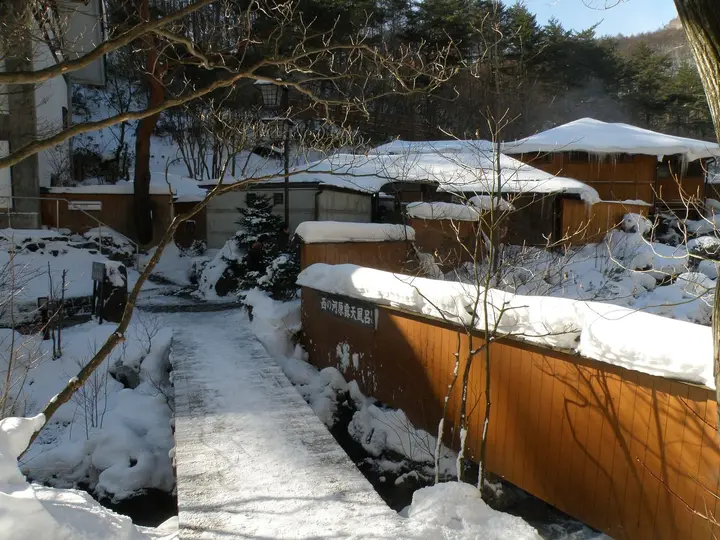
A ski and spa village in northern Nagano where 13 small public bathhouses, owned and cleaned by villagers, are free to anyone who follows the house rules and drops a coin in the box.
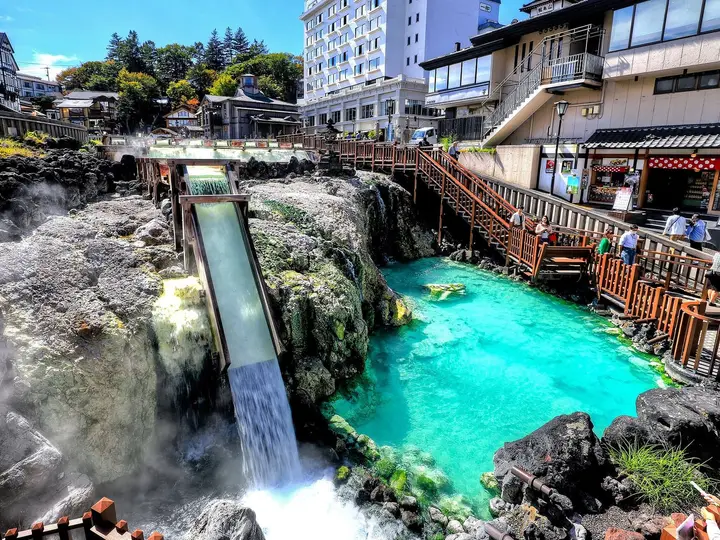
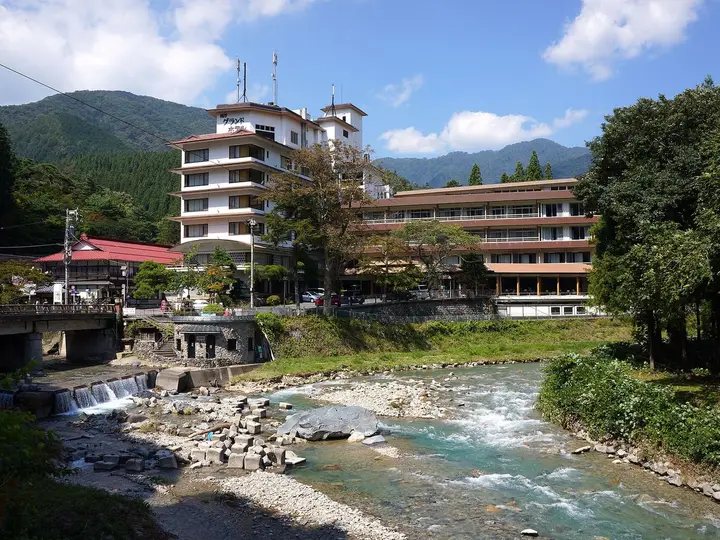
Photos: Miya.m (CC BY-SA 3.0); 小石川人晃 (CC BY-SA 4.0). Resized and cropped for this page.


- Water temperature
- Not published
- Entry
- Free
- Getting in
- Drive-up
- Type
- Public pool
- Thirteen soto-yu public baths sit within walking distance of each other, free to use with a donation box at each.
- Villagers have owned and maintained the baths through the yunakama bath associations since the Edo period.
- Source water reaches about 194°F90°C at many baths, so the tubs often run very hot.
- The Nozawa Onsen Liner bus links Iiyama Station on the Hokuriku Shinkansen with the village in about 25 minutes for ¥600.
What to expect
Nozawa Onsen is a mountain village in northern Nagano, best known abroad for its ski area and at home for its public baths. There are 13 soto-yu (outside baths) spread through the lanes of the old village, close enough that you can walk between several in an evening. They are not run by the council or a company. Villagers own and clean them through local bath associations called yunakama, a system that the tourism association traces back to the Edo period, and they let visitors in for free.
Each bathhouse is small and simple, with separate men’s and women’s sides. There are no staff, no soap and no towels, and you should not count on lockers. The water comes from the village’s springs and is often very hot.
Expect locals. People from the village bathe here every day, often early in the morning, and the baths are part of their routine, not an attraction. Treat them the way you would treat a neighbour’s kitchen.
The baths
The tourism association lists the 13 soto-yu with these source temperatures (the water at the vent, not in the tub):
- Oyu, in the centre of the village: 151°F66°C
- Kawarayu: about 140°F60°C
- Shinyu: about 131°F55°C
- Taki-no-yu: about 172°F78°C
- Kuma-no-tearaiyu: about 104°F40°C, the mildest source
- Akiha-no-yu, Asagama-no-yu, Kamiterayu, Matsuba-no-yu, Nakao-no-yu, Shinden-no-yu, Yokochi-no-yu and Jūōdō-no-yu: about 194°F90°C
Most open 5:00 to 23:00 from April to November and 6:00 to 23:00 from December to March. Shinyu and Jūōdō-no-yu keep 6:00 to 22:00 all year, Yokochi-no-yu 6:00 to 23:00, and Taki-no-yu 5:00 to 21:00 in summer and 6:00 to 22:00 in winter.
Akiha-no-yu is closed. A notice dated May 19, 2026 says it is shut for demolition from May 11 to October 30, 2026. It does not mention rebuilding or reopening, so check before you plan around it.
Four baths (Matsuba-no-yu, Jūōdō-no-yu, Kamiterayu and Kuma-no-tearaiyu) have small cauldrons where you can cook eggs in spring water. The Ogama (Asagama) spring, a group of steaming source pools above the centre, supplies many of the baths. Visitors cannot enter the Ogama enclosure; look from outside.
If you want towels, soap and a rest area, there are two paid options:
- Furusato-no-yu in Ogama Onsen Park, reopened in October 2024: ¥700 adults, ¥500 for children under elementary school age, under 2 free. Open 10:00 to 19:00 from April to mid-December and 11:00 to 20:00 from mid-December to March, last entry 30 minutes before closing. Closed Thursdays. No parking of its own.
- Sparena, near the ski area: ¥900 adults, ¥700 children (age 3 to elementary school), ¥100 off with a winter day lift ticket. Baths 14:00 to 20:30, last entry 20:00. It has separate indoor baths and saunas for men and women, plus a large outdoor bath where swimsuits are required (rental ¥300 with a ¥1,000 deposit). Closed Wednesdays outside ski and pool season, with two-week maintenance closures in spring and autumn.
Onsen etiquette
The tourism association asks visitors to follow five rules at the soto-yu:
- Wash your body before entering the bath.
- Do not put your towel in the water.
- Follow normal bathing manners.
- If you add cold water, turn the tap off once the bath is comfortable.
- Do not bathe outside the posted hours.
In practice: undress in the shared changing space, bathe naked, and keep noise down. Pour water over yourself before you get in. Do not let the cold tap run and leave the bath lukewarm; regulars will be annoyed. Bring a small towel and dry yourself before you step back into the changing area. Leave a coin in the box on the way out.
The baths have no attendant and the tourism association gives no tattoo policy for them. Sparena does not publish one either.
Getting there
By train and bus: take the Hokuriku Shinkansen to Iiyama Station. The Nozawa Onsen Liner bus runs from the station to the village in about 25 minutes, ¥600 for adults and ¥300 for children. In the March 30 to November 30, 2026 timetable it ran about ten times a day each way, from Iiyama between 8:45 and 21:20. Some buses do not connect with trains. There is no public transport from the JR Iiyama Line’s Togari-Nozawa-Onsen or Kamisakai stations. From December 11, 2026 to March 25, 2027 the village runs a ride-share service covering Nozawa Onsen and Iiyama Station, 8:00 to 22:00.
By car: park at one of the village lots and walk; the lanes around the soto-yu are narrow. Nitta multi-storey car park is open 24 hours (¥100 an hour). Nakao and Yokochi car parks are free in summer, but in winter Yokochi charges ¥500 for daytime use and Nakao is closed to ordinary cars. Most lots ban overnight parking, so ask your inn.
When to go
The baths are open all year. Ski season, roughly December to March, is the busiest time, and the baths can be crowded in the late afternoon and evening. Early morning is local time; go then if you can be quiet and quick. Spring and autumn are calmer.
Where to stay nearby
Lodging in Nozawa ranges from old ryokan to ski lodges and apartments, most within walking distance of several soto-yu. From June 1, 2026, Nagano Prefecture charges an accommodation tax on stays priced at ¥6,000 or more per person per night (room only): ¥200 per person per night until May 31, 2029, then ¥300. Nozawaonsen village is one of five municipalities that also levy their own share, and its pages did not state the amount in October 2026, so ask your inn. Elsewhere in Nagano, see Bessho Onsen near Ueda.
Safety notes
- Very hot water: with sources near 194°F90°C, some tubs run far hotter than a typical bath. Test the water with your hand, get in slowly, and get out if you feel dizzy. Do not let children jump in.
- Ogama and egg cauldrons: the source water is close to boiling. Stay outside the Ogama fence and keep children’s hands away from the cooking cauldrons.
- Ice: the lanes freeze in winter, and wet feet on icy stone are a bad mix. Wear grippy boots between baths.
- Drinking: do not bathe after heavy drinking, a common risk in a ski village.
Map and nearby springs
GPS: 36.92320, 138.44829
Nozawa Onsen: common questions
Are the Nozawa Onsen soto-yu free?
Yes. The 13 public baths charge no entry fee. Each has a donation box, and visitors are asked to leave a voluntary contribution for the villagers' bath associations that own and clean them.
What are the rules at the soto-yu?
Wash your body before you get in, keep your towel out of the water, follow normal bathing manners, and turn the cold tap off again once the bath is at a comfortable temperature. Use the baths only during posted hours. There are no staff, soap or towels, so bring your own.
Why is the water so hot?
The tourism association lists source temperatures of about 194°F90°C at many of the baths, including Akiha-no-yu, Kamiterayu and Matsuba-no-yu. Oyu's source is 151°F66°C and Kuma-no-tearaiyu's about 104°F40°C. You may add cold water, but turn it off afterward so the bath is not left cold for locals.
Is Akiha-no-yu open?
Not as of October 2026. The tourism association said Akiha-no-yu would be closed for demolition work from May 11 to October 30, 2026, and gave no reopening date or rebuild plan. Its stamp-rally stamp was moved to the tourist information centre.
Are tattoos allowed at the Nozawa Onsen baths?
The tourism association does not publish a tattoo policy for the soto-yu, which are unstaffed village baths, or for Sparena. Ask at the tourist information centre or call Sparena (0269-85-4567) before you go.
How do you get to Nozawa Onsen?
Take the Hokuriku Shinkansen to Iiyama Station, then the Nozawa Onsen Liner bus, about 25 minutes for ¥600 (children ¥300). Not every bus connects with a train, so check the timetable. No public transport runs from Togari-Nozawa-Onsen or Kamisakai stations on the JR Iiyama Line.
Closest hot springs to Nozawa Onsen
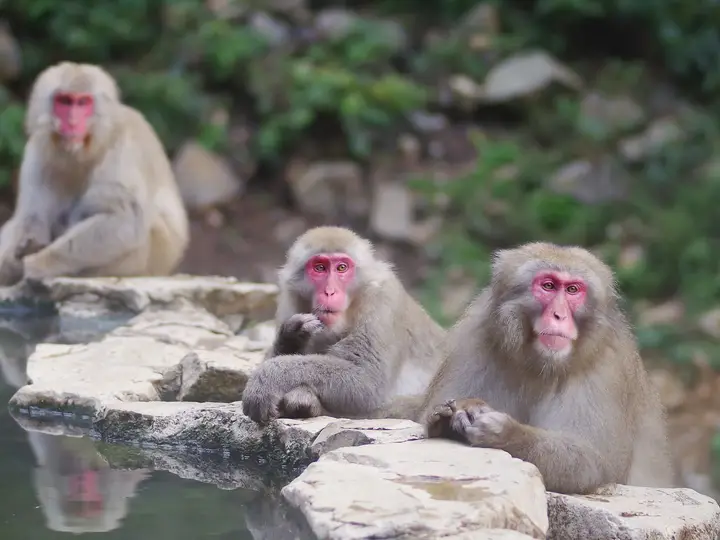
Jigokudani Yaen-kōen (Snow Monkey Park)
Nagano Prefecture, Japan
13 mi away, ~20 min drive
Temp n/a Paid Hike in
Near Yamanouchi (Yudanaka)
Resort or spa