Shibu Onsen
Near Yamanouchi (Yudanaka), Nagano Prefecture, Japan
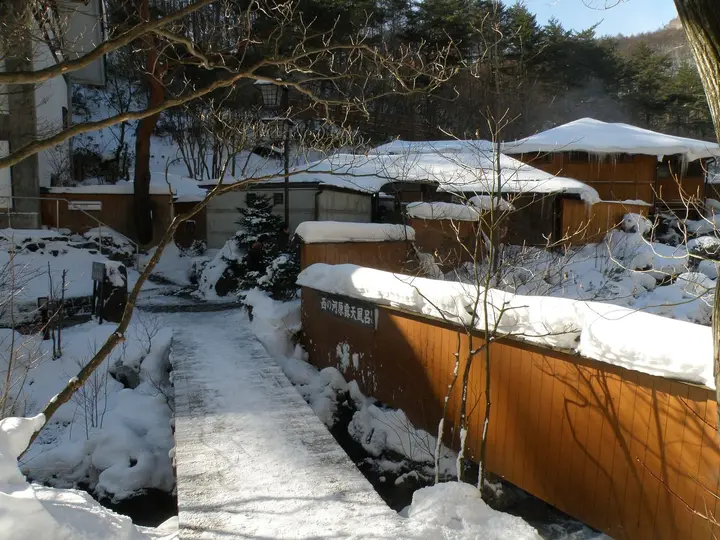
A lantern-lit onsen town in the Yokoyu valley near the snow monkeys, where inn guests borrow a key to nine small public baths. Day visitors can use only the ninth, the Oyu.
Photos: Totti (CC BY-SA 4.0); katorisi (CC BY-SA 3.0). Resized and cropped for this page.


- Water temperature
- Not published
- Entry
- Paid
- Getting in
- Drive-up
- Type
- Public pool
- Nine numbered soto-yu, each on its own source, are locked; your inn lends you the key. Stamp a ¥350 prayer towel at each one.
- Only bath No. 9, Shibu Oyu, takes day visitors: ¥800 for adults in 2026, 10:00 to 17:00, with a steam bath and a rooftop foot bath.
- Source temperatures run from about 123-188°F50°C to 86.5°C. Nothing is heated, so some tubs are very hot.
- Jigokudani Monkey Park is a short drive or bus ride up the valley, via Kanbayashi Onsen.
What to expect
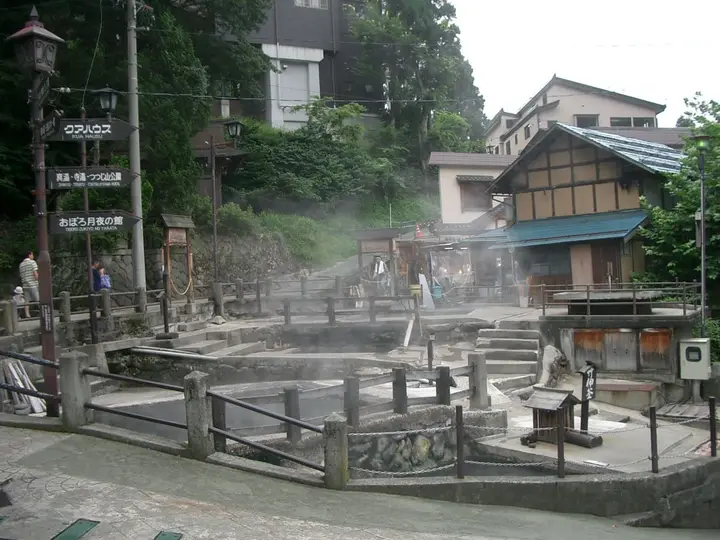
Shibu Onsen is a narrow, stone-paved hot spring town on the Yokoyu River in Yamanouchi, at the foot of Shiga Kogen in northern Nagano. The local association dates it back about 1,300 years. Old wooden inns, some three and four storeys high, lean over a lane barely wider than a car, and in the evening guests in yukata and geta clack along it from bath to bath.
The draw is the soto-yu, nine small public bathhouses scattered along the lane. Locals have kept them up for generations and still use them every day. Each one is numbered, has its own source and, by tradition, its own claimed benefit. They are simple rooms with a tub or two and a changing area, not spas. Each is split into men’s and women’s sides.
The catch for day-trippers: the doors are locked. If you stay at a Shibu inn, you get a key that opens all nine. If you do not, you can use only the ninth and largest, Shibu Oyu.
The nine baths
The Shibu Onsen Ryokan Association lists the baths with their sources:
- Hatsu-yu (No. 1): sodium-calcium sulfate and chloride water, source 149°F65°C. Linked in legend to the monk Gyoki.
- Sasa-no-yu (No. 2): same water as No. 1.
- Wata-no-yu (No. 3): same source again, known for white mineral flakes.
- Take-no-yu (No. 4): source 188°F86.5°C, named after the first water piped down from Jigokudani.
- Matsu-no-yu (No. 5): sulphur-bearing water from the same 188°F86.5°C source group.
- Mearai-no-yu (No. 6): neutral sulfate-chloride water at about 123°F50.6°C.
- Nanakuri-no-yu (No. 7): same water as No. 6, with black mineral flakes.
- Shinmei-taki-no-yu (No. 8): its source comes from the hill behind.
- Shibu Oyu (No. 9): the best known, with iron-tinted brownish water, a steam room fed by source vapour and a rooftop foot bath.
The association lists traditional ailments for each bath, from the stomach to neuralgia. Those are folk associations, not medical advice.
All nine are fed straight from the source with nothing added, and the association warns that the water is very hot. You may cool a tub with the cold tap, but turn it off once it is bearable so the next person is not left with a lukewarm bath.
Kyuto-meguri: the nine-bath round
Inns sell a prayer towel (tenugui) for ¥350. Stamp it at the entrance of each bath as you go, finishing at the Oyu. Since the word for nine (ku) also reads as suffering, doing all nine is said to bring good luck and wash away hardship. Many people end by climbing the steps above the Oyu to the Yakushi temple to pray. The round takes a relaxed evening, or two short sessions if the hottest tubs slow you down.
Prices and booking
Overnight guests: the soto-yu are free. Borrow the key at check-in. Directory listings give the guest hours as about 6:00 to 22:00, and baths may be shut briefly for cleaning.
Day visitors: only Shibu Oyu is open to you, from 10:00 to 17:00. Prices in October 2026 are ¥800 for adults and ¥500 for children. Buy a ticket at the Shibu Onsen tourist information center or at one of several inns close to the Oyu (the association names Kanaya, Kate, Yumoto Ryokan, Matsuya, Hishiya and Ikariya). Then show the ticket at a listed shop or inn nearby to have the door unlocked. Some of these may be unstaffed at certain times. Japan-guide reports later starts (13:00) on Mondays, Wednesdays and Fridays, and the association posts temporary closures on its news page (the Oyu shut on two days in September 2026), so check before you plan around it.
What is not provided: there are no showers, shampoo or soap in any soto-yu, and you may not wash your hair at the Oyu. Bring a bath towel and a small towel. There are no valuables lockers.
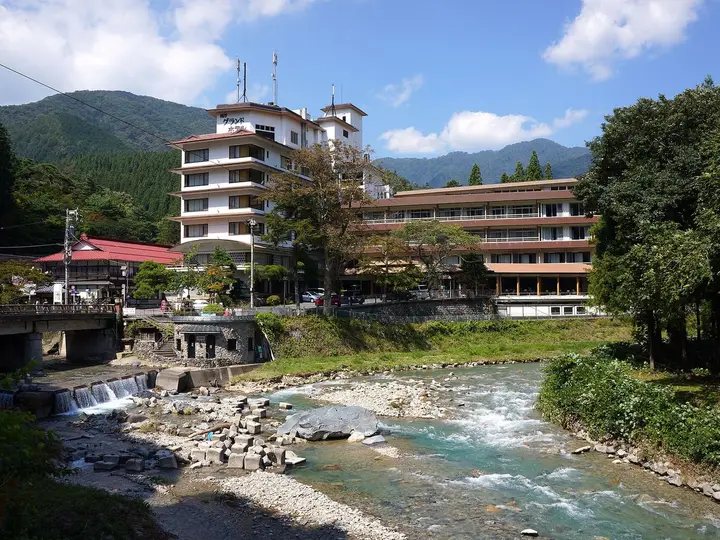
Inn prices vary widely. The association’s stay page lists the inns, from small family-run places to Kanaya, the multi-storey wooden ryokan many visitors come to photograph.
Onsen etiquette
- Pour hot water over yourself before you get in, and wash at your inn first since the soto-yu have no showers.
- Bathe naked, with your small towel out of the water.
- Take your geta off before the changing room. Outdoor shoes are not allowed inside.
- Sit when you rinse, so you do not splash others.
- If a tiny bath is full, try another one and come back.
- Dry off before you return to the changing room.
Tattoos are not mentioned in the association’s rules. These are local residents’ baths with room for a handful of people, so ask your inn before you go in.
Getting there
- By train: take the Hokuriku Shinkansen to Nagano, then the Nagano Electric Railway (Nagaden) to Yudanaka, the end of the line.
- From Yudanaka: Nagaden buses toward the Snow Monkey Park, Okushiga Kogen or Shirane Kazan stop at Shibu Wagobashi in about 5 minutes. A taxi takes about 5 minutes. Walking takes about 30.
- By car: leave the Joshin-etsu Expressway at Shinshu-Nakano IC and head for Yamanouchi. The village has one-way sections and very narrow lanes, so park first.
- Parking: the Shibu Onsen Yumeguri Parking lot sits just across Shibuyu Bridge (100 cars, 20 buses), open 24 hours since December 2025. The first 30 minutes are free, then ¥300 an hour, with a ¥1,000 cap per 24 hours for cars (2026).
When to go
Shibu works all year. Winter, December to February, is the busiest season because the snow monkeys at Jigokudani Monkey Park are bathing, and the lane looks its best under snow and lanterns. Book inns early for those weekends. Walking between baths in geta on ice needs care. Autumn brings leaf colour to the valley. Summer evenings are mild, which helps with the hotter tubs.
The association marks the Oyu’s ad hoc closures on its news page, so check it if you are coming only for a day bath.
Where to stay nearby
Staying in Shibu is the only way to use all nine baths, so book an inn here rather than in Nagano City if the soto-yu are the point. The association’s site lists the member inns.
Kanbayashi Onsen, a few kilometres up the valley, has four inns at the start of the forest path to the monkeys. Yudanaka, next door, has more inns and the railway station. Nagano City, about 45 minutes away, has the widest choice of hotels.
Accommodation tax: since June 1, 2026, Nagano Prefecture charges ¥200 per person per night (rising to ¥300 from June 1, 2029) when the room-only rate is ¥6,000 or more. Yamanouchi does not add a town share.
Nearby stops worth adding
The snow monkeys are the obvious trip. Jigokudani Monkey Park is reached by a forest walk of about 2 km (1.2 miles) from the Kanbayashi side. A narrow road from Shibu leads to the upper Jigokudani parking lot, but it is closed all winter and awkward for large cars. You cannot bathe in the monkeys’ pool.
Shiga Kogen, one of Japan’s biggest ski areas, is higher up the same road.
Safety notes
- Very hot water: sources run from about 123-188°F50°C to 86.5°C, and the tubs get water straight from them. Test with a hand, add cold water if needed, and keep soaks short.
- Hydration: the association asks bathers to drink water and rest between baths, especially on a nine-bath round.
- Footing: wet stone floors, steep steps and icy lanes in geta. Walk slowly.
- Valuables: there are no lockers in the soto-yu. Leave valuables at your inn.
- Alcohol: do not bathe after drinking. These temperatures are a real risk.
Map and nearby springs
GPS: 36.73460, 138.43305
Shibu Onsen: common questions
Can day visitors use the Shibu Onsen public baths?
Only one of them. Eight of the nine soto-yu are for overnight guests of Shibu inns, who borrow a key at check-in. Day visitors can use bath No. 9, Shibu Oyu, from 10:00 to 17:00 for ¥800 (adults) or ¥500 (children). Buy a ticket at the Shibu Onsen tourist information center or one of several inns near the Oyu, then show it to have the door unlocked.
How does the Shibu Onsen key work?
Your inn lends you one key that opens all nine soto-yu. Some locks turn and push, others pull. The Oyu locks itself behind you if you step outside, so take the key or ticket in with you. The baths are free for guests.
What is kyuto-meguri at Shibu Onsen?
It is the nine-bath round. You buy a prayer towel (tenugui) for ¥350, stamp it at the entrance of each bath, and finish at the Oyu, then climb to the Yakushi temple above the town. The number nine (ku) also reads as hardship, so completing all nine is said to wash away troubles.
Are tattoos allowed at Shibu Onsen?
The association's bath rules do not mention tattoos either way. The soto-yu are small shared tubs used by locals, so ask your inn first. Several Shibu inns have private baths you can book instead.
How do I get to Shibu Onsen from Yudanaka Station?
Nagaden buses toward the Snow Monkey Park or Shiga Kogen reach the Shibu Wagobashi stop in about 5 minutes. A taxi takes about 5 minutes, and walking takes about 30. Yudanaka is the end of the Nagano Electric Railway from Nagano Station.
Is there an accommodation tax at Shibu Onsen?
Yes. Nagano Prefecture charges an accommodation tax from June 1, 2026 on stays where the room-only rate is ¥6,000 or more per person per night. It is ¥200 per person per night until May 31, 2029, then ¥300. Yamanouchi town adds no share of its own.
Closest hot springs to Shibu Onsen
Near Yamanouchi (Yudanaka)
Resort or spa
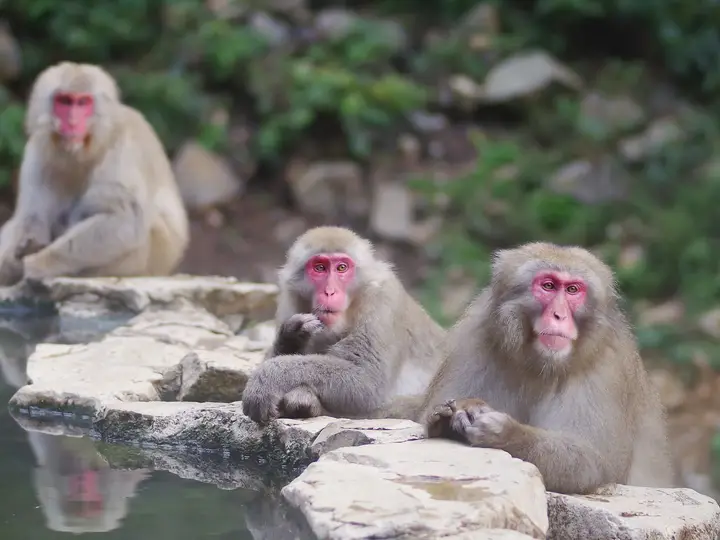
Jigokudani Yaen-kōen (Snow Monkey Park)
Nagano Prefecture, Japan
2 mi away, ~10 min drive
Temp n/a Paid Hike in