Jigokudani Yaen-kōen (Snow Monkey Park)
Near Yamanouchi, Nagano Prefecture, Japan
A wildlife park in a steaming Nagano valley where wild Japanese macaques soak in a hot spring pool. You come to watch: humans are not allowed in the monkey pool.
Photos: Akiko_Toshinai (CC BY 4.0); Kelly Drewett (CC BY-SA 4.0); 迷惘的人生 (CC BY-SA 2.0); z tanuki (CC BY 3.0). Resized and cropped for this page.


- Water temperature
- Not published
- Entry
- Paid
- Getting in
- Hike in
- Type
- Public pool
- Over 160 wild Japanese macaques live around the valley. Watching them soak in falling snow is the whole point of the trip.
- People cannot bathe in the monkey pool. The operator bans bathing with the monkeys outright.
- Entry goes up on December 1, 2026: ¥1,000 at the gate or ¥880 online for adults.
- Selfie sticks, drones, pets, strollers and wheelchairs are not allowed on the forest trail or in the park.
What to expect
Jigokudani Yaen-kōen, better known in English as the Snow Monkey Park, sits in the steep valley of the Yokoyu River in Yamanouchi, northern Nagano Prefecture. The name Jigokudani means “Hell’s Valley”, a nod to the rough cliffs and the hot water and steam that break out of the ground here. The park has been open since 1964.
The draw is simple. A troop of wild Japanese macaques, more than 160 animals according to the prefecture’s tourism site, lives around the valley. In winter, many of them climb into a rock-lined pool fed by hot spring water and sit there, faces red, fur frosted with snow.
This is not a place to soak. The pool belongs to the monkeys. The operator states plainly that visitors may not bathe in the hot spring and that bathing with the monkeys is prohibited. You stand around the edge of the pool and the river bank and watch. The monkeys are wild and not fenced in, so they walk right past you on the paths.
Just before the park entrance you pass the Jigokudani steam vent, which sends up a plume of hot water and steam from the river bed.
Getting there
The park is at 6845 Hirao, Yamanouchi. There is no road to the gate. Everyone walks the last stretch.
- From Nagano Station: the express bus bound for Shiga Kogen takes about 41 to 45 minutes to the Snow Monkey Park bus stop. The park sells an online ticket bundled with a Nagano Station bus pass.
- From Yudanaka Station (end of the Nagano Dentetsu line): the Shiga Kogen bus reaches the Snow Monkey Park stop in about 7 to 15 minutes. In summer you can also take a taxi from Yudanaka to the Jigokudani parking lot.
- By car: from the Shinshu-Nakano IC, drive about 16 km (10 miles) on Route 292 to Kanbayashi Onsen, then walk.
From the Kanbayashi side, the Yumichi forest trail is about 2 km (1.2 miles) and takes around 30 minutes. It is mostly level but has some short climbs, steps, roots and unpaved sections. The operator’s map measures about 1.6 km from the trail entrance to the park itself.
There is a second approach on the Shibu side: a narrow forest road from Shibu Onsen leads to the Jigokudani parking lot (¥500, about 15 minutes’ walk from the park). That road is tight, awkward when two cars meet, unsuitable for large vehicles, and closed for the whole winter.
Winter parking is limited. For the 2026-27 season the park asks visitors to use public transport. Some lots are closed over New Year and on Saturdays, Sundays and holidays from December to March, and the park publishes a calendar of “very busy” days when its parking cannot be used.
When to go
The park is open every day of the year, though it can shorten hours or close without notice because of weather, the monkeys’ behaviour or natural hazards.
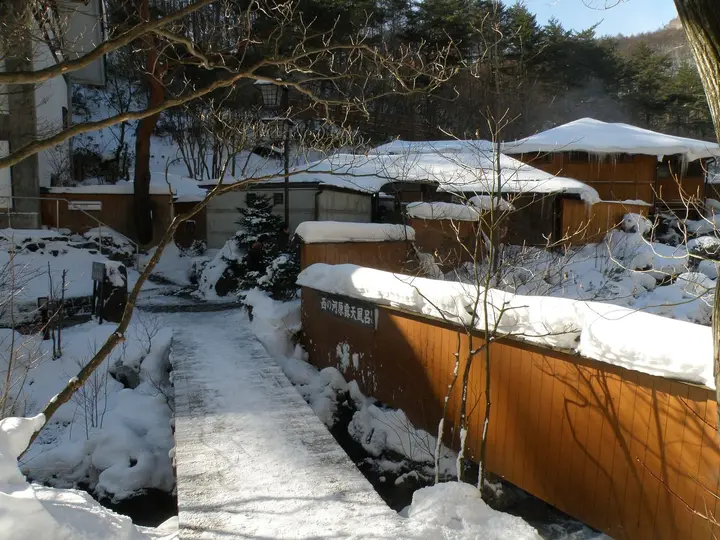
Winter (December to March) is when the monkeys use the pool most and when the scene matches the photographs. It is also the crowded season. The busiest days in the operator’s 2026-27 calendar are weekends, national holidays and the New Year period. A weekday morning soon after the 9:00 opening is your best chance of a calmer visit.
Spring and summer bring green forest and far fewer people, and the troop is still there to watch. The monkeys rarely bathe in warm weather, so do not expect the snow-monkey shot.
Autumn colours the valley and the walk is pleasant, but bathing is still hit-and-miss.
Even in mid-winter there is no guarantee. The operator says outright that the monkeys do not bathe at all hours.
Prices and booking
Prices are from the operator’s site and its September 2026 fee notice, and include tax.
| Ticket | Until Nov 30, 2026 | From Dec 1, 2026 (gate) | From Dec 1, 2026 (online) |
|---|---|---|---|
| Adult (18+) | ¥800 | ¥1,000 | ¥880 |
| Child (elementary to high school) | ¥400 | ¥500 | ¥440 |
| Under 6 | Free with a guardian | Free | Free |
| Annual pass, adult | ¥5,000 | ¥6,000 |
Groups of 20 or more get a reduced rate, and holders of a disability certificate pay half (claim that discount at the gate, not online). There is no senior discount. The gate takes credit cards and electronic money but not QR-code payments.
Online tickets started in early August 2026. They are tied to one date and go on sale 3 months ahead. From December to April, online ticket holders get priority entry, and the operator warns that people without one may have to wait or, on crowded days, may not be admitted.
Rules and etiquette
The park’s rules are there to keep both people and monkeys safe, and staff can ask rule-breakers to leave.
- Do not touch, chase or shout at the monkeys. Never touch a baby, even if it comes close; step away instead.
- Do not show or give food to the monkeys. Keep snacks out of sight.
- Do not stare into a monkey’s eyes or open your mouth at it. Both read as threats.
- No selfie sticks and no drones.
- Photos and video are allowed, flash included, but keep your camera or phone at a sensible distance.
- No pets of any kind, including guide, hearing and service dogs. Dogs are natural enemies of the monkeys.
- Wheelchairs and strollers cannot be used on the trail or in the park.
- Do not collect plants or insects or catch animals.
Where to stay nearby
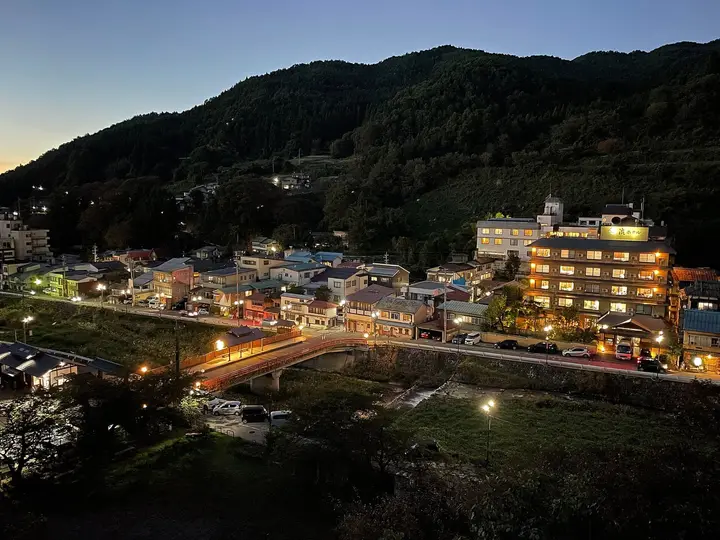
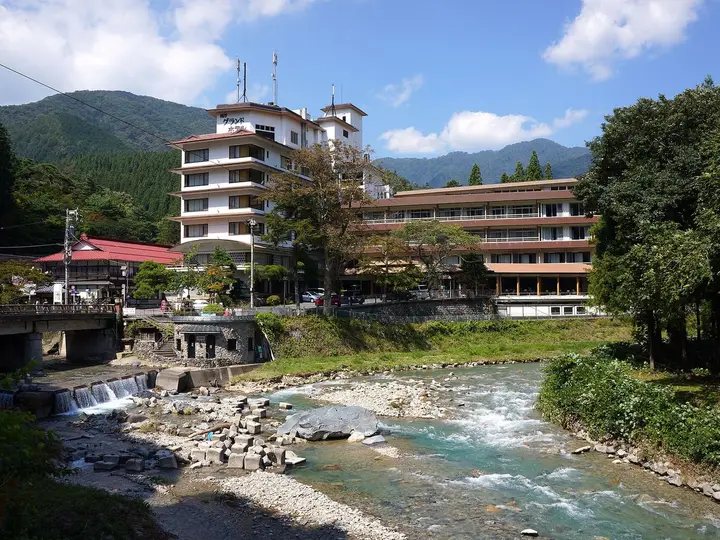
There are no rooms at the park. The nearest bases are Kanbayashi Onsen, at the start of the forest trail, and Shibu Onsen and Yudanaka a few kilometres down the valley, all with inns that have their own baths. The Nagano prefecture tourism site also notes that Kōrakukan, an inn across the Yokoyu River from the park, offers a hot spring bath to visitors, so you can have your own soak after watching the monkeys have theirs. Nagano City, about 45 minutes away by express bus, has the widest choice of hotels.
Since June 1, 2026, Nagano Prefecture charges an accommodation tax on stays where the room-only rate is ¥6,000 or more per person per night. The rate is ¥200 per person per night until May 31, 2029, then ¥300.
Safety notes
- Wild animals: the macaques are used to people but are not tame. Bites happen when people get too close, touch the young or carry food.
- Ice and snow: the trail is packed snow and ice for much of the winter. The operator recommends rubber or snow boots and simple crampons. Hold young children by the hand.
- Cold: you will stand still for a long time at the pool. Dress in layers, with a hat and gloves.
- Changing conditions: the park can close at short notice in heavy snow or storms. Check the operator’s notices on the day.
- Timing: last entry is about 30 minutes before closing, and the walk back takes another 30 minutes. In winter it gets dark soon after the 16:00 close, so carry a light.
Map and nearby springs
GPS: 36.73281, 138.46232
Jigokudani Yaen-kōen (Snow Monkey Park): common questions
Can you bathe with the monkeys at Jigokudani?
No. The pool is for the monkeys only, and the operator says bathing with them is prohibited. You watch from the edge. If you want your own soak, the inns at Kanbayashi Onsen and Shibu Onsen nearby have baths, and an inn across the river from the park offers baths to visitors.
How much is Jigokudani Monkey Park in 2026?
Until November 30, 2026, adults (18 and over) pay ¥800 and children ¥400. From December 1, 2026, the gate price is ¥1,000 for adults and ¥500 for children, or ¥880 and ¥440 if you buy online in advance. Children under 6 are free with a guardian.
Do I need to book tickets for the Snow Monkey Park?
Not always, but it is wise in winter. The park started selling date-specific online tickets in August 2026, up to 3 months ahead. From December to April, online ticket holders get priority, and on crowded days people without one may have to wait or may not get in at all.
How long is the walk to the monkey park?
About 30 minutes on foot. The Yumichi forest trail runs roughly 2 km (1.2 miles) from the Kanbayashi Onsen side. It is mostly flat with a few climbs, stairs and unpaved stretches that turn icy in winter, so wear boots and carry simple crampons.
When do the monkeys bathe in the hot spring?
Mainly in winter, roughly December to March, when the valley is under snow. The operator warns that the monkeys do not bathe at all hours, and some days they hardly use the pool. In summer you still see the troop, but much less bathing.
Can I bring a selfie stick or drone?
No. Both are banned. Photos and video are fine, flash included, but do not push a camera or phone close to a monkey.
Closest hot springs to Jigokudani Yaen-kōen (Snow Monkey Park)
Near Yamanouchi (Yudanaka)
Resort or spa