Kinosaki Onsen
Near Toyooka, Hyogo Prefecture, Japan
A willow-lined canal town near the Sea of Japan where visitors walk between public bathhouses in yukata and geta. Six of its seven public baths are open; Satono-yu by the station is closed for rebuilding.
Photos: 663highland (CC BY 2.5); akamitori (CC BY 3.0). Resized and cropped for this page.


- Water temperature
- 108°F42°C
- Entry
- Paid
- Getting in
- Drive-up
- Type
- Public pool
- The ¥1,500 Yumepa day pass covers every open public bath, which pays for itself after two baths.
- Each public bath closes on a different weekday, so you can always find several open.
- Satono-yu, the bath beside JR Kinosaki Onsen Station, has been closed since the end of March 2024 and is being rebuilt.
- About 2 hours 40 minutes from Osaka on the Kounotori limited express, or 2 hours 20 minutes from Kyoto on the Kinosaki.
What to expect
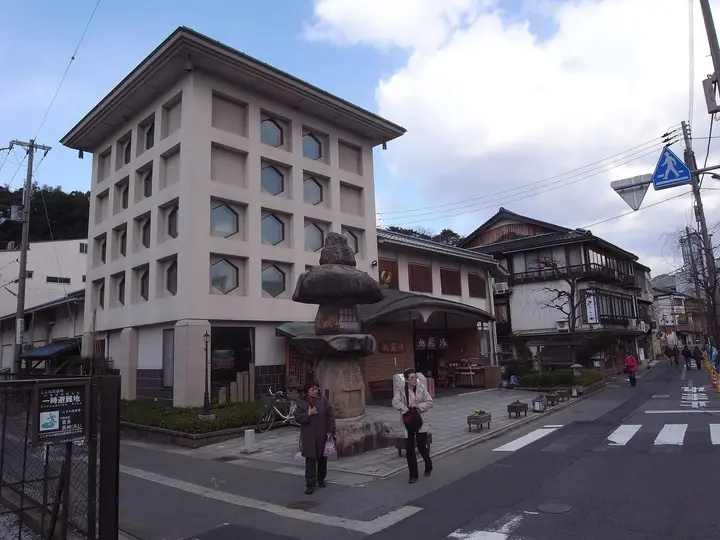
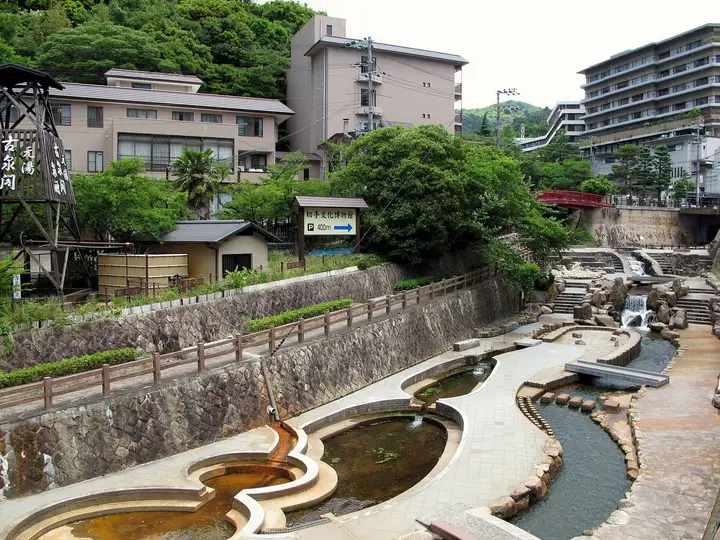
Kinosaki Onsen is a small hot spring town in the far north of Hyogo Prefecture, part of Toyooka city, a few kilometres inland from the Sea of Japan. A willow-lined canal runs through the middle, stone bridges cross it, and the ryokan crowd in along both banks. The local idea is that the whole town is one big inn: you sleep in your ryokan, then put on a yukata and wooden geta and walk out to bathe in the public bathhouses, called sotoyu. In the evening the streets fill with people doing exactly that.
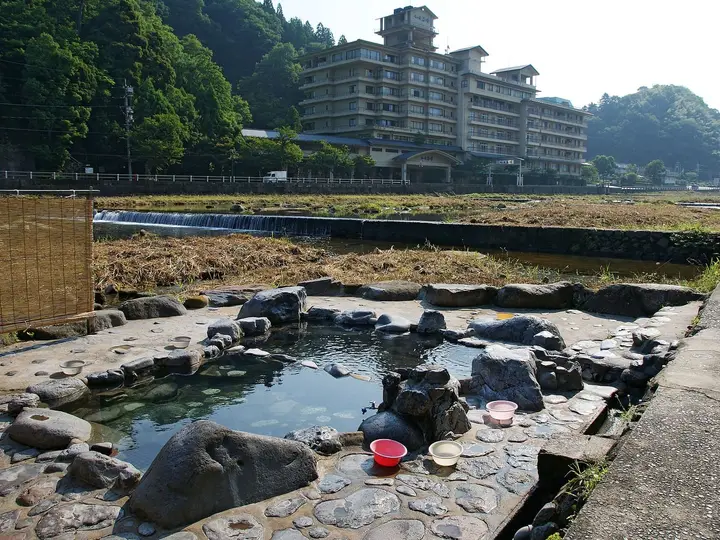
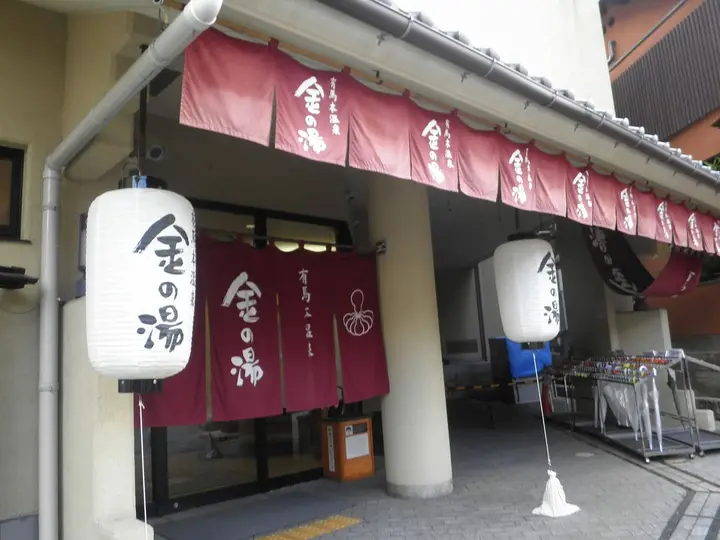
The sotoyu are not museum pieces. Locals use them as their everyday bath, and each one was built at a different time, looks different and has its own story. All are split into men’s and women’s sides and follow normal Japanese bath rules. The tourism association lists one shared water profile for them: a sodium-calcium chloride spring at 108°F42°C. Since November 2023 places in town that use the natural spring water have been putting up a certificate saying so.
The public baths
Six sotoyu are open in October 2026. All cost ¥800 for adults and ¥400 for children (age 3 to elementary school), and last entry is 30 minutes before closing.
- Kou no Yu (7:00-23:00, closed Tuesday). Named after a legend that a stork (kounotori) was seen healing an injured leg in the spring here, the town’s second founding story.
- Mandara-yu (15:00-23:00, closed Wednesday). Tied to the town’s founding: the monk Dochi is said to have prayed for 1,000 days until the spring appeared, about 1,300 years ago. It has a temple-style gabled roof and an outdoor bath looking at the wooded hill behind.
- Gosho no Yu (7:00-23:00, closed Thursday). Named for a 1267 visit by a sister of Emperor Go-Horikawa, recorded in the medieval chronicle Masukagami. Its outdoor bath uses the hillside behind as a backdrop, with planting meant to suggest the Tajima mountains.
- Ichi no Yu (7:00-23:00, closed Wednesday). Originally called Arayu, it was renamed after the Edo-period physician Kagawa Shutoku called it the best spring in the land. Its family bath is out of use for now.
- Yanagi-yu (15:00-23:00, closed Thursday). The smallest sotoyu, named after a willow said to have been brought from West Lake in China.
- Jizo-yu (7:00-23:00, closed Monday). Once the villagers’ bath. A Jizo statue found at its source is enshrined in the garden. Upstairs is a large tatami rest room; its family bath is also out of use.
The tourism association’s site shows live crowd levels for several of the baths, which helps on busy evenings.
Satono-yu, the seventh, is closed. It stood next to JR Kinosaki Onsen Station and was the first bath most arrivals saw. Toyooka city closed it at the end of March 2024 because the aging building could no longer be kept safe, and in May 2025 adopted a plan to rebuild it as the town’s “entrance hall”, folding in the town’s literature museum and straw-craft museum. The city’s schedule puts construction in fiscal 2026 and 2027 and a reopening around fiscal 2028, and says the dates may change.
Prices and booking
- Single entry: ¥800 adults, ¥400 children.
- Yumepa one-day pass: ¥1,500 adults, ¥750 children, valid at all the open sotoyu that day. Buy it at any bath’s ticket window.
If you are staying overnight in town, ask your ryokan how it handles access to the public baths before you buy a pass. No booking is needed for the baths themselves. Bring a small towel or buy one; a bag for wet things helps if you are hopping between baths.
Onsen etiquette
- Wash thoroughly at the seated taps before entering any tub.
- Bathe naked. Swimsuits are not used, and towels stay out of the water.
- Tie up long hair.
- No photos in changing rooms or baths.
- Walking between baths in your ryokan yukata and geta is normal here, but take care on wet stone.
We could not find a published tattoo policy for the sotoyu. Ask at the counter before paying.
Getting there
The tourism association gives these approximate times:
- From Osaka: JR Kounotori limited express from Osaka Station to JR Kinosaki Onsen Station, about 2 hours 40 minutes.
- From Kyoto: JR Kinosaki limited express from Kyoto Station, about 2 hours 20 minutes.
- From Tokyo: Tokaido Shinkansen to Kyoto, then the Kinosaki limited express, about 4 hours 40 minutes.
- By air: fly from Osaka Itami to Kounotori Tajima Airport (about 35 minutes), then about 40 minutes by bus.
- By car from Osaka: about 2 hours 30 minutes via the Chugoku Expressway, Maizuru-Wakasa Expressway and Kitakinki-Toyooka Expressway to Toyooka-Izushi IC.
From the station you can walk to most ryokan. The ryokan association also runs a shared shuttle from the station to member inns.
When to go
The baths are open all year. Winter is the town’s busiest season, when crab from the nearby Sea of Japan coast draws crowds and weekend rooms go early. Snow on the willows and steam over the canal make it the classic time to come. Spring and autumn are calmer. Summer is hot and humid but quieter in the evenings.
Plan around closing days. On any weekday at least four sotoyu are open, but if you have your heart set on one, check its day off. Mandara-yu and Yanagi-yu do not open until 15:00, so morning bathers have four to choose from.
Where to stay nearby
Kinosaki has dozens of ryokan, from small family inns to large hotels, most within a short walk of the canal. Many have their own indoor baths and some have private open-air baths in the rooms. The tourism association runs a booking page for member inns. If Kinosaki is full, Toyooka city proper is a short train ride south. For another Hyogo hot spring town with its own pair of city bathhouses, see Arima Onsen near Kobe.
Safety notes
- Hot water: the baths run at about 108°F42°C. Keep each soak short, especially if you are visiting several baths in an evening, and drink water between them.
- Alcohol: crab dinners and sake come before many bath walks. Do not bathe drunk.
- Footing: geta on wet stone and bathhouse floors are slippery. Walk slowly, and wear proper shoes in snow or ice.
- Cold: in winter the walk between baths in a yukata gets cold quickly. Wrap up for the walk back.
Map and nearby springs
GPS: 35.62616, 134.80953
Kinosaki Onsen: common questions
How many public baths are open in Kinosaki Onsen?
Six. Kinosaki is known for seven public baths (sotoyu): Kou no Yu, Mandara-yu, Gosho no Yu, Ichi no Yu, Yanagi-yu, Jizo-yu and Satono-yu. Toyooka city closed Satono-yu at the end of March 2024 because the building had aged too far to keep safe, and plans to rebuild it as a new station-front bath and visitor center.
How much is the Yumepa pass?
The tourism association sells Yumepa, a one-day ticket for all the public baths, for ¥1,500 per adult and ¥750 per child (age 3 to elementary school). Buy it at the window of any public bath. A single entry is ¥800 for adults and ¥400 for children, so the pass is cheaper from the second bath on.
What are the opening hours of the Kinosaki public baths?
Kou no Yu, Gosho no Yu, Ichi no Yu and Jizo-yu open 7:00 to 23:00. Mandara-yu and Yanagi-yu open 15:00 to 23:00. Last entry is 30 minutes before closing. Closing days: Kou no Yu Tuesday, Mandara-yu and Ichi no Yu Wednesday, Gosho no Yu and Yanagi-yu Thursday, Jizo-yu Monday.
Are tattoos allowed in Kinosaki's public baths?
The official public bath page from the Kinosaki Onsen tourism association does not publish a tattoo rule, and we could not confirm a current policy. Ask at the counter before you buy a ticket or pass. A ryokan with a private bath avoids the question.
How do I get to Kinosaki Onsen from Osaka or Kyoto?
From JR Osaka Station, the Kounotori limited express reaches JR Kinosaki Onsen Station in about 2 hours 40 minutes. From JR Kyoto Station, the Kinosaki limited express takes about 2 hours 20 minutes. By car from Osaka it is about 2 hours 30 minutes via the Chugoku, Maizuru-Wakasa and Kitakinki-Toyooka expressways to Toyooka-Izushi IC.
Closest hot springs to Kinosaki Onsen