Misasa Onsen
Near Kurayoshi, Tottori Prefecture, Japan
A riverside spa town in central Tottori known for radon-bearing springs, with a ¥400 public bathhouse at the original source and a free, open mixed bath on the bank of the Mitoku River.
Photos: 663highland (CC BY 2.5); Miya.m (CC BY-SA 3.0). Resized and cropped for this page.


- Water temperature
- Not published
- Entry
- Paid
- Getting in
- Drive-up
- Type
- Public pool
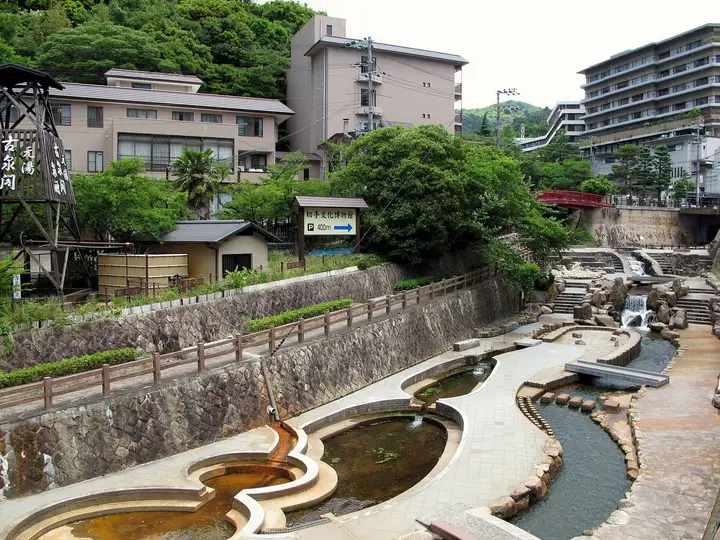
- Kabuyu, the bath at the spring the town grew from, costs ¥400 and has a free foot bath and drinking fountain outside.
- Kawara-buro is a free mixed outdoor bath on the riverbank by Misasa Bridge, open around the clock except mornings of odd-numbered days.
- Radon was found in the springs in 1914, and the water is classed as radioactive sodium chloride and simple springs.
- Misasa and Mt. Mitoku, with its cliffside Nageire-do hall, were certified together as Japan Heritage in 2015.
What to expect
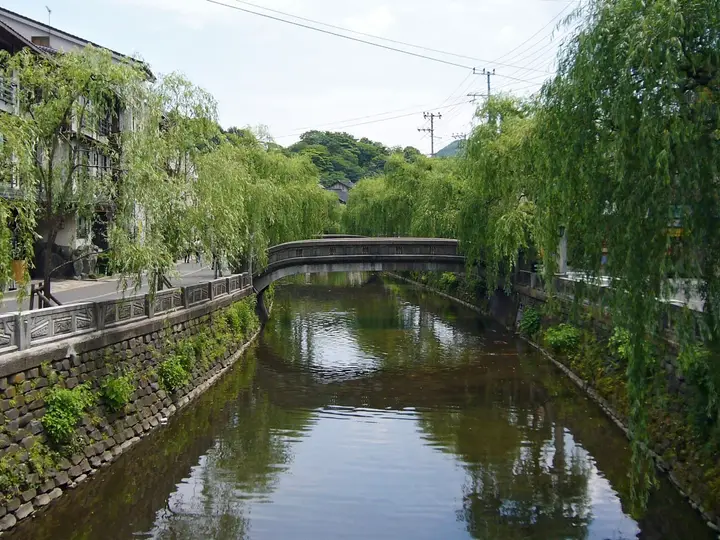
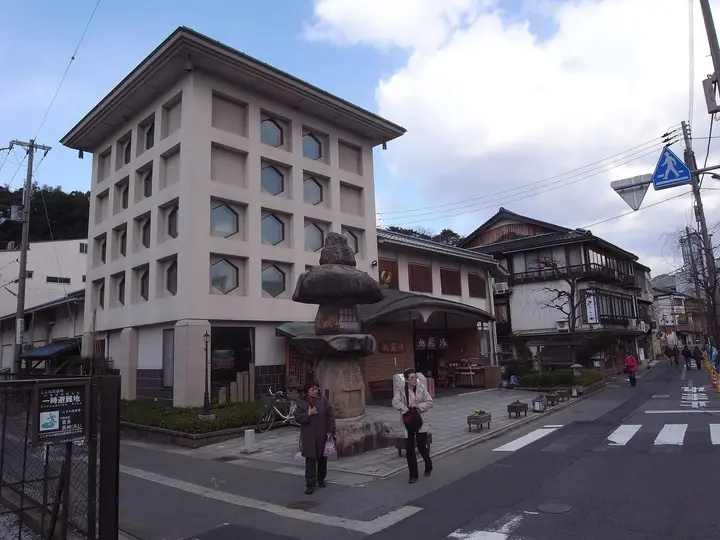
Misasa Onsen is a small spa town on the Mitoku River in central Tottori Prefecture, about 20 minutes by bus from Kurayoshi. Ryokan and hotels line both banks, joined by a handful of bridges, and the old main street behind them has shops, foot baths and quiet lanes, including the one to Misasa Shrine and its Kami no Yu drinking spot. It is not a big resort. Most of what visitors do here is bathe, eat and walk along the river.
The springs are the reason people come, and specifically their radon. Radon was found in one of the springs in 1914, and Misasa is among Japan’s largest radon hot spring areas. The water is classed as two types: radioactive sodium chloride springs and radioactive simple springs. The town makes a lot of this, promoting a local saying that bathing on three mornings in a row leaves you feeling refreshed. It also makes health claims for the radon, inhaled steam and drinking water. Those are the town’s claims, not ours.
The spring’s founding story dates to 1164. A retainer of Minamoto no Yoshitomo spared an old white wolf, and that night the bodhisattva Myoken came to him in a dream and showed him a spring at the roots of an old camphor tree. That spring is Kabuyu, whose name refers to the tree stump.
In 2015, Misasa and nearby Mt. Mitoku were certified together as one of Japan’s first Japan Heritage sites. Misasa Bridge is a registered cultural property.
The public baths
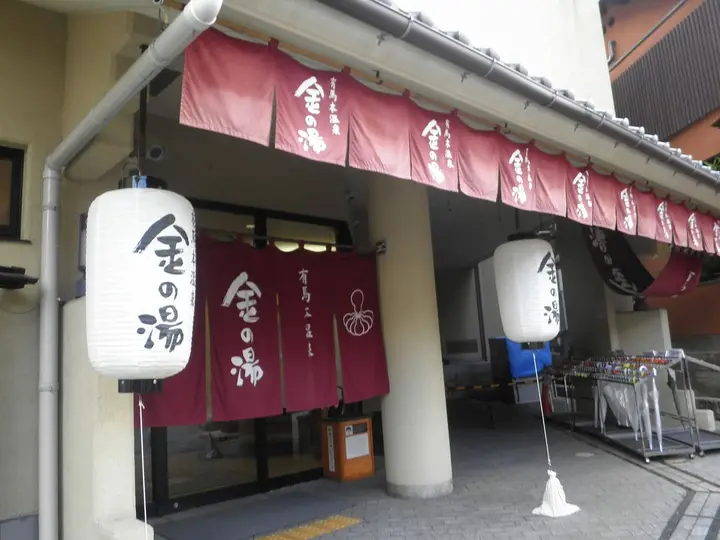
- Kabuyu (634-1 Misasa, tel. 0858-43-3022) is the bath at the original source, sometimes called Motoyu. It sits in a quieter residential lane and is used mainly by locals. Entry is ¥400 for adults and ¥250 for children from age 3 through elementary school. It opens 9:00 to 20:45, or from 10:00 on Mondays, with last entry at 20:15. Men and women bathe separately. Outside are a free foot bath (8:00 to 21:00, from 10:00 on Mondays) and a drinking spot open 24 hours. The tourism association does not publish the water temperature or whether the bath is heated or recirculated.
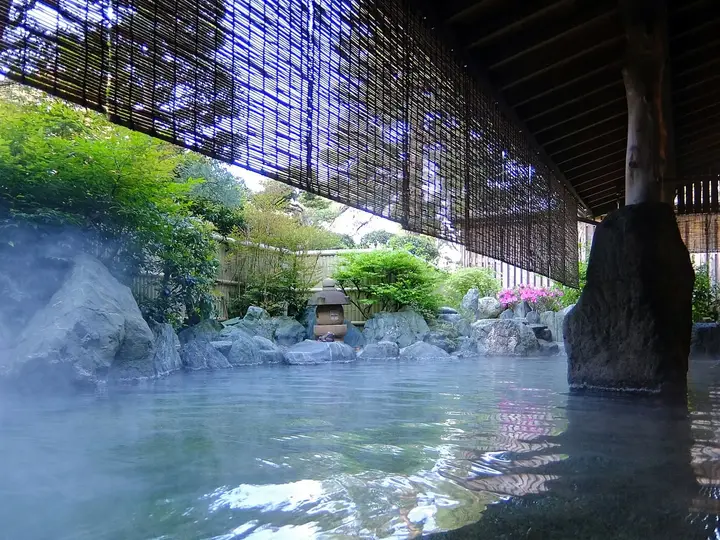
- Kawara-buro is a free outdoor bath on the riverbank at the foot of Misasa Bridge, the image most people know Misasa by. It is open 24 hours, all year, except on the mornings of odd-numbered days when it is cleaned. It is mixed-gender and very open: there is a simple fence to change behind, and the bath is in full view of the bridge and the riverside path.
- Foot baths: Kawara no Yu next to the Kawara-buro, Yakushi no Yu (with a drinking spot), Kajika no Yu and the Kabuyu foot bath are all free.
- Su-Ha Onsen is a natural radon steam room listed by the tourism association, for those who want to try the inhalation side of Misasa bathing.
Tamawari no Yu, a larger public bath in town, closed at the end of March 2023. Older guides that list it are out of date.
Ryokan day bathing
The tourism association lists 12 inns that take day bathers, including Keisenkaku, Yuraku, Seiryuso, Misasa Garden Hotel, Masuiro, Hashizuya, Ohashi, Iwasaki and Blanart Misasa. Prices and hours are not published together, so call the inn or the association first.
Getting there
- By train and bus: take the JR San’in Main Line to Kurayoshi Station. Hinomaru buses run to Misasa Onsen in about 20 minutes. The Yu-Yu 2-day bus pass (¥1,300) covers this route and others around central Tottori.
- By air: from Tottori Airport, take the limousine bus to Kurayoshi Station (about 45 minutes), then the bus to Misasa.
- By car: about 1 hour 50 minutes from Okayama (Okayama Expressway, Chugoku Expressway, Yonago Expressway to Yubara IC, then Route 313), or about 3 hours 20 minutes from Osaka via the Chugoku Expressway to Innosho IC and Route 179.
- Parking: the town’s multipurpose car park is free for the first hour, then ¥100 per 30 minutes, with a ¥1,000 daily maximum. It has a paid fast EV charger. Motorbikes cannot use it.
When to go
Misasa is open all year. The town’s own custom is to bathe in the early morning, ideally three mornings in a row. Weekends and Japanese holidays are busiest, and weekday evenings are quietest at the riverside bath. Autumn is a popular time to combine the baths with the climb at Mt. Mitoku. Winters in central Tottori are cold, which makes the open river bath a test of nerve on the walk back to your clothes.
Prices and booking
- Kabuyu: ¥400 adults, ¥250 children, pay at the counter.
- Kawara-buro and foot baths: free.
- Ryokan day bathing: set by each inn; call ahead.
- Overnight: book through the inns or the Misasa Onsen Tourism Association (tel. 0858-43-0431).
Onsen etiquette
At Kabuyu, wash before you get in, bathe naked, and keep small towels out of the water. The Kawara-buro has no attendant and no published rules on bathing wear. Treat it like any Japanese bath: rinse off from the tub first, keep your towel out of the water, and do not take photos of other bathers. Remember that you are visible from the bridge. No tattoo policy is published for the public baths; ask before you pay.
Where to stay nearby
The town has a wide range of ryokan, from big riverside hotels to small family inns, many with day bathing. Kurayoshi, 20 minutes away by bus, has more hotels and the JR station. Mt. Mitoku and Sanbutsu-ji temple, home of the cliffside Nageire-do hall (a National Treasure), are the classic side trip. Elsewhere in the region, Kaike Onsen on the coast at Yonago and Tamatsukuri Onsen in Shimane make a longer San’in onsen loop.
Safety notes
- Heat: keep soaks short and drink water. The town itself advises caution with water over 108°F42°C.
- Kawara-buro: it is on an open riverbank. Rocks are slippery, and the river can rise after heavy rain. Stay out when the water is high.
- Radon: the town promotes radon as beneficial. If you are pregnant or have a medical condition, check with your doctor rather than relying on local claims.
- Mt. Mitoku: the climb to Nageire-do is a steep mountain trail. Go in proper shoes, and check the temple’s entry rules and weather closures before you go.
Map and nearby springs
GPS: 35.40763, 133.89827
Misasa Onsen: common questions
Is the Kawara-buro at Misasa free?
Yes. It is a free outdoor bath on the bank of the Mitoku River near Misasa Bridge, open 24 hours a day all year. It is closed for cleaning on the mornings of odd-numbered days. It is mixed-gender and in plain view from the bridge and riverbank, with only a simple fence to change behind.
Can you wear a swimsuit in the Kawara-buro?
The tourism association does not publish a rule on swimsuits or towels for the Kawara-buro. In practice it is a traditional mixed bath in public view. If you are not comfortable with that, use the free Kawara no Yu foot bath next to it, or Kabuyu, which has separate men's and women's baths.
How much is Kabuyu and when is it open?
Kabuyu costs ¥400 for adults and ¥250 for children aged 3 to elementary school. It opens 9:00 to 20:45 (from 10:00 on Mondays), with last entry at 20:15. The foot bath outside is free from 8:00 to 21:00 (10:00 on Mondays), and the drinking spot is open all day and night.
What is special about the water at Misasa?
The springs contain radon, a radioactive gas from the breakdown of radium. Radon was detected here in 1914, and the town markets Misasa as one of the world's leading radioactive springs. The tourism association makes health claims about this; treat them as local promotion rather than medical advice.
How do I get to Misasa Onsen?
Take the San'in Main Line to JR Kurayoshi Station, then a Hinomaru bus, about 20 minutes. From Tottori Airport, a limousine bus runs to Kurayoshi Station in about 45 minutes. By car it is about 1 hour 50 minutes from Okayama via the Yonago Expressway and Yubara IC.
Closest hot springs to Misasa Onsen