Arima Onsen Gin no Yu
Near Arima Onsen (Kobe), Hyogo Prefecture, Japan
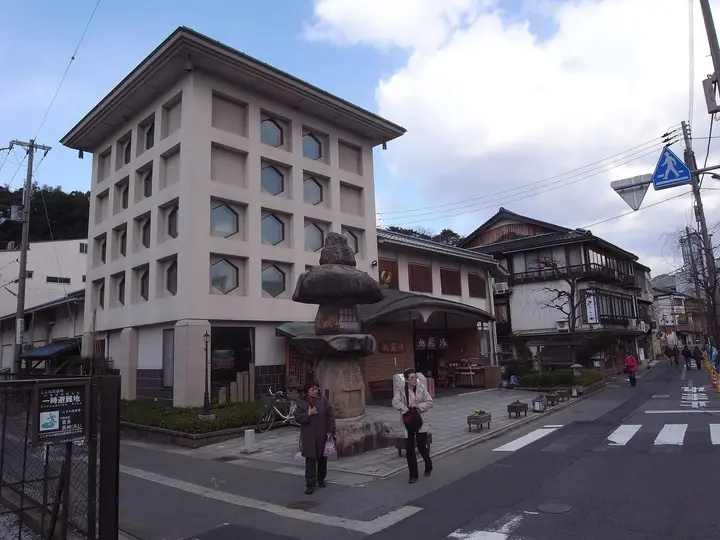
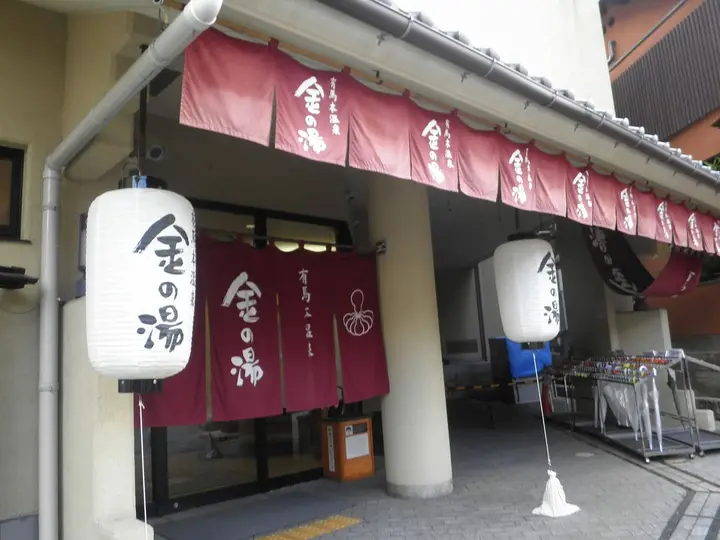
One of the two public bathhouses of Arima Onsen in Kobe, serving the clear "ginsen" (silver) water, carbonated and radium spring water, in a rock bath styled on the one Toyotomi Hideyoshi used.
Photos: hy95tg (CC BY 3.0); 663highland (CC BY 2.5). Resized and cropped for this page.


- Water temperature
- Not published
- Entry
- Paid
- Getting in
- Drive-up
- Type
- Public pool
- It serves Arima's clear ginsen (silver) water, a blend of carbonated and radium spring water, rather than the rust-brown kinsen of Kin no Yu.
- Entry is ¥700, cut to ¥550 on ordinary weekdays, and a ¥1,200 ticket covers both Gin no Yu and Kin no Yu.
- The main bath is modelled on a rock bath used by Toyotomi Hideyoshi, with a bubble bath and steam sauna alongside.
- About 10 minutes on foot from Kobe Electric Railway's Arima Onsen Station.
Which Gin no Yu this is
“Gin no Yu” simply means “silver bath,” and more than one bathhouse in Japan uses the name or something close to it. We have taken this listing to be Gin no Yu in Arima Onsen, the hot spring town in Kita Ward on the north side of Kobe. Arima’s public baths come as a pair, Kin no Yu (gold) and Gin no Yu (silver), named after the town’s two kinds of water. Because our guide also covers Kin no Yu and Arima Onsen, the Arima bathhouse is by far the most likely match. If you were looking for Ginzan Onsen in Yamagata, that is a different place: see Ginzan Onsen.
What to expect
Gin no Yu is a modern public bathhouse that opened in 2001 in the lanes of Arima’s old town, a short walk from Kin no Yu. It is plainer than a big ryokan bath and costs a fraction of the price of a hotel day bath.
The bathing rooms are split into men’s and women’s sides. The main bath is designed to evoke the rock bath Toyotomi Hideyoshi, the 16th-century ruler, is said to have used in Arima. Alongside it are a bubble bath, where jets of air rise from the floor, and a steam sauna inspired by the steam baths of the same era. There is also a rest area with a fridge of local Arima Cider (¥250), a foot massage machine and massage chairs.
The operator notes that the sauna on the men’s side is out of action because of a machine fault. Check before you go if the sauna matters to you.
The water
Arima has two famous kinds of water. Kinsen (“gold spring”) is the salty, iron-rich water that turns rust-brown in the air, and that is what Kin no Yu serves. Ginsen (“silver spring”) is everything else: clear water from carbonated springs and radium springs. Gin no Yu uses ginsen, listed as carbonated spring and radium spring water (a simple carbon dioxide cold mineral spring and a simple radioactive spring).
Ginsen comes out of the ground cool, so it is heated. The operator is upfront about how the water is handled: it is warmed with a heat exchanger, circulated through filters with part of it flowing away, chlorinated during opening hours, and topped up with tap water only when the springs run low. No bath additives are used, and the tubs are fully drained and cleaned every day. Do not expect the strong colour or fizz of a raw carbonated spring. What you get is clear, mild water in a comfortable bath.
Prices and booking
All prices include tax (October 2026):
- Adults: ¥700. On ordinary weekdays it is ¥550, but not at New Year, Golden Week, Obon and other busy periods.
- Children (elementary and junior high school): ¥300.
- Preschoolers: free.
- Kin no Yu and Gin no Yu ticket: ¥1,200. A version with a towel is sold on weekdays only.
- Disability certificate holders: ¥350, with one adult carer at ¥350. Bring your certificate.
There are no reservations. On crowded days staff may limit entry. Body soap, rinse-in shampoo and hair dryers are provided. Towels and toiletries are for sale, so bring your own towel to save money.
Onsen etiquette
Gin no Yu follows standard public bath rules:
- Wash and rinse at the seated taps before you get into any tub.
- Bathe naked. Swimsuits are not worn in Japanese public baths, and towels stay out of the water.
- Tie up long hair and keep it out of the water.
- No photos in the changing room or bath.
- Rinse your stool and bucket after use.
The official site does not publish a tattoo rule. Ask at the counter or by phone (078-904-0256) before you pay if you have visible tattoos.
Getting there
Gin no Yu is at Arima-chō 1039-1, Kita-ku, Kobe.
- By train: Kobe Electric Railway (Shintetsu) runs to Arima Onsen Station. From the station it is about a 10-minute walk through the old town.
- By bus: express buses also run to Arima from central Kobe and Osaka. Kobe’s tourism listings put Arima at 30 minutes to an hour from both cities.
- By car: the official site lists no parking for Gin no Yu, so plan on a pay car park in town and a walk.
When to go
Gin no Yu opens every day from 9:00 to 21:00 except the 1st and 3rd Tuesdays of the month and New Year’s Day. If a closing Tuesday is a public holiday, it opens that day and closes on Wednesday instead. It also shuts for works from time to time. In 2025 it closed from June 3 to 17 for air-conditioning work, and in 2024 it reopened on April 26 after another round of work. Check the notices on the official site before a long trip.
Weekdays are cheaper, and usually calmer. Weekends and holiday periods are busier, and the operator warns that entry may be limited when either bathhouse is crowded.
Where to stay nearby
There are no rooms at Gin no Yu. Arima Onsen has many ryokan and hotels, from small inns in the old lanes to large hotels on the hillsides, and many offer day bathing too. The town’s official visitor site lists them. Central Kobe (Sannomiya) and Osaka are both close enough for a day trip.
Nearby stops worth adding
Kin no Yu, the gold-water bathhouse, is a few minutes downhill and covered by the combined ticket. Next to it is Taikō no Yudono-kan, a small Kobe city museum built over the remains of a bath complex linked to Hideyoshi, uncovered after the 1995 Great Hanshin earthquake. The Gin no Yu building also sits close to the town’s spring sources and temples, which make a short walk between baths.
Safety notes
- Heat and steam: keep sauna and bath sessions short, cool down between them and drink water.
- Alcohol: do not bathe after drinking.
- Steep lanes: Arima’s streets are steep and can be slippery in rain or after a bath in sandals. Wear proper shoes for the walk from the station.
- Radium spring: the water is labelled a radioactive (radon) spring, which is common in Japan. If you are pregnant or have a medical condition, ask your doctor before bathing in any hot spring.
Map and nearby springs
GPS: 34.79551, 135.24902
Arima Onsen Gin no Yu: common questions
Which Gin no Yu is this?
This page covers Gin no Yu in Arima Onsen, Kobe, the public bathhouse run alongside Kin no Yu. Several baths in Japan use the name, but its pairing with Kin no Yu, which we also cover, makes the Arima bathhouse the clear match.
How much does Gin no Yu cost?
Adults pay ¥700, or ¥550 on ordinary weekdays (the discount does not apply at New Year, Golden Week, Obon and other busy periods). Elementary and junior high students pay ¥300 and preschoolers are free. A ticket for both Kin no Yu and Gin no Yu costs ¥1,200, and a towel-included version is sold on weekdays.
What are the opening hours and closing days?
Gin no Yu opens 9:00 to 21:00, with last entry at 20:30. It closes on the 1st and 3rd Tuesday of each month (if that Tuesday is a public holiday it opens and closes the next day) and on January 1. It also closes now and then for maintenance; it shut from June 3 to 17, 2025 for air-conditioning work.
What is the difference between Kin no Yu and Gin no Yu?
Kin no Yu uses kinsen, Arima's iron-rich, salty water that runs a cloudy rust-brown. Gin no Yu uses ginsen, the clear water from carbonated and radium springs. They are a few minutes' walk apart and a combined ticket covers both.
Do I need to bring a towel?
Yes, or buy one there. Body soap, rinse-in shampoo and hair dryers are provided, and towels, bath towels, razors and toothbrushes are on sale at the counter.
Is the water at Gin no Yu straight from the source?
No. The operator says the water is heated by heat exchanger to bathing temperature, circulated and filtered (with part flowing out), chlorinated during opening hours, and topped up with tap water when the springs run low. The tubs are drained and cleaned every day.
Closest hot springs to Arima Onsen Gin no Yu
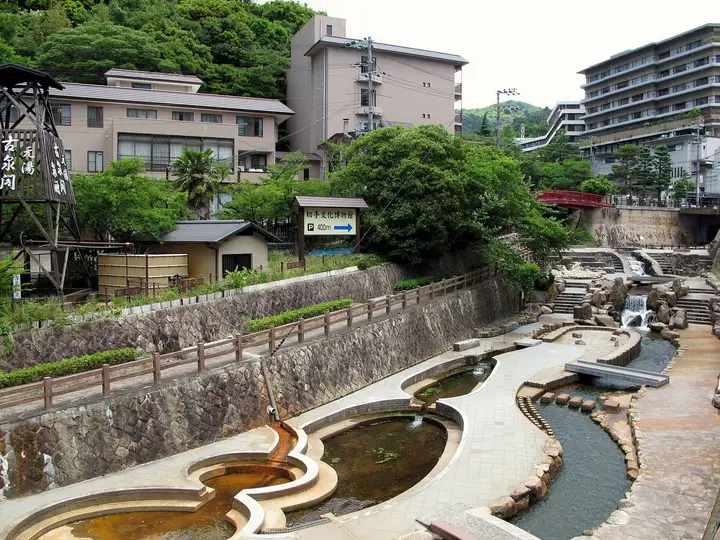
Near Yuasa
Resort or spa