Awanoyu (Shirahone Onsen)
Near Shirahone Onsen (Matsumoto), Nagano Prefecture, Japan
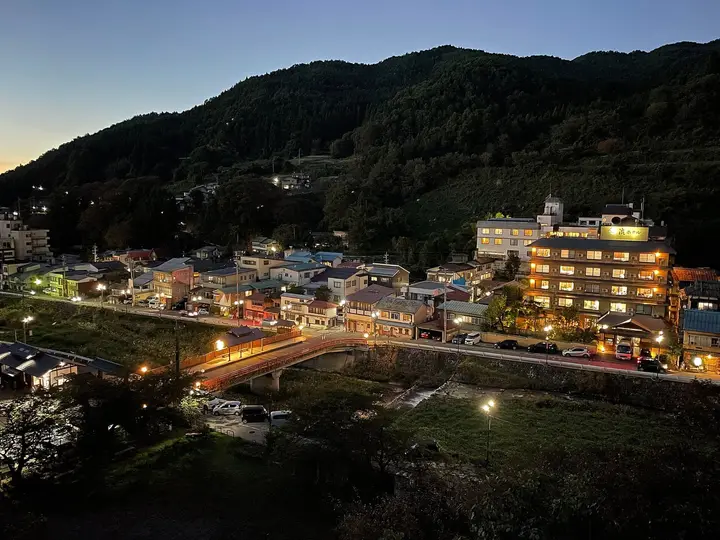
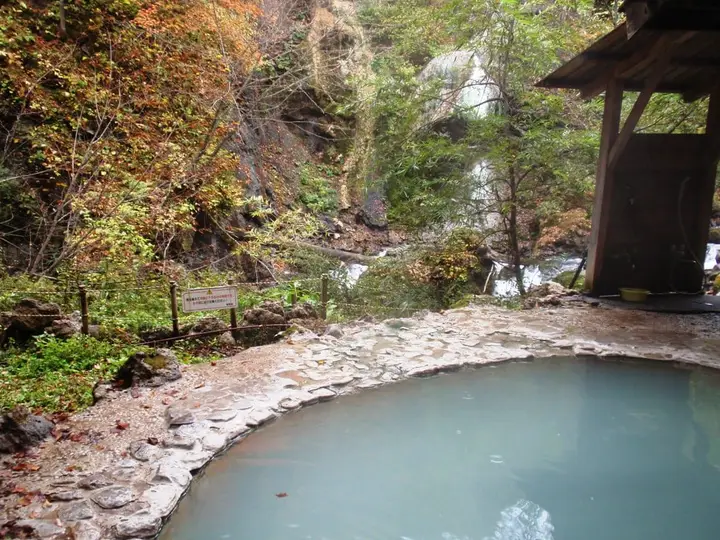
A ryokan at Shirahone Onsen in the mountains west of Matsumoto, known for its large milky-white mixed outdoor bath of lukewarm, gas-rich sulphur water, open to day visitors for three hours at midday.
Photo: YOSHIFUMI OGISO (CC BY-SA 3.0). Resized and cropped for this page.

- Water temperature
- 99-104°F37-40°C
- Entry
- Paid
- Getting in
- Drive-up
- Type
- Resort or spa
- The mixed outdoor bath covers about 70 tsubo (roughly 230 square metres) of milky water, with a women-only entrance that leads straight down into the bath.
- The source flows at 1,730 litres a minute at about 99°F37°C, lukewarm enough that the gas clings to your skin as tiny bubbles.
- Day visitors get a three-hour window, 10:30 to 13:30, for ¥1,000. Swimsuits are not allowed; you may wrap in a bath towel.
- Seasonal Alpico buses run to the Awanoyu-mae stop from April 17 to November 15, 2026, with a change at Sawando.
Which Awanoyu this is
Awanoyu (泡の湯, “bubble bath”) is a name used by more than one inn in Japan. This page covers Awanoyu at Shirahone Onsen, 4181 Azumi, Matsumoto, in Nagano Prefecture, the inn famous for its milky mixed outdoor bath. A different inn, Awanoyu Onsen Miyoshiso in Kodamagawa, Yamagata Prefecture, announced it would close at the end of December 2019, so if you see older references to an Awanoyu in Yamagata, that one is gone. For the village as a whole, see Shirahone Onsen.
What to expect
Shirahone is a small hot spring village in a steep, forested valley on the road between Matsumoto and Norikura. The inn’s signature is a large mixed outdoor bath (konyoku) of milky, pale blue-white water, about 70 tsubo (roughly 230 square metres), with a stream of hot water falling from a spout several metres above the surface. Rocks in the middle and planting around the edges break up the view.
The water is unusual. The inn’s analysis lists a sulphur-bearing calcium-magnesium bicarbonate spring (hydrogen sulphide type), pH 6.3, flowing at 1,730 litres a minute, which the inn says is one of the largest flows in Nagano. It comes out of the ground clear at about 99°F37.3°C and turns milky cream or even bluish as it meets the air. Because it is so rich in carbon dioxide, fine bubbles gather on your skin, which is where the name comes from. The inn keeps the main baths lukewarm, roughly 99-104°F37 to 40°C, changing with the outside temperature; heating it more, it says, would drive the gas off. Expect a long, gentle soak rather than a hot one. Some baths are partly heated.
Besides the mixed bath there are separate men’s and women’s indoor baths (one lukewarm at about 99°F37°C, one at about 104°F40°C) and separate outdoor baths, so nobody has to use the mixed bath. The source is drinkable, and breakfast includes the inn’s hot spring rice porridge.
Getting there
By car: Prefectural Road 300, the Shirahone Onsen road, was widened and opened for year-round use on December 1, 2012. The inn says it freezes in winter, so come with winter tyres and chains. From Tokyo, the Chuo and Nagano expressways take about 2 hours 30 minutes to the Matsumoto IC, then allow about 60 minutes to the inn. From the Gifu side, Hirayu Onsen is about 20 minutes away.
By bus: in the 2026 season (April 17 to November 15), Alpico buses run from Shin-Shimashima, the terminus of the Kamikochi Line railway from Matsumoto, with a change at the Sawando bus terminal for Shirahone Onsen and the Awanoyu-mae stop. There are only a few buses a day, so check the timetable on the inn’s access page against the 10:30 to 13:30 day-bathing window. The Nohi bus from Takayama via Hirayu connects at Sawando and has been reservation-only since April 1, 2024. Outside the bus season you need a car or a taxi from Shin-Shimashima or Matsumoto.
When to go
Shirahone is a mountain village, and the seasons feel strong here. Autumn colour brings the biggest crowds. Winter brings snow around the outdoor bath, but the road freezes and the inn may close day bathing in bad weather. Spring and summer are green and quieter, and the lukewarm water is comfortable even on warm days.
For day bathing, arrive close to 10:30 on a weekday. The inn may limit entry when it is crowded or close the desk early.
Prices and booking
- Day bathing: ¥1,000 for junior high and up, ¥600 for ages 3 to 12, 10:30 to 13:30 (leave by 14:00). This covers the mixed outdoor bath and the separate indoor and outdoor baths.
- Extras: towel ¥200, bath towel ¥800, shower cap ¥100, razor ¥200, all including tax.
- Open days: the inn posts a day-bathing calendar on its website. Closed days change, and it can also close for maintenance or in winter weather. In 2026 it warned that boiler fuel supplies were unstable because of tension in the Middle East and that it might close at short notice, so phone on the day (0263-93-2101).
- Overnight stays: book through the inn’s website or by phone. Guests can use the baths through the night, except during cleaning from 10:00 to 10:30 and 14:00 to 15:00.
Overnight guests also pay the Matsumoto accommodation tax, introduced on June 1, 2026: ¥200 per person per night until May 31, 2029 (then ¥300), when the room-only rate is ¥6,000 or more before tax.
Onsen etiquette
Bathing is naked. Swimsuits are not allowed in the mixed bath, but you may wrap yourself in a bath towel. Overnight guests get thick bath towels at the outdoor bath changing room and can borrow bathing wraps (yuami-gi) free; day visitors get neither and must bring their own bath towel or buy one. Wash before you get in, keep your movement low and slow (the water is deep enough to move around half-crouched), and do not stare or take photos. The separate-sex baths follow normal onsen rules. Remove gold, silver and platinum jewellery, since the minerals can discolour it.
Children are welcome and pay a reduced day rate; families who prefer can use the separate men’s and women’s baths.
Where to stay nearby
Staying at Awanoyu itself gives you the baths at night and early morning, when they are quietest. Shirahone has several other ryokan, many of which offer day bathing. Norikura Kogen is higher up the valley, and Kamikochi is reachable by bus via Sawando in season. Asama Onsen and central Matsumoto are the lowland bases.
Safety notes
- Winter roads: the access road freezes. Do not attempt it without winter tyres, and carry chains.
- Long soaks: the water feels mild, so it is easy to stay in for a long time. Drink water and get out if you feel lightheaded.
- Footing: rock edges and steps into the outdoor bath are slippery.
- Remote location: services are limited in the village. Check bus times before you go, as there are only a few departures.
Nearby stops worth adding
Kamikochi, the alpine valley below the Hotaka peaks, is the big draw nearby and closes for the season from mid-November to mid-April. Norikura Kogen has waterfalls and hiking. Back in the valley, Shirahone Onsen has other inns to compare its milky water with.
Map and nearby springs
GPS: 36.14629, 137.62393
Awanoyu (Shirahone Onsen): common questions
Can you visit Awanoyu without staying the night?
Yes, on its open days. Day bathing runs from 10:30 to 13:30 (you must leave by 14:00) and costs ¥1,000 for junior high and up and ¥600 for children aged 3 to 12. It covers the mixed outdoor bath and the separate men's and women's baths. Open days change, and in 2026 the inn warned it might close at short notice because of fuel supply problems, so phone on the day (0263-93-2101).
Is the Awanoyu outdoor bath mixed gender?
Yes. The big outdoor bath is shared by men and women, but there are also separate men's and women's indoor and outdoor baths if you prefer. Women have their own entrance and changing room, with steps that lead straight into the water, and the milky water is not see-through.
Can you wear a swimsuit or towel in the Awanoyu mixed bath?
Swimsuits are not allowed. You may wrap yourself in a bath towel. Overnight guests get free thick bathing towels and bathing wraps (yuami-gi) at the outdoor bath, but day visitors do not. Bring your own bath towel or buy one at the desk for ¥800.
Why is the water at Awanoyu so lukewarm?
The source comes out at about 99°F37°C and is rich in carbon dioxide, which forms the fine bubbles the inn is named after (awa means bubbles). The inn says heating it much further would drive the gas out, so the main baths stay around 99-104°F37 to 40°C, depending on the weather.
How do I get to Awanoyu by public transport?
From April 17 to November 15, 2026, Alpico buses run from Shin-Shimashima, the end of the Kamikochi Line railway from Matsumoto, with a change at the Sawando bus terminal for Shirahone Onsen and the Awanoyu-mae stop. Nohi buses from Takayama via Hirayu Onsen connect at Sawando and need a reservation. Outside that season, drive or take a taxi.
Closest hot springs to Awanoyu (Shirahone Onsen)
Near Hirayu Onsen (Takayama)
Resort or spa