Gero Onsen
Near Gero, Gifu Prefecture, Japan
One of Japan's three classic famous springs, a riverside spa town in Gifu with alkaline water at pH 9.2, three public baths and a ¥2,500 pass for ryokan baths. The free riverside pool is now foot-bath only.
Photos: 663highland (CC BY 2.5); Suikotei (CC BY-SA 4.0); Asturio Cantabrio (CC BY-SA 4.0). Resized and cropped for this page.


- Water temperature
- Not published
- Entry
- Paid
- Getting in
- Drive-up
- Type
- Public pool
- Named one of Japan's three famous springs, with Kusatsu and Arima, since the 15th century.
- Alkaline simple water at pH 9.2, from 12 wells blended and piped through town at about 131°F55°C.
- The free Funsenchi pool on the Hida River banned bathing on December 1, 2021 and is now a foot bath.
- The Yumeguri Tegata (¥2,500) gets you into three member ryokan baths within six months, with a towel.
What to expect
Gero Onsen is a spa town on the Hida River in the mountains of Gifu Prefecture, about halfway between Nagoya and Takayama. Ryokan and hotels line both banks of the river and climb the hillsides, and the old district of Yunoshima sits across the bridge from the station.
Its reputation is old. In the 15th century the monk Banri Shūku named Gero (then called Yushima) one of the three famous springs of Japan, alongside Kusatsu and Arima, and the Confucian scholar Hayashi Razan repeated the ranking in the early 17th century. The local legend says the spring once rose near the summit of Mount Yugamine, about 4 km (2.5 miles) away, and that when it stopped flowing in 1265 a white heron led people to a new source in the riverbed.
Today you can use Gero in three ways: pay a few hundred yen at one of the three public baths, buy the Yumeguri Tegata pass and hop between ryokan baths, or stay the night at an inn and use its baths as much as you like. Free foot baths are dotted all over town.
The water
Gero’s water is an alkaline simple spring at pH 9.2. At that pH it feels slick, almost soapy, and the tourism association leans on that “smooth skin” image in its promotion. Since 1974 the town has pooled its springs: Wikipedia, citing local sources, says water from 12 wells, with the hottest at 176°F80.2°C, is blended and piped to the town at about 131°F55°C. That is too hot to sit in, so each bath cools it before it reaches the tubs.
The public baths
All three have separate men’s and women’s sides.
- Shirasagi no Yu (白鷺乃湯). A white, Romanesque-style building in Yunoshima with a hinoki (cypress) indoor bath and a rest room. The free Venus foot bath is outside. 10:00 to 20:45, last entry 20:00. Closed Wednesdays (Fridays when Wednesday is a holiday). Adults ¥470, elementary school children ¥180, young children ¥100. Seven free parking spaces. Phone 0576-25-2462.
- Kuagarden Roten-buro (クアガーデン露天風呂). A larger outdoor-bath complex by the river, with an open-air bath where you can hear the water and six kinds of bathing, including a waterfall shower bath, a three-temperature bath, box steam baths and a foam bath. 8:00 to 20:45, last entry 20:00. Closed Thursdays (the next day after a holiday). Adults ¥800, children ¥400, young children ¥200. Phone 0576-24-1182.
- Sachi no Yu (幸乃湯). A public bath attached to the Sachi no Yu inn on the station side of the river, with seven kinds of bath including a waterfall bath and an open-air bath. Weekdays 12:00 to 21:00, weekends and holidays 11:00 to 21:00, last entry 20:30. Closed Tuesdays and the 4th Monday. Adults ¥470, children ¥180, young children ¥100. Its family baths are all suspended. Twenty free parking spaces. Phone 0576-25-2157.
Travel sites quote older prices for some of these, so trust the tourism association’s figures above and the counter on the day.
The Funsenchi
The Funsenchi is the free open-air pool on the Hida River bank in the Kōda district. For decades it was Gero’s best-known sight, a public bath with no walls at all, used by tourists since 1983. Swimsuits became compulsory in 2010. After complaints about rule-breaking and concerns about the view, the city ended bathing there on December 1, 2021. It is now a foot bath only. Older guidebooks and photos that show people soaking in it are out of date.
Prices and booking
- Public baths: ¥470 (Shirasagi no Yu, Sachi no Yu) or ¥800 (Kuagarden) for adults. No booking.
- Yumeguri Tegata: ¥2,500 per pass (junior high age and up), good for three baths at member ryokan within six months of purchase. A towel and drawstring bag come with it. Children from age 4 through 6th grade bathe on an adult’s pass, and under-4s are free. Each inn sets its own day-bathing hours and parking rules. The Gero Onsen Ryokan Cooperative (0576-25-2541) runs it, and passes are sold at member inns, convenience stores and souvenir shops.
- Foot baths: the seven in the town are free. The ones at Gero Onsen Gasshō-mura and the Gero Hatsu Onsen Museum need an admission ticket.
Bring a towel to the public baths or buy one there.
Onsen etiquette
Gero follows standard Japanese bathing rules:
- Wash and rinse at the taps before you get in any tub.
- Bathe naked in the indoor and open-air baths, and keep your towel out of the water.
- Tie long hair up, and keep noise down.
- No photos in changing rooms or baths.
- At ryokan on the Tegata pass, follow the inn’s hours and show the pass at the front desk.
No town-wide tattoo policy is published, and rules vary by inn. Ask before you pay.
Getting there
- By train: Gero Station is on the JR Takayama Main Line, about 1 hour 30 minutes from Nagoya and about 3 hours 30 minutes from Osaka (some trains run through). Most of the town is a short walk from the station across the river.
- By bus: Nōhi Bus runs between Gero and Takayama, where highway buses connect to Shinjuku, Nagoya, Kyoto and Osaka. Guests of member ryokan can use a reservation-only direct bus from Nagoya Station.
- By car: from the Chūō Expressway’s Nakatsugawa IC take Routes 257 and 41, about 52 km (32 miles). From the Tōkai-Kanjō Expressway’s Tomika-Seki IC it is about 62 km (39 miles), around 70 minutes, via Prefectural Route 58 and Route 41. The city car park near the river charges ¥100 per 20 minutes, up to ¥1,500 for 24 hours.
When to go
The town is busy all year, with weekends and Japanese holidays the most crowded. The river setting is at its best in autumn leaf season and in summer, when the town holds a summer festival. Winters bring some snow, but less than the high Hida country further north. If you are using the public baths, check the closing days above so you do not arrive on the one day a bath is shut.
Where to stay nearby
Gero has a wide range of places to stay, from large hotels to traditional ryokan, listed by the Gero Onsen Ryokan Cooperative. Yunoshima-kan, opened in 1931, has buildings registered as tangible cultural property. Takayama, further north on the same rail line and bus routes, makes a good second stop.
Safety notes
- Hot water: the town supply arrives at about 131°F55°C, so test any unfamiliar tub, especially the hottest pool at a ryokan, before you get in.
- Slippery floors: the alkaline water makes tiles and stone slick. Walk carefully.
- River bank: the Hida River rises fast after heavy rain, and the Funsenchi area has flooded many times. Stay off the bank when the water is high.
Map and nearby springs
GPS: 35.80932, 137.24143
Gero Onsen: common questions
Can you still bathe in the Funsenchi at Gero Onsen?
No. Since December 1, 2021 bathing in the Funsenchi, the free open-air pool on the Hida River bank, has been banned, and it is used only as a foot bath. Swimsuits had been required there since 2010, but complaints about rule-breaking led the city to change its use.
What public baths are there in Gero Onsen?
Three: Shirasagi no Yu (¥470, closed Wednesdays), Kuagarden Roten-buro (¥800, closed Thursdays) and Sachi no Yu (¥470, closed Tuesdays and the 4th Monday). Elementary school children pay ¥180 to ¥400 and young children ¥100 to ¥200.
What is the Gero Onsen Yumeguri Tegata?
A wooden bath-hopping pass that costs ¥2,500 (junior high and up) and lets you bathe at three member ryokan within six months. It comes with a towel and a drawstring bag. Children from 4 through 6th grade can bathe on an adult's pass, and under-4s are free. Inns set their own hours, so check first. It is sold at member ryokan, convenience stores and souvenir shops.
How do you get to Gero Onsen from Nagoya?
Take the JR Takayama Main Line to Gero Station, about 1 hour 30 minutes from Nagoya. From Osaka it is about 3 hours 30 minutes. By car, Gero is about 52 km (32 miles) from the Chūō Expressway's Nakatsugawa IC via Routes 257 and 41.
What is the water like at Gero Onsen?
It is an alkaline simple spring at pH 9.2, which feels slippery on the skin. Water from 12 wells is mixed and supplied to the town at about 131°F55°C, so baths are cooled to bathing temperature.
Are there free foot baths in Gero?
Yes. The tourism association says the seven foot baths in the hot spring town are free to use. One, the Venus foot bath, is just outside Shirasagi no Yu. The foot baths at Gero Onsen Gasshō-mura and the Gero Hatsu Onsen Museum need an admission ticket.
Closest hot springs to Gero Onsen
Near Hirayu Onsen (Takayama)
Resort or spa
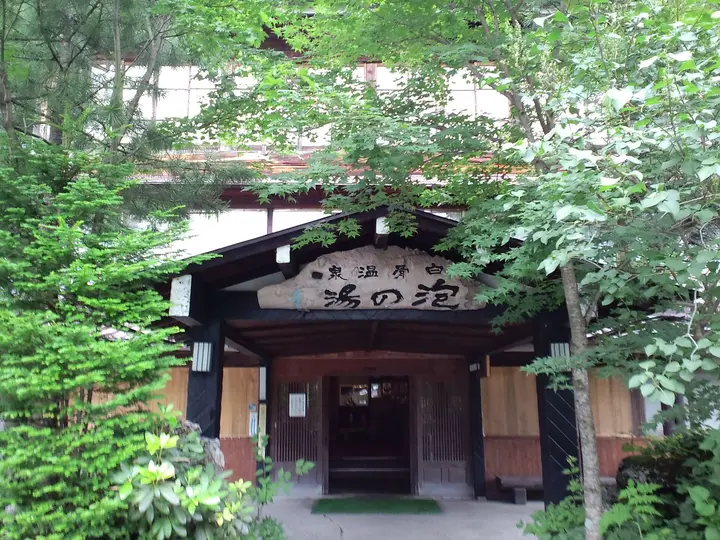
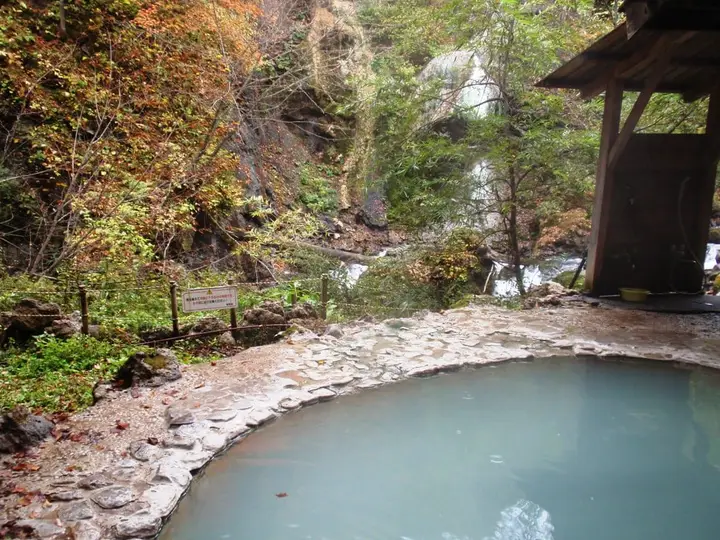
Awanoyu (Shirahone Onsen)
Nagano Prefecture, Japan
32 mi away, ~50 min drive
99-104°F37-40°C Paid Drive-up
Near Kaga
Public pool
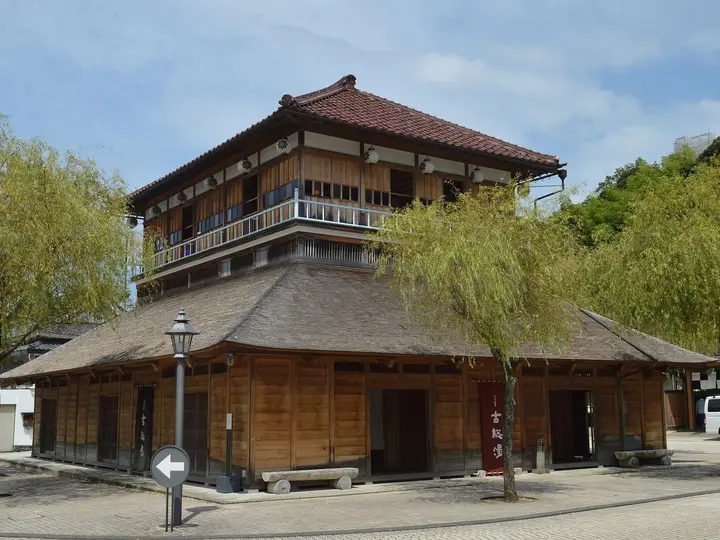
Yamashiro Onsen (Sōyu and Ko-sōyu)
Ishikawa Prefecture, Japan
59 mi away, ~1.5 hr drive
Temp n/a Paid Drive-up