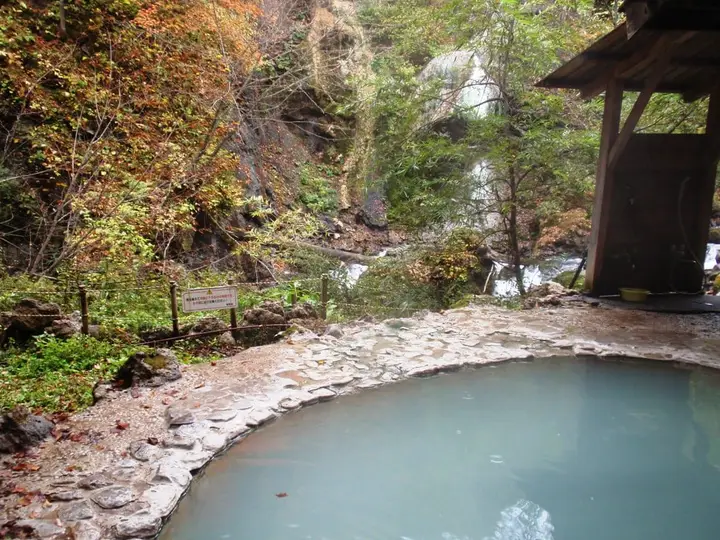
Kaga Onsen (Kaga Onsenkyō)
Near Kaga, Ishikawa Prefecture, Japan
A cluster of hot spring towns in Kaga, southern Ishikawa: Yamanaka, Yamashiro and Katayamazu. Each has a ¥500 public bathhouse (sōyu), and the Shinkansen now stops at Kaga Onsen Station.
- Water temperature
- Not published
- Entry
- Paid
- Getting in
- Drive-up
- Type
- Public pool
- Yamanaka's Kikunoyu puts the men's and women's baths in two separate buildings, which the town says is rare in Japan.
- Katayamazu Sōyu, designed by architect Yoshio Taniguchi, has a bath whose surface lines up with the Shibayamagata lagoon outside.
- The Hokuriku Shinkansen stops at Kaga Onsen Station, about 2 hours 50 minutes from Tokyo on the fastest trains.
- Kaga was far from the worst of the January 2024 Noto earthquake. The public baths run normal hours in 2026.
What Kaga Onsen means
“Kaga Onsen” is not one bath but a group of spa towns in Kaga city, at the southern end of Ishikawa Prefecture on the Sea of Japan side. The city’s official tourism site covers three of them: Yamanaka, in a river gorge in the hills; Yamashiro, built around its old bathhouse square; and Katayamazu, on the shore of the Shibayamagata lagoon. The name is also used for Kaga Onsen Station, the Shinkansen stop that serves all three.
The town at the heart of a traditional onsen resort is its public bathhouse, called a sōyu here, where locals and visitors soak side by side for a few hundred yen. This page focuses on Yamanaka’s Kikunoyu, where our map pin sits, and Katayamazu’s Sōyu. Yamashiro, with its Sōyu and the restored Ko-sōyu, gets its own page in our Japan coverage.
Yamanaka Onsen: Kikunoyu
Yamanaka claims a history of about 1,300 years. The town association says the Nara-period monk Gyōki found the spring. In 1689 the poet Matsuo Bashō stopped here on the travels he recorded in Oku no Hosomichi, stayed nine days, and ranked the water alongside Arima and Kusatsu. Kikunoyu takes its name from the haiku he wrote here about chrysanthemums and the scent of the hot water, and it stands on the spot where the town’s first communal bath was built.
What makes Kikunoyu unusual is that the men’s and women’s baths are in two separate buildings, which the association says is rare anywhere in Japan. The men’s bath is a heavy, temple-style hall with a deep tub that comes up to your waist when you stand. The women’s bath is lighter, with curving lines, and its tub has a shallow end and a deep end. The Yamanaka-za theatre, where geisha perform the Yamanaka-bushi song and dance on weekends and holidays, adjoins the women’s bath.
The association lists the bath water as a simple spring, weakly alkaline and high-temperature. The city tourism site gives Yamanaka’s spring as a calcium-sodium sulfate spring at 119°F48.3°C. Neither says whether the tubs are heated, circulated or chlorinated.
From Kikunoyu, the Yuge Kaidō street runs about 600 m (0.4 miles) to the Korogi Bridge over the gorge, lined with lacquerware and Kutani porcelain galleries, cafés and food stands. There is a free foot bath at the Bashō-linked drinking fountain.
Katayamazu Onsen: Sōyu
Katayamazu sits on the Shibayamagata lagoon with Mount Hakusan, one of Japan’s three sacred peaks, behind it on clear days. According to the town association, the local lord Maeda Toshiaki noticed water birds gathering over warm water in the lagoon in 1653. Bathing only became practical after a large landfill created an island in the lagoon in 1876, and the first inn opened in 1877.
The present Sōyu opened on April 21, 2012. It was designed by the architect Yoshio Taniguchi and is almost all glass. Its two baths have different views: in the Kata-no-yu (“lagoon bath”) the surface of the tub lines up with the lagoon outside, so you seem to be sitting in the lake, while the other bath looks onto woodland. The water is a sodium-calcium chloride spring, and the city lists the source at 162°F72°C. The shop downstairs sells onsen eggs from ¥90.
Prices and booking
Prices are from the Yamanaka association and the Kaga city tourism site in October 2026.
| Bath | Adults (12+) | Ages 6-11 | Ages 3-5 | Hours | Closed |
|---|---|---|---|---|---|
| Yamanaka Kikunoyu | ¥500 | ¥150 | ¥70 | 7:00-22:00 | 2nd and 4th Tuesdays, plus maintenance days |
| Katayamazu Sōyu | ¥500 | ¥150 | ¥70 | 6:00-22:00 | No regular day off; occasional closures |
- Guests at inns in the Yamanaka ryokan association pay half price at Kikunoyu.
- At Katayamazu, children aged 3 to 5 bathe free on the 26th of each month (“bath day”).
- Katayamazu Sōyu closed on September 16 and 17, 2026 for pipe maintenance. Check the town association’s news page for any further closure days.
No booking is needed; pay on arrival. The official pages do not list towel rental, so bring your own to be safe.
Onsen etiquette
The sōyu are everyday public baths used by locals as well as visitors. Wash at the seated showers before getting in, bathe naked with your small towel out of the water, tie up long hair, and keep phones out of the changing room. Do not bathe after drinking.
Neither the city nor the town associations publish a tattoo policy for these baths. Call ahead: Kikunoyu 0761-78-4026, Katayamazu Sōyu 0761-74-0550.
Getting there
Since March 2024 the Hokuriku Shinkansen has stopped at Kaga Onsen Station.
- From Tokyo: about 2 hours 50 minutes on a Kagayaki or 3 hours 15 minutes on a Hakutaka. You can also fly from Haneda to Komatsu Airport in about 1 hour 5 minutes.
- From Kanazawa: 15 to 18 minutes by Shinkansen, or about 45 minutes on the local IR Ishikawa line.
- By car from Kanazawa: about 25 minutes on the Hokuriku Expressway to the Katayamazu IC.
From Kaga Onsen Station, the CAN BUS sightseeing loop runs two routes. The “sea” route stops 50 m from Katayamazu Sōyu. The “mountain” route serves Yamashiro, where the Sōyu bus stop is about 100 m from the bath. For Yamanaka, local buses run from the station to the Yamanaka Onsen bus terminal, a short walk from Kikunoyu. Check the city access page for the current route.
When to go
The baths are open all year. Yamanaka is at its best in autumn, when the maples colour the gorge, and from spring to autumn riverside platforms (kawadoko) are set up along the gorge. Katayamazu is worth timing for a clear day, when Mount Hakusan shows across the lagoon; the city tourism site says the lagoon changes colour seven times a day with the light and weather. Weekday mornings are quietest at both baths.
The 2024 Noto earthquake: the January 1, 2024 earthquake struck the Noto Peninsula at the far north of Ishikawa. Kaga, at the southern end of the prefecture, escaped the worst of it. The city tourism site still lists Jisshō-in, a temple in Daishōji, as closed to visitors because of quake damage. We found no damage or closure notices for the public baths, which list normal hours and new 2026 prices.
Where to stay nearby
All three towns have ryokan, from large hotels to small family inns, listed by the city tourism site and each town’s association. Staying in Yamanaka gets you half-price entry to Kikunoyu.
Safety notes
- Hot water: the sources here run from about 119°F to 162°F48-72°C before cooling. Keep soaks short and drink water.
- Deep tub: the men’s tub at Kikunoyu is waist-deep, which surprises some visitors. Step in carefully.
- Slippery floors: tile and stone floors get slick, and Yamanaka’s gorge paths are steep in places.
- Winter weather: the Hokuriku coast gets heavy snow and wind in winter. Allow extra time on the roads.
Map and nearby springs
GPS: 36.24698, 136.37303
Kaga Onsen (Kaga Onsenkyō): common questions
What is Kaga Onsen?
Kaga Onsen, or Kaga Onsenkyō, is the name for the hot spring towns of Kaga city in southern Ishikawa Prefecture. The city's tourism site covers three: Yamanaka, Yamashiro and Katayamazu. Kaga Onsen is also the name of the Shinkansen station that serves them. Each town has a public bathhouse called a sōyu.
Was Kaga Onsen damaged in the 2024 Noto earthquake?
Kaga is in the far south of Ishikawa, a long way from the Noto Peninsula. The city tourism site still lists Jisshō-in temple in Daishōji as closed to visitors because of quake damage, but we found no notice of damage or closure at the public baths, which list normal hours for 2026.
How much are the public baths at Kaga Onsen?
Yamanaka's Kikunoyu and Katayamazu Sōyu both charge ¥500 for adults, ¥150 for ages 6 to 11 and ¥70 for ages 3 to 5. Guests at Yamanaka ryokan association inns pay half at Kikunoyu. Yamashiro's Sōyu also charges ¥500 for adults (since May 1, 2025); its Ko-sōyu went up to ¥700 on April 1, 2026. See the Yamashiro page.
How do I get to Kaga Onsen?
Take the Hokuriku Shinkansen to Kaga Onsen Station: about 2 hours 50 minutes from Tokyo on a Kagayaki, or 15 to 18 minutes from Kanazawa. From the station, the CAN BUS sightseeing loop and local buses reach each town.
Are tattoos allowed in the Kaga public baths?
Neither the city tourism site nor the town association pages publish a tattoo policy for the public baths. Call Kikunoyu on 0761-78-4026 or Katayamazu Sōyu on 0761-74-0550 to check.
Closest hot springs to Kaga Onsen (Kaga Onsenkyō)
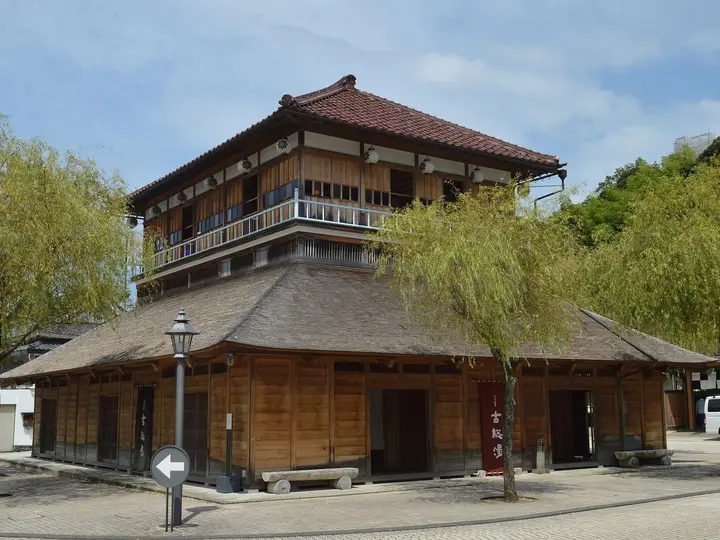
Yamashiro Onsen (Sōyu and Ko-sōyu)
Ishikawa Prefecture, Japan
3 mi away, ~10 min drive
Temp n/a Paid Drive-up
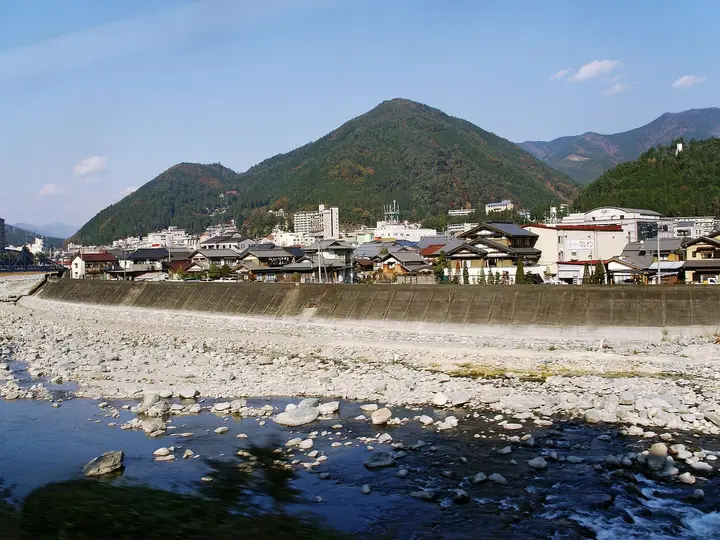
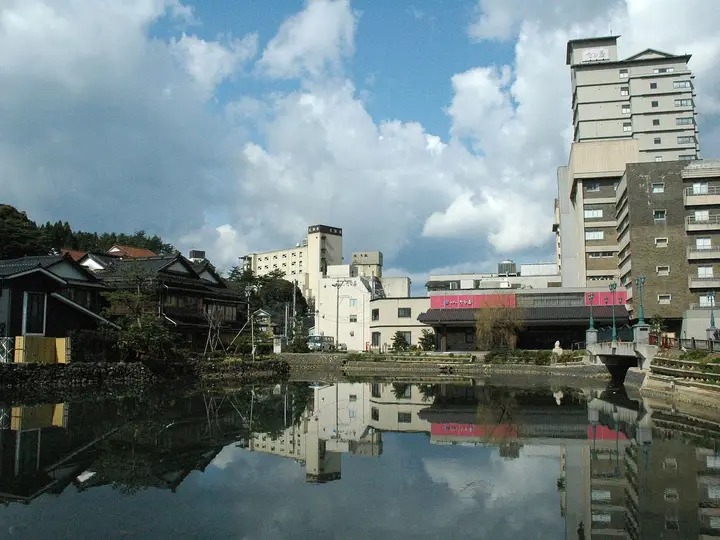
Wakura Onsen (Sōyu public bath)
Ishikawa Prefecture, Japan
65 mi away, ~1.5 hr drive
106-109°F41-43°C Paid Drive-up
Near Hirayu Onsen (Takayama)
Resort or spa
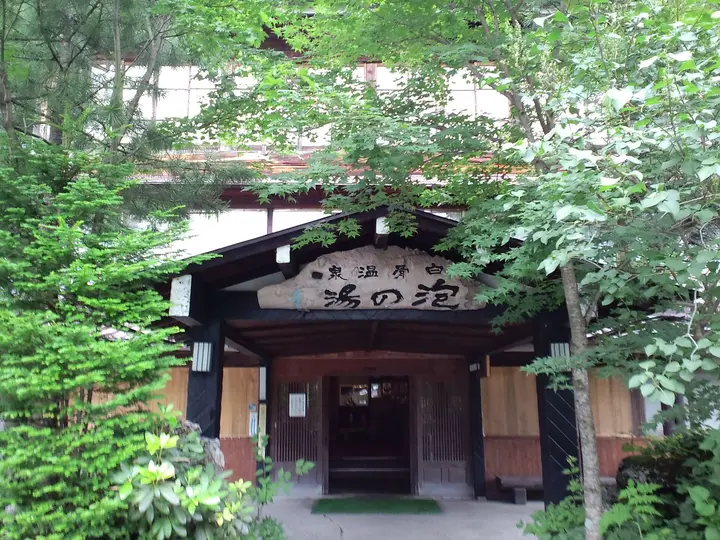
Awanoyu (Shirahone Onsen)
Nagano Prefecture, Japan
70 mi away, ~2 hr drive
99-104°F37-40°C Paid Drive-up