Noboribetsu Onsen
Near Noboribetsu, Hokkaido, Japan
Hokkaido's best-known onsen town, fed by about 10,000 tons a day of water from the Jigokudani crater, with a cheap public bathhouse, a free natural foot bath and day baths at the big hotels.
Photos: User:欅 (CC BY-SA 3.0); Calistemon (CC BY-SA 4.0); Totti (CC0). Resized and cropped for this page.


- Water temperature
- Not published
- Entry
- Paid
- Getting in
- Drive-up
- Type
- Public pool
- Jigokudani, a 450 m (1,476 ft) wide crater beside the town, releases about 10,000 tons of hot water a day for the hotels and inns.
- Yumoto Sagiri-yu, the town bathhouse, charges ¥550 and runs two source waters straight into its tubs.
- A free natural foot bath sits beside Taisho Jigoku on the Oyunuma River trail, warmed by overflow from the Oyunuma pond.
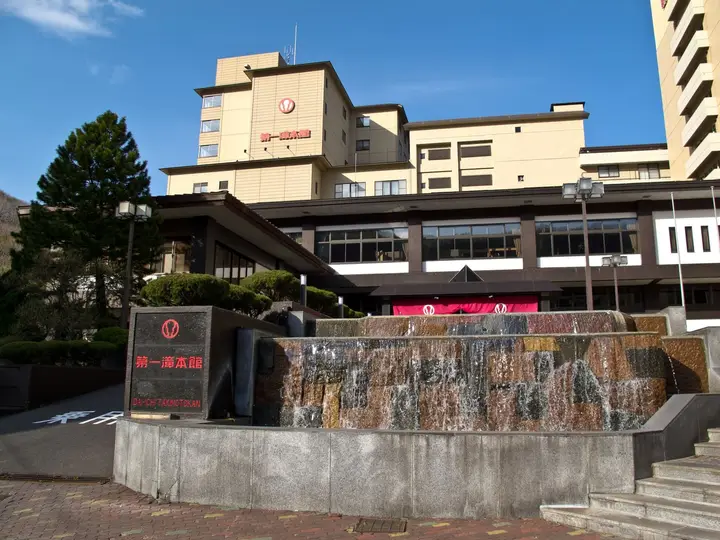
- Six hotels in Noboribetsu Onsen sell day baths, from ¥1,000 at Hanaya to ¥2,500 at Dai-ichi Takimotokan.
What to expect
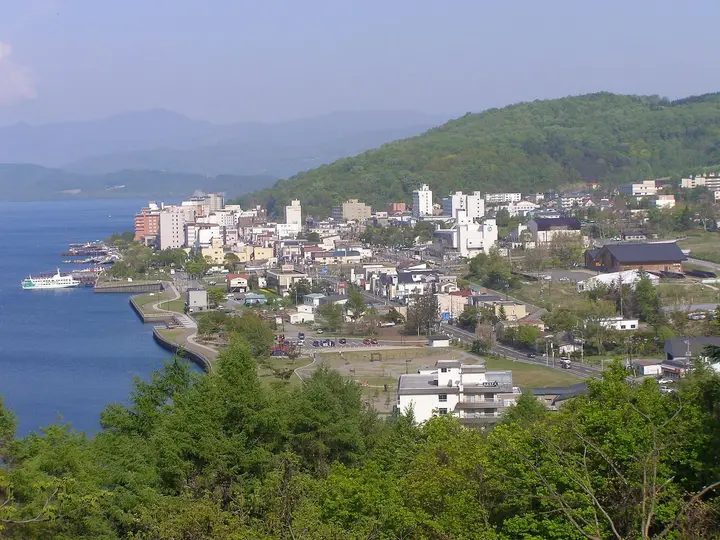
Noboribetsu Onsen is a compact hot spring town in southwest Hokkaido, about 8 km (5 miles) uphill from JR Noboribetsu Station. Its reason for existing is Jigokudani (“Hell Valley”), a crater about 450 m (1,476 ft) across, covering some 11 hectares, formed by volcanic activity on Mt. Hiyori. The tourism association says about 10,000 tons of hot water emerge from the area every day, and pipes carry it to the hotels and inns along the main street.
Most visitors come for one of two things: a night in one of the large hotels, or a day trip to see Jigokudani and soak somewhere afterward. This page covers the town as a day visitor would use it. If you are thinking about the biggest bathhouse in town, see our separate page on Dai-ichi Takimotokan.
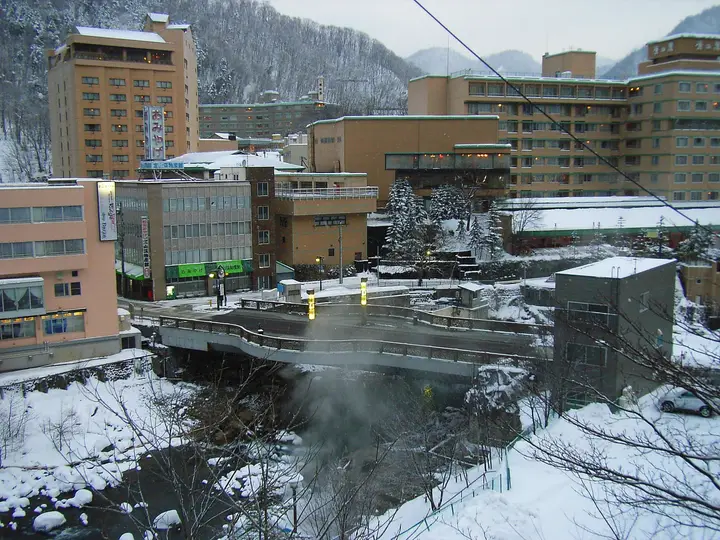
The town is busy and built up. Expect tour coaches, souvenir shops, red demon statues and a lot of steam. It is not a rustic mountain onsen, but the water is the real thing, and the variety is unusual. The association describes nine main spring types in the area, among them sulphur, salt, alum, iron, Glauber’s salt and sodium bicarbonate water.
Where day visitors soak
Yumoto Sagiri-yu is the town’s public bathhouse, on Gokuraku-dōri in the middle of the onsen. It costs ¥550 for adults and ¥180 for children (the association’s 2026 list; some older guides still show ¥500), and it is open from 9:00 to 21:00 with last entry at 20:30, every day. A travel guide listing describes one indoor bath on each side, plus a jacuzzi, sauna and cold plunge, with no outdoor bath. The water is a mix of a sulphur source and an alum source, run straight from the source. Towels are sold (¥400) and bath towels rented (¥200), soap and shampoo cost extra, and lockers are included. There is a free car park.
Hotel day baths are the other option. The association lists these in Noboribetsu Onsen itself (adult and child prices):
- Dai-ichi Takimotokan: ¥2,500 / ¥1,500, 9:00-21:00 (entry until 18:00)
- Noboribetsu Grand Hotel: ¥2,000 / ¥1,000, 12:30-20:00
- Hotel Yumoto Noboribetsu: ¥1,400 / ¥700, 13:00-20:00
- Noboribetsu Banseikaku: ¥1,300 / ¥650, 7:00-9:30 and 13:30-20:00
- Noboribetsu Sekisuitei: ¥1,200 / ¥600, 11:00-19:00
- Kashōtei Hanaya: ¥1,000 / ¥500, 11:00-14:00
Hours are the bathing window. Last entry is usually 30 to 60 minutes before closing, but Dai-ichi Takimotokan stops admitting day visitors at 18:00. Karurusu Onsen, further inland and about 14 km (8.7 miles) from JR Noboribetsu Station, has three more inns with day baths from ¥500.
Oyunuma River natural foot bath is free. It lies beside Taisho Jigoku on the Oyunuma River trail, where warm water overflowing from the Oyunuma pond runs down a stream through the forest. You sit on the bank and put your feet in the stream. Bring a small towel.
Getting there
From New Chitose Airport: the Dōnan Bus airport express takes about 1 hour and needs a reserved seat. You can also take the train to Minami-Chitose and change to a limited express (Hokuto or Suzuran) for Noboribetsu Station.
From Sapporo: Dōnan Bus and Chūō Bus highway buses take about 1 hour 20 minutes; some need a reservation (Dōnan Bus, 0143-45-2131). The limited express train to Noboribetsu Station takes about 1 hour 10 minutes, and from the station a local bus or taxi climbs about 8 km to the onsen.
By car: leave the Dō-Ō Expressway at Noboribetsu-Higashi IC, about 6 km (3.7 miles) from the onsen. The interchange name lacks the word “Onsen”, so look for the demon signs. The Jigokudani car park costs ¥500 a visit, and in summer a combined ticket with the Oyunuma car park is sold.
When to go
The town is open all year. Winter brings deep snow, and steam rising off Jigokudani with snow on the ground is the classic Noboribetsu picture. Buses and trains run in winter, but allow extra time on the roads. Prefectural Route 350, the Kuttara Park Line toward Lake Kuttara, closes for winter; in 2024-25 the closure ran from mid-November to mid-April, and the closed section was later extended down to the Jigokudani gate, so check before driving beyond the town.
Japanese holidays (New Year, Golden Week in early May, Obon in mid-August) are the busiest. Tour groups arrive late morning and afternoon, so Sagiri-yu at 9:00 or in the evening is usually calmer. See Jigokudani in daylight: the observation deck is lit until about 23:00, but the association recommends going before sunset.
Onsen etiquette
All the baths here are gender-separated and you bathe naked. Wash and rinse fully at the taps before you get in, keep your small towel out of the water, tie up long hair, and do not take photos in the changing room or bath. At Sagiri-yu, bring or buy your own soap and towel. Get out and cool down if you feel light-headed.
Tattoo rules vary by hotel, and none of the official sources for this page state a policy for Sagiri-yu. Call ahead (Sagiri-yu 0143-84-2050).
Where to stay nearby
Most beds are in the big hotels on the main street, and many of them sell day baths too. Dai-ichi Takimotokan sits at the foot of Jigokudani. For a quieter night, the inns at Karurusu Onsen, about 14 km (8.7 miles) from JR Noboribetsu Station, are smaller. Other Hokkaido onsen areas on this site include Niseko Goshiki Onsen in the Niseko mountains and Nukabira in Tokachi.
Safety notes
- Jigokudani: stay on the boardwalks and paths. The ground, vents and streams are scalding, and the sulphur smell is strong. A ramp with a maximum slope of 8% runs from the park service centre to the observation deck.
- Acidic water: some hotel baths use strongly acidic sulphur and alum water. It stings cuts and eyes. Rinse with fresh water afterward if your skin is sensitive.
- The foot bath trail: it is a forest path beside hot streams. Wear proper shoes and keep children close to the edge of the water.
- Winter driving: snow and ice on the climb from the expressway are normal from December to March. Use winter tyres or take the bus.
Map and nearby springs
GPS: 42.49223, 141.14301
Noboribetsu Onsen: common questions
Where can day visitors bathe in Noboribetsu Onsen?
The cheapest option is Yumoto Sagiri-yu, the town bathhouse, at ¥550 for adults and ¥180 for children. Six hotels in the town also sell day baths, listed by the tourism association at ¥1,000 to ¥2,500 for adults. Dai-ichi Takimotokan, the largest, is ¥2,500 with towels included.
Can you bathe in Jigokudani itself?
No. Jigokudani is a viewing area with boardwalks and an observation deck, and entry is free. The place to put your feet in natural hot water is the Oyunuma River natural foot bath, beside Taisho Jigoku on the trail north of the valley. It is also free.
What kind of water does Noboribetsu have?
The tourism association describes nine main spring types in the area, including sulphur, salt, alum, iron and sodium bicarbonate water. Different hotels tap different sources. Sagiri-yu mixes a sulphur source with an alum source, and it is listed as running its water straight from the source without recirculating it.
How do you get to Noboribetsu Onsen from Sapporo or New Chitose Airport?
Dōnan Bus runs reserved-seat highway buses to the onsen: about 1 hour from New Chitose Airport and about 1 hour 20 minutes from Sapporo. By train, take a limited express to JR Noboribetsu Station (about 1 hour 10 minutes from Sapporo), then a local bus or taxi about 8 km (5 miles) up to the onsen.
Are tattoos allowed in Noboribetsu's baths?
Neither the tourism association nor the listings for Sagiri-yu publish a tattoo policy, and the rules differ by hotel. Phone Sagiri-yu (0143-84-2050) or your hotel before you go rather than relying on blogs.
Is there parking at Jigokudani?
Yes. The Jigokudani car park charges ¥500 per passenger car per visit, and the ticket is not valid once you leave. Sagiri-yu has its own free car park for bathers.
Closest hot springs to Noboribetsu Onsen
Yagen Onsen (Okuyagen Kappa no Yu)
Aomori Prefecture, Japan
77 mi away, ~2 hr drive
Temp n/a Paid Drive-up