Gellért Thermal Bath (Szent Gellért Gyógyfürdő)
Near Budapest, Budapest, Hungary
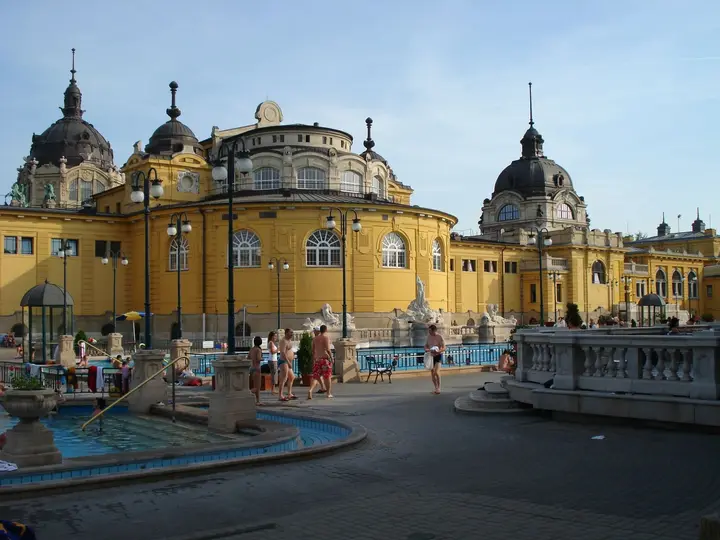
Budapest's Art Nouveau spa at the foot of Gellért Hill, famous for its mosaic-lined thermal halls and 1927 wave pool. It closed on October 1, 2025 for a renovation expected to last until 2028.
Temporarily closed. Closed since October 1, 2025 for a full renovation. The operator gives 2028 as the expected reopening year, but funding was not secured when the bath closed, so treat that date as a target.
Photos: VillageHero from Ulm, Germany (CC BY-SA 2.0); Jorge Franganillo from Barcelona, Spain (CC BY 2.0); Párkányi Balázs (CC BY-SA 2.5 hu). Resized and cropped for this page.


- Water temperature
- 95-104°F35-40°C
- Entry
- Paid
- Getting in
- Drive-up
- Type
- Public pool
- Closed to all visitors since October 1, 2025; the last bathing day was September 30, 2025.
- The operator expects to reopen in 2028; the renovation was costed at about HUF 20 billion.
- Built between 1912 and 1918 in the Secession (Hungarian Art Nouveau) style, with an outdoor wave pool added in 1927.
- Dandár, Rudas and Széchenyi are the nearest open Budapest Spas baths.
Current status: closed until 2028
Gellért Thermal Bath is closed. Its last day of bathing was Tuesday, September 30, 2025, and it has not admitted visitors since October 1, 2025. The notice on the bath’s official website is short: closed from October 1, 2025, with reopening expected in 2028. Nothing is open in the meantime. There is no partial opening of the outdoor pools in summer, no access to the thermal halls, and no ticket sales.
If you have a trip to Budapest booked, plan around a different bath. This page explains what happened, what the renovation involves, and which of the city’s other thermal baths gives you the closest experience.
Why it closed
The bath is run by Budapest Gyógyfürdői és Hévizei Zrt. (Budapest Spas), the city-owned company that also operates Széchenyi, Rudas, Lukács and Dandár. When it announced the closure, the company said the building’s condition had worsened quickly and that it had structural problems. Telex, which walked through the bath on its final day, described damaged fittings in the men’s thermal section, gaps in the mosaics and an empty plot where the children’s pools had been.
The second reason is the building next door. The bath and the Hotel Gellért are one complex and share cellars, corridors and building services. The hotel is owned by a private group and is being renovated separately. In July 2025, a company in that group signed an agreement with Budapest Spas to buy or swap parts of the shared basement and service areas, with the aim of letting the hotel and the bath run independently. Budapest’s General Assembly had approved the deal in February 2025.
The renovation and the 2028 date
The project was costed at about HUF 20 billion in press reports. Telex reported in October 2025 that the plan is to restore the historic interiors, replace the curved, socialist-era changing block in the middle of the building with a new sauna area, and add new wellness services. Building permits covered the design, and the substantive construction work was not expected to start before the second half of 2026.
Money is the open question. In October 2025 neither Budapest Spas nor the city had the funds, and the city planned to borrow, which needs central government approval. That is why the 2028 date should be read as a target. If you are reading this in 2027 or later, check gellertfurdo.hu and Hungarian news for an updated date before you make plans.
What it was like (and should be again)
Gellért was the bath on the postcards. It opened in 1918, after six years of construction, together with the hotel at the Buda end of Liberty Bridge (Szabadság híd). The style is Hungarian Secession, the local form of Art Nouveau: ceramic tiles, mosaics, carved columns and stained glass. The main hall held an indoor swimming pool, and in 1927 the complex gained an outdoor artificial wave pool. On the last day before the closure, Telex noted, the wave bath still looked much as it had in 1927.
The thermal water comes from springs on Gellért Hill. Before the closure, the thermal pools were held at roughly 95-104°F35-40°C, and the water carries calcium, magnesium, hydrogen carbonate, sulphate, chloride and fluoride. There were separate thermal sections, a plunge pool, saunas, a steam room, massage rooms and medical treatment areas, and the outdoor terrace pools opened in summer.
Getting there
The bath is at Kelenhegyi út 4 in Budapest’s 11th district, directly behind the hotel at Szent Gellért tér. The M4 metro and several tram lines stop at Szent Gellért tér, and Liberty Bridge leads straight across the Danube to the Central Market Hall on the Pest side. You can walk past the building and see the facade, but the entrance is shut.
For the nearest open bath, Rudas is a 10-minute walk north along the Buda riverbank. Dandár is about 2 km (1.2 miles) away in Ferencváros on the Pest side, a short tram ride across the river.
When to go
Not until it reopens. For now, put your bath time into one of the other Budapest Spas baths. Winter is the best season for any of them: the outdoor thermal pools steam in the cold air and the city is quieter. Weekday mornings are the calmest time at every bath, and Budapest Spas charges more from Friday to Sunday and on holidays.
Where to bathe instead
- Széchenyi Thermal Bath in City Park is the largest and best known of the city baths, with big outdoor pools open all year. It is open, but expect crowds.
- Rudas, on the same bank of the Danube as Gellért, has a 16th-century Ottoman domed pool, a modern rooftop pool and a separate wellness section.
- Lukács Thermal Bath, north of Margaret Bridge, is a working medical spa with indoor pools from 90°F to 104°F32°C to 40°C and very few tourists.
- Dandár Thermal Bath in the 9th district is the smallest and cheapest, a 1930 public bath with 2026 tickets from HUF 3,500.
Széchenyi, Rudas, Lukács and Dandár admit no one under 14. Families with younger children have fewer options in central Budapest now that Gellért is shut.
Bathing culture
Budapest’s baths share a set of house rules that will apply at Gellért when it reopens. Shower before you get into any pool. Wear a swimsuit in the pools; nude areas, where they exist, are clearly marked saunas. Swim caps are compulsory in the lap pools at Budapest Spas baths, though not in the thermal pools. The hot pools are for sitting quietly, often by older locals on a doctor’s referral, so keep your voice down and do not splash. Take flip-flops and a towel, and expect a wristband that opens your locker.
Where to stay nearby
The Hotel Gellért itself is under renovation and closed. The Gellért Hill side of the 11th district, the Tabán below Buda Castle, and the streets around the Central Market Hall on the Pest side all have hotels and apartments within walking distance of the building and of Rudas.
Safety notes
- Closed site: The bath and hotel are construction sites. Do not try to get in through side entrances or the hillside.
- Thermal pools elsewhere: At 100°F38°C and above, keep soaks to 15 or 20 minutes, drink water and stand up slowly. Hungarian spas advise people with heart conditions, high blood pressure or pregnancy to check with a doctor before using hot medicinal pools.
- Wet floors: Tiled bath floors are slippery. Wear flip-flops.
Map and nearby springs
GPS: 47.48382, 19.05095
Gellért Thermal Bath (Szent Gellért Gyógyfürdő): common questions
Is Gellért Bath open in 2026?
No. The bath closed on October 1, 2025 and its official website says it will stay closed until an expected reopening in 2028. No part of the bath, indoor or outdoor, is open, and no tickets are sold.
Why did Gellért Bath close?
The operator, Budapest Gyógyfürdői és Hévizei Zrt., said the building had deteriorated quickly and had structural problems. Work on the neighbouring Hotel Gellért, which shares building systems with the bath, was a second reason.
When will Gellért Bath reopen?
The official date is 2028. Hungarian press reported in October 2025 that the renovation would cost about HUF 20 billion and that neither the operator nor the city had the money in hand, so the date could slip. Check gellertfurdo.hu before planning a trip around it.
Can I still see the inside of Gellért Bath?
Not at present. The bath is a closed construction site. You can see the facade and the main entrance on Kelenhegyi út from the street, next to the Hotel Gellért building.
Which Budapest bath is most like Gellért?
Rudas, a short walk north along the Danube, is the closest in spirit, with historic thermal halls. Széchenyi in City Park is the big showpiece bath. Dandár, across Liberty Bridge, is small, cheap and local.
Closest hot springs to Gellért Thermal Bath (Szent Gellért Gyógyfürdő)
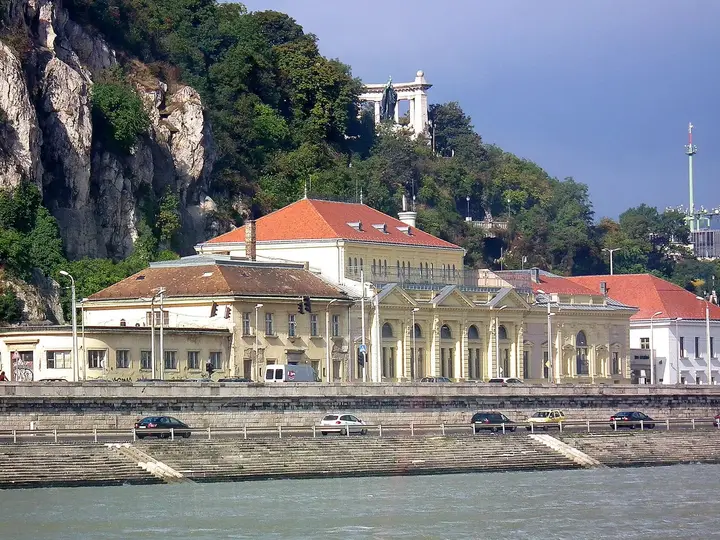
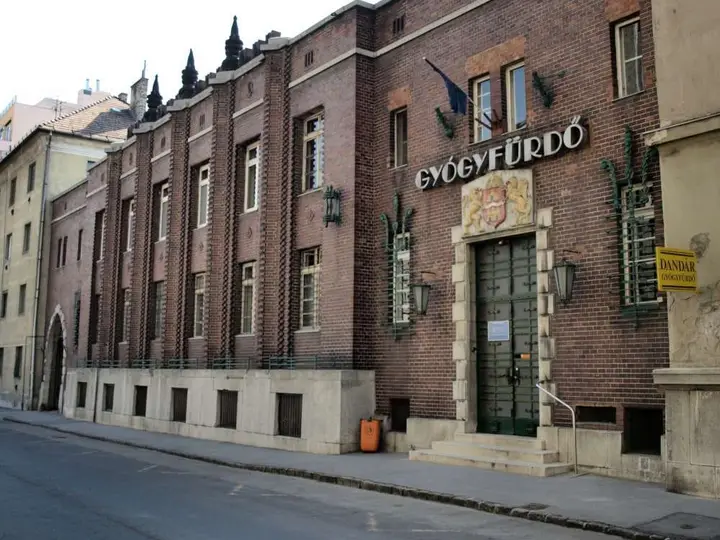
Dandár Thermal Bath (Dandár Gyógyfürdő)
Budapest, Hungary
1 mi away, ~10 min drive
95-100°F35-38°C Paid Drive-up
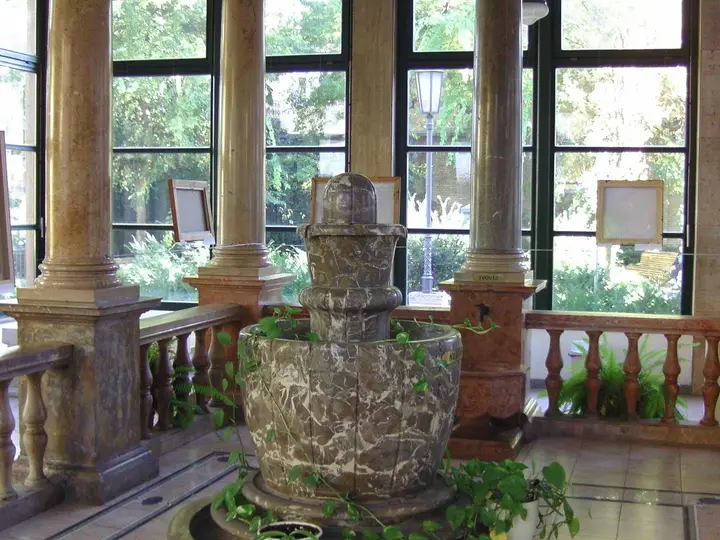
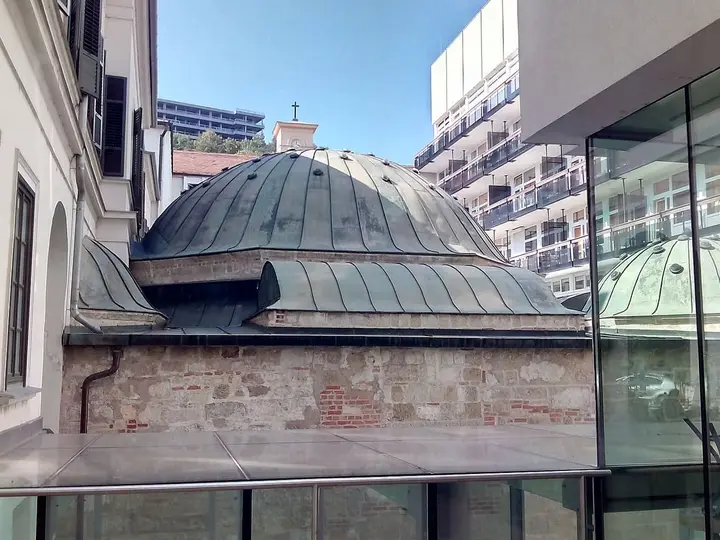
Irgalmasok Veli Bej Fürdője (Veli Bej Bath)
Budapest, Hungary
3 mi away, ~10 min drive
72-104°F22-40°C Paid Drive-up
93-104°F34-40°C
Public pool
Pesterzsébet Iodine-Salt Thermal Bath
Budapest, Hungary
4 mi away, ~10 min drive
93-104°F34-40°C Paid Drive-up
Sources we checked (5)
- gellertfurdo.hu
- telex.hu/eletmod/2025/09/30/gellert-furdo-felujitas-utolso-nap
- telex.hu/gazdasag/2025/10/28/bgyh-rudas-gellert-szechenyi-furdok-fovaros-rac-kiraly-koltsegvetes-turistak-turizmus
- penzcentrum.hu/utazas/20250717/hivatalos-nemsokara-bezar-budapest-ikonikus-furdoje-2028-ig-egyaltalan-nem-fogad-vendegeket-1182397/amp
- en.wikipedia.org/wiki/Gell%C3%A9rt_Baths