Zao Onsen
Near Yamagata, Yamagata Prefecture, Japan
A ski and spa town high on the Yamagata side of the Zao volcano, known for strongly acidic sulfur water (pH 1.25-1.6), three ¥300 honour-box bathhouses and a big riverside open-air bath that shuts each winter.
Photos: 663highland (CC BY-SA 4.0); Soica2001 ( talk ) (Public domain). Resized and cropped for this page.


- Water temperature
- 104-109°F40-43°C
- Entry
- Paid
- Getting in
- Drive-up
- Type
- Public pool
- The water is a strongly acidic sulfur spring, pH 1.25 to 1.6, from sources at 113-151°F45-66°C, about 5,700 litres a minute in all.
- Kami-yu, Shimo-yu and Kawara-yu are simple town bathhouses: ¥300 in a box, 6:00 to 22:00, all year.
- The Dai-rotenburo is a gender-split riverside open-air bath fed straight from the source, ¥850 in 2026, closed late November to mid-April.
- As of October 22, 2026, JMA had no eruption warning in force for Zaozan.
What to expect
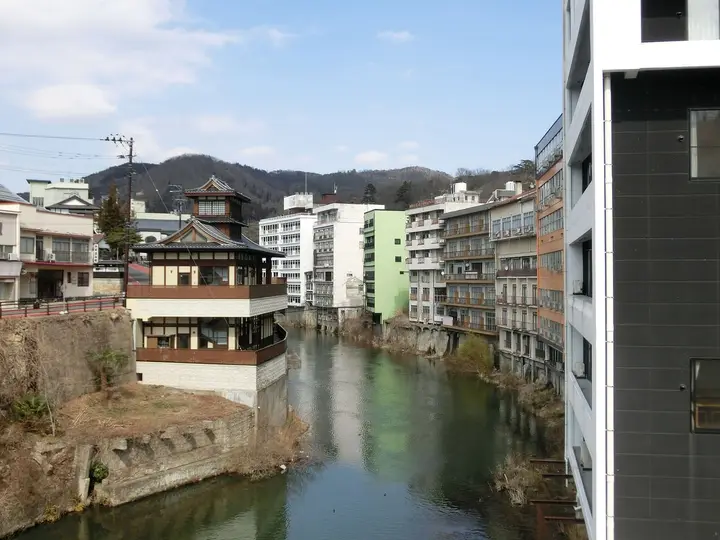
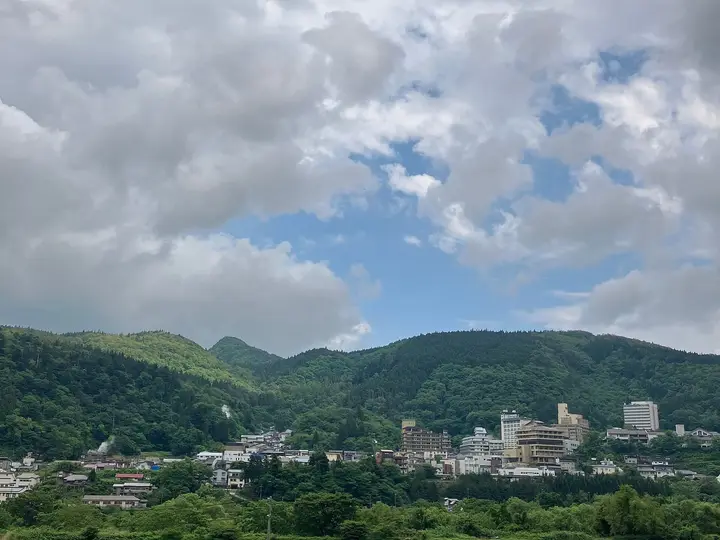
Zao Onsen is on the western, Yamagata side of the Zao volcano, about 40 minutes by bus from Yamagata city. It is two places at once. In winter it is one of northern Japan’s big ski resorts, famous for the juhyo, conifers plastered into rime-ice “snow monsters” on the upper slopes. The rest of the year it is a hot spring town of steep lanes, inns and souvenir shops, with a strong smell of sulfur.
The Zao Onsen Tourism Association says the spring was found about 1,900 years ago, during the eastern campaign of the legendary Yamato Takeru, and that the town grew in the Edo period as the western trailhead for pilgrims climbing to the Zao Gongen shrine. Roads, then ski slopes and ropeways, turned it into a resort in the 20th century.
The association counts three public bathhouses, three foot baths and five day-bath facilities in the town. Most visitors use some mix of:
- The three town bathhouses, Kami-yu, Shimo-yu and Kawara-yu, which are basic, cheap and open from early morning.
- The Zao Onsen Dai-rotenburo, a large open-air bath by a mountain stream just above the town, open from spring to late autumn.
- Hotel and inn day baths, including Genshichi Roten-no-yu, Sunoko-no-yu Kawaraya and Yunohana Chaya Shinzaemon-no-yu.
The water
This is the reason people come. The association describes Zao’s water as the most acidic in Tohoku: a strongly acidic sulfur spring with a pH of 1.25 to 1.6. Source temperatures run from 113-151°F45°C to 66°C, and the town’s springs together give about 5,700 litres a minute, roughly 8,700 tonnes a day. It is cloudy and smells strongly of sulfur.
Acid this strong has practical effects. The visitor guide for the Dai-rotenburo warns that it is corrosive: keep it out of your eyes, do not drink it, and take off metal watches and jewellery, which it can discolour. The association also lists people who should avoid it, including anyone with very sensitive skin, older people with dry skin and those who are pregnant. Rinse with fresh water after your last soak if your skin reacts.
The Dai-rotenburo is gensen kakenagashi, fed straight from the source with the overflow running away rather than being recirculated, according to the operator.
The public bathhouses
The three kyodo yokujo are run on trust. Each has a box by the door where you put your money.
- Kami-yu, Shimo-yu and Kawara-yu: ¥300 adults, ¥100 children, 6:00 to 22:00, open all year.
They are small, plain and mostly used by locals and inn guests walking between baths. There are no shampoo or towels, so bring your own, wash before you get in, and keep the tubs clean. The association singles out one bath in town where the water wells up from under your feet, which it calls rare in Japan; ask at the bus terminal information desk which one.
The town also has foot baths at Shimo-yu and Robata (both all year) and at Yunohana Chaya Shinzaemon-no-yu (April to November, 10:00 to 18:00).
The Dai-rotenburo
The Zao Onsen Dai-rotenburo (big open-air bath) is the town’s signature soak. It sits in a stream valley a short way above the town, run by Zao Onsen Kanko (023-694-9417). Pools are built from rock along the stream, and the operator says the source rises close by. A visitor guide from 2021 says there are two pools each for men and women, the upper one at about 108-109°F42-43°C and the lower one at about 104°F40°C, and the whole bath is often described as holding about 200 people.
Prices and hours in 2026:
- ¥850 adults, ¥400 children aged 1 to 11.
- Weekdays 9:30 to 17:00 (last entry 16:30); weekends and holidays 9:30 to 18:00 (last entry 17:30).
- Towels for sale; paid coin lockers.
- Night sessions were run on selected September and October 2026 evenings, 18:30 to 21:00, for ¥1,000 and ¥500. Discount tickets and the usual hotel bath tickets were not accepted for these.
Winter closure: the tourism association lists the bath as closed from late November to mid-April. In September 2026 the operator said it planned to stay open until around late November and might close earlier because of weather. It also closes now and then for maintenance; on October 7, 2026, for example, it opened in the morning only.
Getting there
- By train and bus: the Yamagata Shinkansen from Tokyo reaches Yamagata Station in about 2.5 hours. From there, Yamako buses run to the Zao Onsen bus terminal at the top of the town in about 40 minutes.
- To the Dai-rotenburo: it is about an 18-minute walk from the bus terminal, mostly uphill. It has its own car park.
- By car: drive up from Yamagata city. From late autumn to spring you need winter tyres or chains, and snow can close side roads.
The tourism association office is at Zao Onsen 708-1 (023-694-9328).
When to go
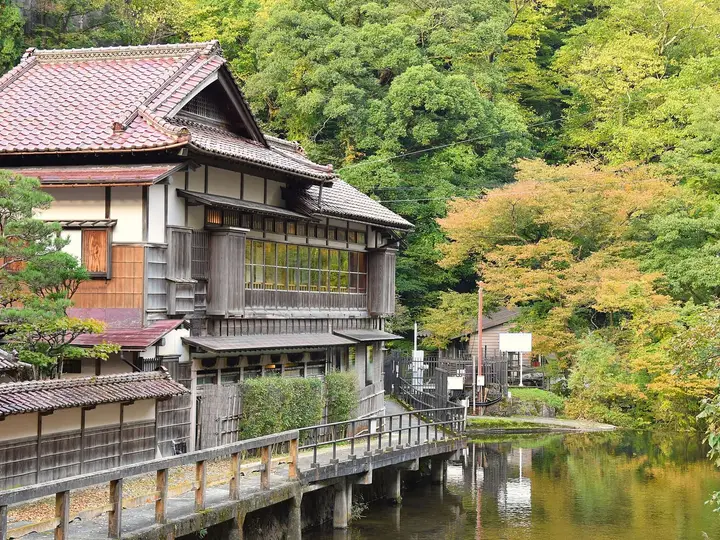
Mid-April to November is when everything is open, including the Dai-rotenburo. October is a good month: the operator says the trees around the open-air bath usually start turning from mid-October, and the night sessions run into early October.
Late November to mid-April is ski season. The Dai-rotenburo is closed, but the public bathhouses and the inns carry on, and a hot sulfur bath after a day on the slopes is what most winter visitors come for. The Zao Juhyo Festival, which the association featured for 2026, is held in the rime-ice season.
Onsen etiquette
- Pay in the box at the public baths before you go in.
- Wash at the taps first. Towels stay out of the water.
- No swimsuits in the public baths or the Dai-rotenburo.
- Take off metal jewellery and watches; the acid water can discolour them.
- No tattoo rule is published by the association or the Dai-rotenburo. Ask the operator before you go if this affects you.
Where to stay nearby
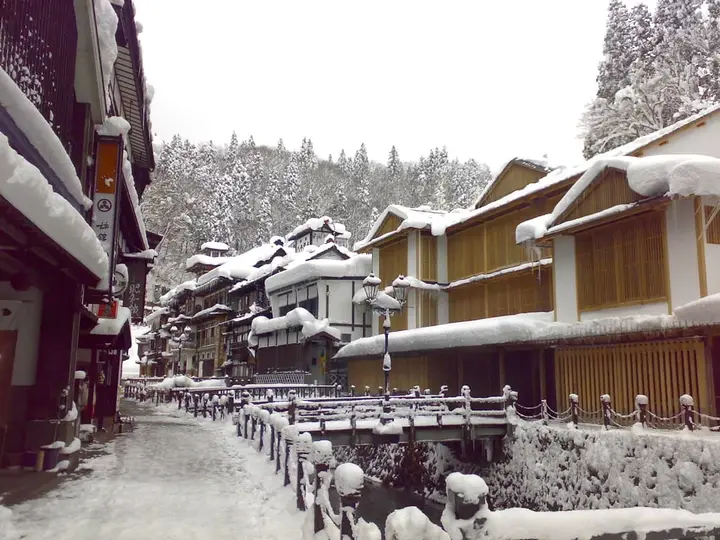
The town has ryokan, hotels, pensions and minshuku, many with their own sulfur baths; the association’s site lists them. The Yumeguri Kokeshi pass, sold at the tourist information centre in the Zao Onsen bus terminal, has bundled three inn and day-bath tickets with a small wooden kokeshi doll (¥1,300 in 2021; check the current price). Yamagata city, 40 minutes down the mountain, has business hotels. Further north in the prefecture, Ginzan Onsen is a small Taisho-era inn town on a river.
Safety notes
- Volcano: Zaozan is an active volcano monitored by the Japan Meteorological Agency (volcano code 212). On October 22, 2026, JMA’s current warnings feed listed no eruption warning for it, which means the standard Level 1. Check JMA before you go, and before any hike toward the summit and the Okama crater lake.
- Acid water: keep it out of your eyes, do not drink it, and stop if your skin stings.
- Heat: the upper pool at the Dai-rotenburo runs at about 108-109°F42-43°C. Keep soaks short.
- Winter: paths in town ice up, and some lanes are steep. Wear grippy shoes.
Map and nearby springs
GPS: 38.16868, 140.39745
Zao Onsen: common questions
When is the Zao Onsen Dai-rotenburo open?
From about mid-April to late November. The tourism association lists it as closed for winter from late November to mid-April, and the operator said in September 2026 that it expected to stay open until around late November, earlier if the weather turns. Hours are 9:30 to 17:00 on weekdays and 9:30 to 18:00 on weekends and holidays, with last entry 30 minutes before closing.
How much does the Dai-rotenburo cost?
In 2026 the operator, Zao Onsen Kanko, lists ¥850 for adults and ¥400 for children aged 1 to 11. On a few autumn evenings it ran a night session (18:30 to 21:00) for ¥1,000 and ¥500. Towels are sold and there are paid coin lockers.
Can I bathe at Zao Onsen in winter?
Yes. The three public bathhouses, Kami-yu, Shimo-yu and Kawara-yu, are open all year from 6:00 to 22:00 for ¥300 (children ¥100), and several inns and day-bath facilities stay open. Only the big open-air bath closes.
Is the Zao volcano dangerous for visitors to the onsen town?
Zaozan is an active volcano watched by the Japan Meteorological Agency. On October 22, 2026, JMA's warning feed listed no eruption warning for it, which means the normal Level 1 (be aware it is active). Check JMA again before you go, and especially before hiking toward the summit and the Okama crater.
Are there mixed baths at Zao Onsen?
The public bathhouses and the Dai-rotenburo are split into men's and women's sides. At the Dai-rotenburo each side has two pools, a hotter upper one at about 108-109°F42-43°C and a lower one at about 104°F40°C.
How do you get to Zao Onsen?
Take the Yamagata Shinkansen to Yamagata Station, then the Yamako bus to the Zao Onsen bus terminal, about 40 minutes. The Dai-rotenburo is about an 18-minute walk uphill from the terminal. Drivers come up from Yamagata city; winter tyres are essential from late autumn.
Closest hot springs to Zao Onsen