Iizaka Onsen
Near Fukushima, Fukushima Prefecture, Japan
An old spa town on the Surikami River, 20 minutes by local train from Fukushima, known for very hot free-flowing water and eight public bathhouses, including Sabako-yu, where Bashō is said to have bathed.
Photos: Abasaa (Public domain); 皓月旗 (CC BY-SA 4.0); Katorisi (CC BY-SA 3.0). Resized and cropped for this page.


- Water temperature
- Not published
- Entry
- Paid
- Getting in
- Drive-up
- Type
- Public pool
- Eight public bathhouses cost ¥400 for adults, or ¥500 at Hakoyu, and all use the town's free-flowing spring water.
- Sabako-yu is said to be where the poet Matsuo Bashō bathed in 1689. The current granite-tub building, rebuilt in 1993, recreates a Meiji-era bathhouse.
- The water is famously hot. Sources run at about 120-124°F49-51°C, and Hakoyu offers a cooler second tub.
- The Iizaka Line runs straight from Fukushima Station to Iizaka Onsen Station in about 20 minutes.
What to expect
Iizaka Onsen spreads along both banks of the Surikami River on the northwest edge of Fukushima City. It is one of the old spa towns of the Tōhoku region, traditionally counted with Naruko and Akiu as the three famous springs of Ōshū. The town has a long story: legend ties it to Yamato Takeru, the poet Saigyō is said to have named the old Sabako spring, and Matsuo Bashō stopped here in 1689 on the trip he wrote up as The Narrow Road to the Deep North.
What makes Iizaka worth a trip today is its public bathhouses. The town has eight of them, small neighbourhood baths where locals come for a soak before work or after dinner. They are cheap, they use the town’s free-flowing spring water, and the water is hot. The Fukushima City tourism association says people even keep a ranking of which bathhouse is the hottest.
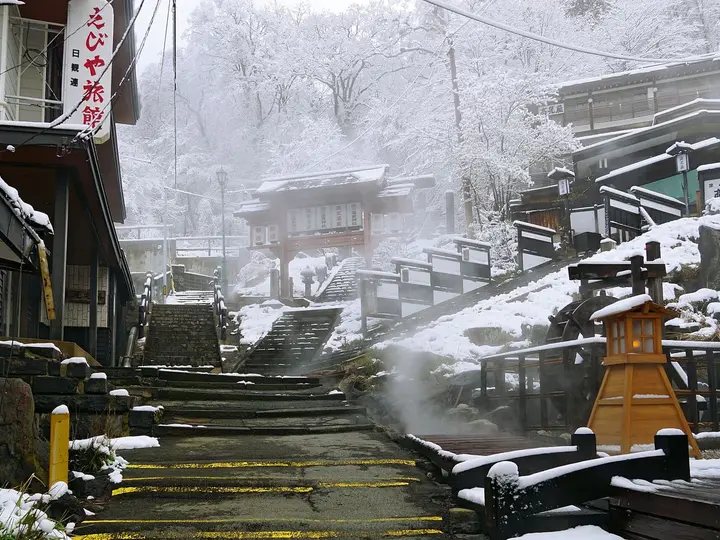
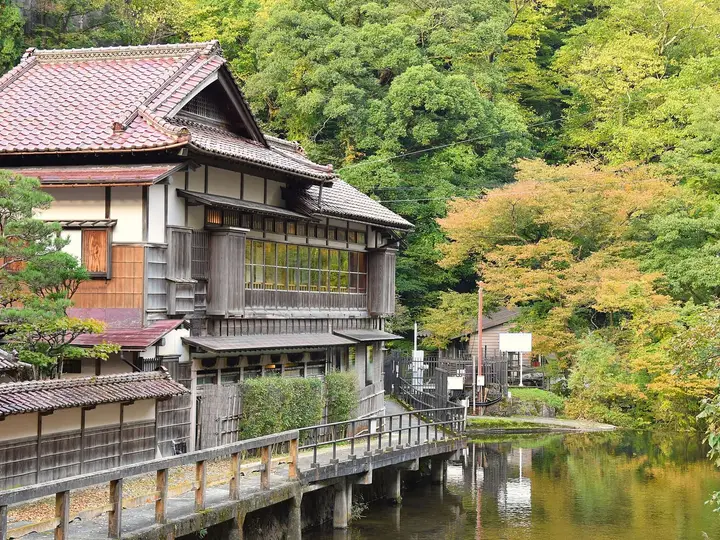
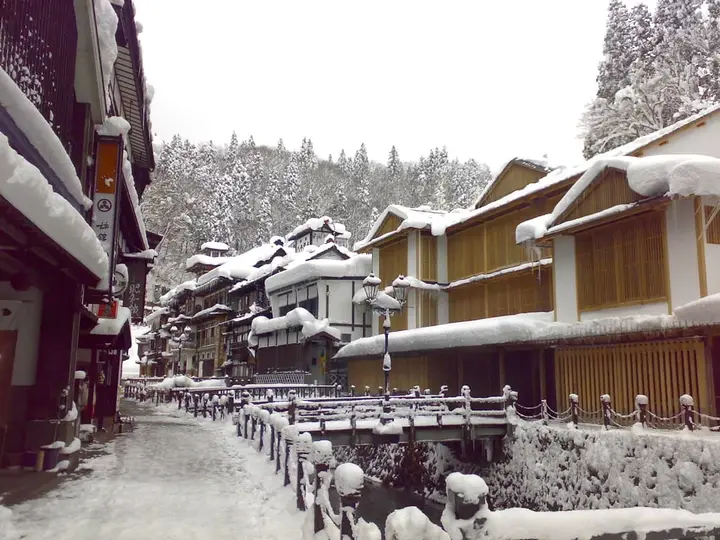
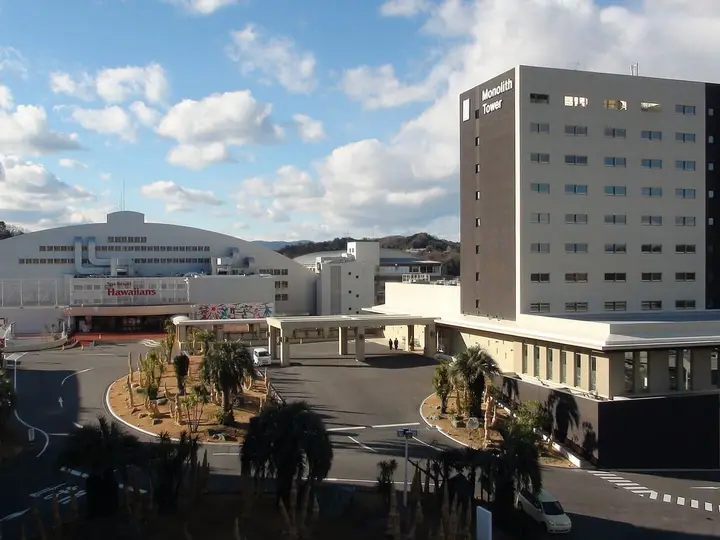
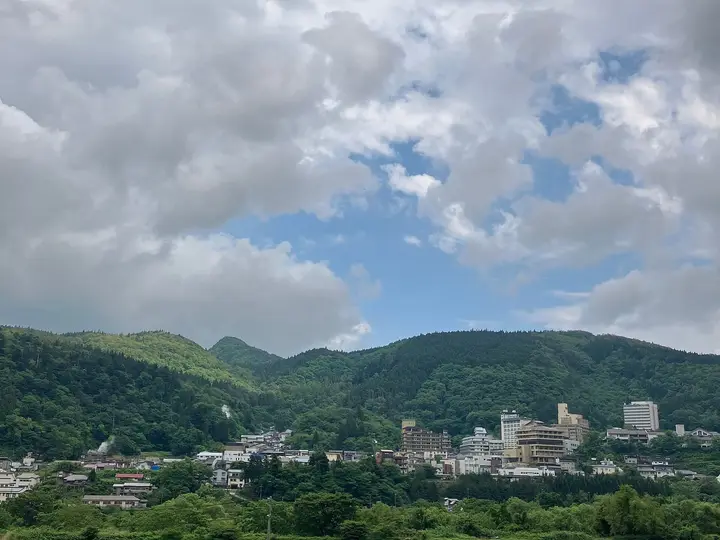
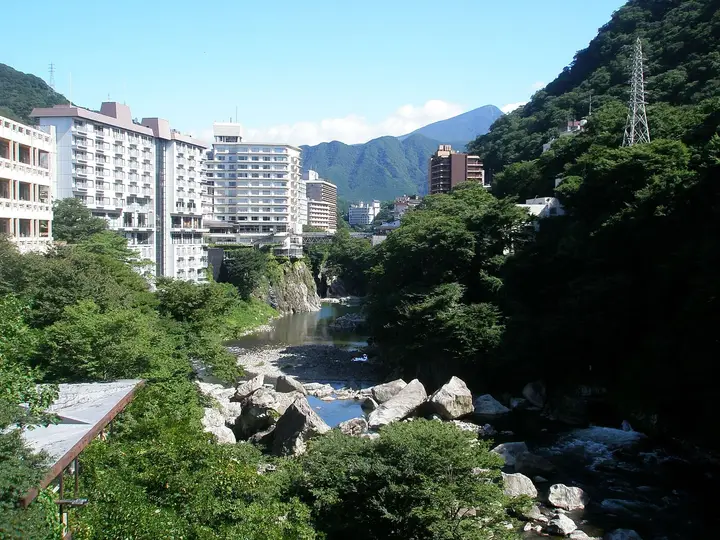
Away from the baths, the town has the look of a big spa resort that has seen busier days, with large hotels along the river, older wooden inns and a few streets of shops and cafés. Most visitors stay at a ryokan and walk between bathhouses in the evening.
The water
Iizaka’s water is an alkaline simple spring, clear and with little smell. The tourism association lists Sabako-yu’s source at 124°F51.0°C and Hakoyu’s at 120°F48.8°C, both at pH 8.6, and both baths use it as free-flowing water. The tubs are run hot. If you are not used to Japanese public baths, start at Hakoyu, which has a second tub cooled to a gentler temperature, before you try Sabako-yu.
The town’s other local product is the radium egg (rajiumu tamago), soft eggs cooked in spring water and sold at a few shops near Iizaka Onsen Station. The name comes from radium, which the tourism association says was first confirmed in Japan here at Iizaka.
The public bathhouses
The two bathhouses most day visitors use:
- Sabako-yu (32 Yuzawa) is the town’s symbol and its oldest bath. It was long known as the oldest wooden public bathhouse in Japan, and in 1993 it was rebuilt to recreate a Meiji-era bathhouse, with a granite tub and hiba wood that you can smell as you walk in. The changing area and the bath share one high-ceilinged room. There is one tub per side and no showers; you wash with water from the tub. Lockers are free. Hours 6:00 to 21:00, closed Mondays (open on public holidays).
- Hakoyu (30 Totsuna-chō), by the Totsuna Bridge and a 1-minute walk from Iizaka Onsen Station, claims a history of 1,200 years and is one of the oldest bathhouses in town with a known founding date. The current building dates from 2011. The baths are in the basement, reached by stairs or a lift, with a hot free-flowing tub and a cooler tub on each side, plus showers and hair dryers. Lockers cost ¥100, returned after use. Hours 6:00 to 21:00, closed Tuesdays (open on public holidays). A small park outside has a free hand bath and foot bath.
The other six are Totsuna no Yu, Senki no Yu, Dōsen no Yu, Daimon no Yu, Yahata no Yu and Tennōji Anabara-yu. Each closes on a different weekday and sets its own hours, so check before you plan a circuit. The city-run Kiriyu closed for good in November 2024.
Bathhouses close briefly now and then for pipe repairs. On April 22, 2026, for example, Sabako-yu, Hakoyu, Dōsen no Yu and Senki no Yu all shut from 10:00 to 12:00. The Fukushima City tourism site posts these notices.
Prices and booking
Prices are from the Fukushima City tourism association in 2026.
| Bathhouse | Adults | Children | 10-visit ticket |
|---|---|---|---|
| Sabako-yu and most others | ¥400 | ¥200 | ¥2,500 / ¥1,200 (Sabako-yu) |
| Hakoyu | ¥500 | ¥250 | ¥3,500 / ¥1,700 |
Visitors with disabilities pay ¥200 for adults and ¥100 for children. Buy a ticket from the machine at the door and hand it to the attendant. No booking is needed. A bath-hopping ticket is sold by the Iizaka Onsen Ryokan Cooperative, and a combined public-bath and Iizaka Line ticket costs ¥800.
Bring your own soap and towel. Neither Sabako-yu nor Hakoyu provides shampoo or body soap. Both sell a towel for ¥500, small soaps from ¥70 and a towel-and-toiletries set for ¥600.
Onsen etiquette
These are small local bathhouses, and regulars notice. Rinse off with water from the tub before you get in, and at Sabako-yu do your washing outside the tub using a basin. Bathe naked, keep towels out of the water,. No tattoo policy is published for the public bathhouses, so call 024-542-5223 if this affects you.
Getting there
- By train: from JR Fukushima Station (Tōhoku Shinkansen), the Fukushima Kōtsū Iizaka Line runs to Iizaka Onsen Station in about 20 minutes. Hakoyu is a 1-minute walk from the station and Sabako-yu about 5 minutes.
- By car: about 10 minutes from Fukushima-Iizaka IC on the Tōhoku Expressway or Fukushima-Ōsasō IC on the Tōhoku-Chūō Expressway. Do not park on the street outside Hakoyu, which is a no-parking zone. Free parking is available at the former Iizaka branch office lot and the Hakoyu and Horikiri-tei lot, with paid lots at Horikiri and Akagawa Bridge (¥100 an hour).
When to go
The bathhouses open at 6:00. Early morning belongs to local regulars, which is part of the charm; late evening, after the ryokan dinners, is also a good time. Summer in the Fukushima basin is hot and humid, which makes these hot baths harder going. The surrounding area is fruit country, with cherries from June followed by peaches, pears, grapes and apples into December. Autumn and winter evenings are the best time for bath-hopping.
Where to stay nearby
Iizaka has about 30 ryokan and hotels along the Surikami River, down from some 120 at its peak; staying overnight lets you walk to the bathhouses after dinner. Nearby stops include Kyū-Horikiri-tei, an old merchant house with a free foot bath and hand bath (9:00 to 21:00), and Iōji Temple. For more Fukushima onsen, see Higashiyama Onsen in Aizu, and to the north, Ginzan Onsen in Yamagata.
Safety notes
- Heat: the tubs are very hot. Ease in slowly, keep soaks short and get out if you feel dizzy.
- Older bathers and heart conditions: sudden immersion in very hot water strains the heart. Use the cooler tub at Hakoyu.
- Alcohol: do not bathe after drinking.
- Floors: stone and tile floors are slippery. Walk carefully in the changing rooms.
Map and nearby springs
GPS: 37.83265, 140.45218
Iizaka Onsen: common questions
How much do the Iizaka Onsen public baths cost?
Most of the public bathhouses charge ¥400 for adults and ¥200 for children (2026). Hakoyu, next to Iizaka Onsen Station, charges ¥500 and ¥250. Each bathhouse has a ticket machine. A combined ticket covering a public bath and the Iizaka Line train costs ¥800.
What are the hours of Sabako-yu?
Sabako-yu is open from 6:00 to 21:00 (since February 1, 2025) and closes on Mondays, except when Monday is a public holiday. Hakoyu keeps the same hours and closes on Tuesdays. Other bathhouses set their own hours and closing days.
Why is the water at Iizaka so hot?
The sources are hot to begin with: Sabako-yu's is listed at 124°F51.0°C and Hakoyu's at 120°F48.8°C, and the baths run it straight through as free-flowing water. The tourism association says locals even rank the bathhouses by heat. At Hakoyu there is a second tub cooled to a gentler temperature.
Do I need to bring soap and a towel?
Yes, or buy them on site. Sabako-yu and Hakoyu provide no shampoo, conditioner or body soap. Towels cost ¥500, small soaps ¥70, and a set with towel and toiletries ¥600. Sabako-yu has no showers at all; you wash with water scooped from the tub.
How do I get to Iizaka Onsen?
From JR Fukushima Station, take the Fukushima Kōtsū Iizaka Line to Iizaka Onsen Station, about 20 minutes. Hakoyu is a 1-minute walk and Sabako-yu about 5 minutes. By car, it is about 10 minutes from Fukushima-Iizaka IC or Fukushima-Ōsasō IC.
Closest hot springs to Iizaka Onsen