Terme di Fordongianus (Roman baths and Is Bangius)
Near Fordongianus, Sardinia, Italy
A Roman bath complex on the Tirso river in central Sardinia, where water still rises at about 129°F54°C. You cannot bathe in the ruins, but the 19th-century Is Bangius baths next door fill tubs at 106-109°F41-43°C.
Photos: Gianni Careddu (CC BY-SA 3.0); Carole Raddato from FRANKFURT, Germany (CC BY-SA 2.0). Resized and cropped for this page.


- Water temperature
- 106-109°F41-43°C
- Entry
- Paid
- Getting in
- Drive-up
- Type
- Public pool
- Hot water still rises at about 129°F54°C into the Roman baths of Forum Traiani, built on the Tirso in the 1st century AD.
- Bathing is banned in the ruins, but the Is Bangius bathhouse next door has stone tubs at 106-109°F41-43°C for €5.
- Free, informal hot pools form where the thermal stream meets the Tirso, downstream of the site.
- The combined ticket for the Roman baths also covers the 17th-century Casa Aragonese in the village.
What to expect
Fordongianus is a small village of red trachyte houses on the Tirso, Sardinia’s longest river, in the province of Oristano. It sits about 21 km (13 miles) north-east of Oristano in a straight line. Unlike most of the places this site lists in central Italy, the water here really is hot. The springs at the locality called Caddas (Sardinian for “hot”) rise at about 129°F54°C, and the regional tourist board gives up to 133°F56°C. The water is a salty, bicarbonate and fluoride-bearing thermal water.
The Romans called the place Aquae Ypsitanae and built Sardinia’s most important bath complex here on the edge of Forum Traiani, a market town named for the emperor Trajan. The ruins stand on the riverbank. Hot water still pours into the big rectangular pool, and on cool mornings steam rises off it. You cannot get in. That is the first thing to know.
What you can do is soak a few metres away. There are three ways to do it, and they are very different.
The baths
- Terme Romane (the Roman baths). An archaeological site run by the Società Cooperativa Forum Traiani. The first building dates to the 1st century AD and the second to the 3rd. You walk past the natatio (the large pool, about 1.6 m deep, with steps), a nymphaeum and the frigidarium, tepidarium and calidarium rooms. Statues of the god Bes and a shrine to the nymphs were found here. No bathing.
- Is Bangius. The municipal bathhouse, built around 1800 directly over the spring on the left bank of the Tirso, next to the ruins. It has three small rooms, each with a changing area and a stone tub with a pebble floor, where hot water seeps up through the rock and drains out to the river. A lower room has a larger hot tub. The water is 106-109°F41-43°C. You get 30 minutes to change and bathe, and the operator advises no more than 10 minutes in the water. There are toilets and a cold shower.
- The free riverside pools. Downstream, where the thermal stream meets the Tirso beside Is Bangius and the hotel, hot water collects in natural pools on the riverbank. Two 2026 Italian travel articles describe them as free and open, a few minutes’ walk from the ruins. Nothing official covers them online: no staff, no facilities and no posted rules that we could find. Search maps for “terme libere di Fordongianus” rather than the hotel.
The fourth option is the Sardegna Grand Hotel Terme, a four-star hotel on the SP23 that runs eight thermal pools for its guests. It is a separate, paid business.
Prices and booking
The cooperative’s current list:
- Is Bangius: €5; children under 10 €3. Reservation required on +39 346 214 3581.
- Roman baths and Casa Aragonese: €6; ages 6 to 14 €3; under 6 free; groups of 20 or more €5 each.
- Chiesa di San Lussorio: €5, reduced €2.50, by reservation.
Tickets can also be bought in the cooperative’s online shop. For general information call +39 0783 60157. The site does not date its price list, so check before you go.
Getting there
Fordongianus is off the main SS131 Carlo Felice highway that runs down the island.
- From Olbia or Sassari: take the SS131 DCN or the SS131 toward Cagliari, exit for Abbasanta, Ghilarza and Fordongianus, then follow the SP23 south.
- From Alghero: SS127bis toward Olmedo, then the SS131, exiting for Abbasanta-Ghilarza-Fordongianus.
- From Cagliari: SS131 toward Sassari, exit for Simaxis, then the SS388 through Simaxis, Ollastra and Villanova Truschedu.
The Roman baths are at Località Caddas, on the river at the edge of the village; Via Terme leads down to them. Is Bangius is on the same stretch of bank, a short walk west of the ruins.
When to go
The sites open every day except December 25 and January 1. The cooperative lists 9:30 a.m. to 1 p.m. and 3 to 6 p.m. for the Roman baths; a 2026 article gave seasonal afternoon closing times from 5 p.m. in winter to 8 p.m. in summer. Is Bangius runs 9:30 a.m. to 12:30 p.m. and 3 to 6 p.m.
Central Sardinia is very hot in July and August, and 109°F43°C water is hard work then. October to April is the better time, and spring is a good balance of weather and quiet. The International Sculpture Symposium each summer leaves new trachyte sculptures around the village.
Rules and etiquette
- No bathing in the Roman site. Stay on the paths.
- Is Bangius: book ahead, bring flip-flops, a towel or robe and a swim cap. Municipal rules are posted on site; anything beyond a simple bath is banned and can be fined.
- Riverside pools: take everything away with you. They sit right below a heritage site, with no facilities of any kind.
Where to stay nearby
The Sardegna Grand Hotel Terme is the obvious base if you want thermal pools after the Roman site. Oristano, about 21 km (13 miles) away in a straight line, has a full range of hotels and is the nearest city with train connections.
Safety notes
- Scalding water: the spring rises at about 129°F54°C. At the free pools, test the water with a hand and stay away from the outflow, where the water is hottest. Wear sandals; the riverbed is slippery.
- Short soaks: at 106-109°F41-43°C, keep to the 10 minutes the operator recommends, drink water, and get out if you feel dizzy.
- Children: under-10s pay a reduced ticket at Is Bangius, but the water is very hot for small bodies. Keep their soaks short.
- The river: the Tirso can rise after rain. Do not use the riverside pools in high water.
Nearby stops worth adding
The Casa Aragonese, a 17th-century house now a museum, is included in the Roman baths ticket. The Romanesque church of San Lussorio, built around 1100 over an early Christian crypt, is a few kilometres away, as are the ruins of the Roman amphitheatre. For a full thermal hotel and pools, Terme di Sardara is about 43 km (27 miles) south in a straight line, with pools kept at about 95°F35°C.
Map and nearby springs
GPS: 39.99682, 8.80836
Terme di Fordongianus (Roman baths and Is Bangius): common questions
Can you swim in the Roman baths at Fordongianus?
No. The Roman pools are still fed by hot spring water, but they are an archaeological site and bathing is not allowed. You can soak next door at the Is Bangius baths (by reservation) or at the free riverside pools downstream.
How much does it cost to bathe at Fordongianus?
Is Bangius, the 19th-century municipal bathhouse, charges €5, or €3 for children under 10, for a 30-minute slot. Visiting the Roman baths is a separate ticket: €6 including the Casa Aragonese, €3 for ages 6 to 14, free for under-6s. The riverside pools on the Tirso are free.
How hot is the water at Fordongianus?
The springs rise at about 129°F54°C, hot enough to scald. The Is Bangius tubs run at 106-109°F41-43°C, and the operator recommends no more than 10 minutes in them. The free pools by the river vary with how much river water mixes in.
Are there free hot springs at Fordongianus?
Yes, informally. Travel articles from 2026 describe natural pools where the hot stream flows into the Tirso, a few minutes on foot from the Roman site and beside the Is Bangius baths and the Sardegna Grand Hotel Terme. There are no facilities, staff or official rules posted online, and the water near the outflow can be scalding.
Do I need to book Is Bangius?
Yes. The cooperative that runs it says bathing is by reservation only. Call +39 346 214 3581. Bring flip-flops, a towel or robe and a swim cap.
Closest hot springs to Terme di Fordongianus (Roman baths and Is Bangius)
95°F35°C
Resort or spa
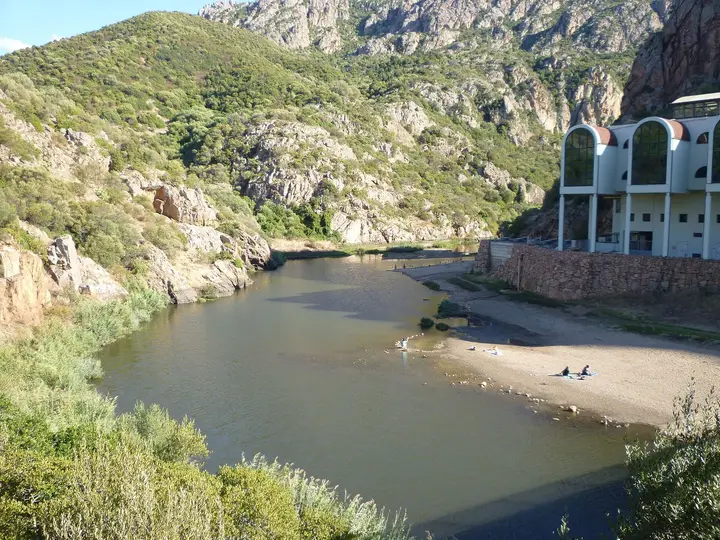
Terme di Sardara (Sardegna Termale Hotel & Spa)
Sardinia, Italy
26 mi away, ~40 min drive
95°F35°C Paid Drive-up
93-100°F34-38°C
Resort or spa
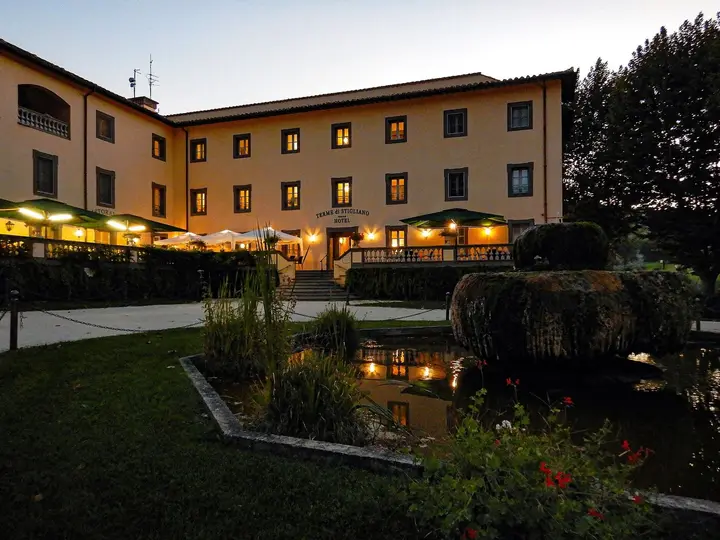
QC Spa Roma (formerly QC Termeroma)
Lazio, Italy
219 mi away, ~5.5 hr drive
93-100°F34-38°C Paid Drive-up
100°F38°C
Resort or spa
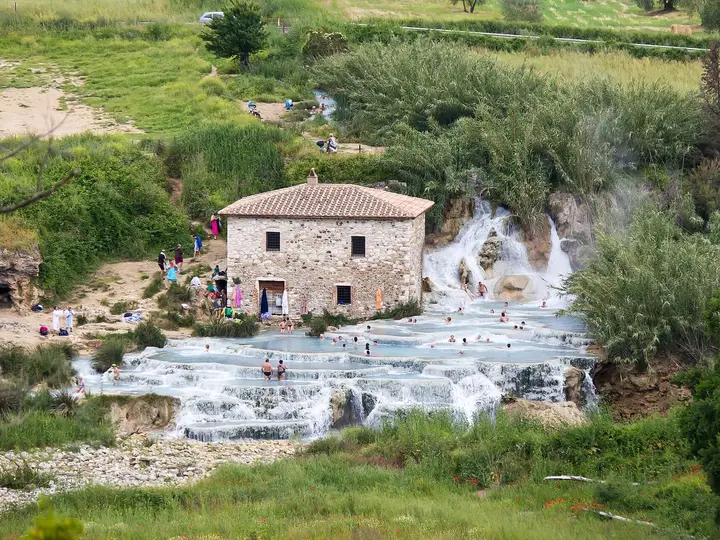
Terme di Saturnia Natural Spa & Golf Resort
Tuscany, Italy
231 mi away, ~6 hr drive
100°F38°C Paid Drive-up
Sources we checked (6)
- forumtraiani.it/informazioni-utili/
- forumtraiani.it/bagni-termali-is-bangius/
- sardegnaturismo.it/it/esplora/terme-di-forum-traiani
- italia.it/it/sardegna/fordongianus/luoghi-della-cultura/terme-romane-di-fordongianus
- greenme.it
- ilmeteo.net/notizie/tempo-libero/le-terme-naturali-piu-nascoste-della-sardegna-acque-calde-tra-scogliere-e-boschi.html