Takegawara Onsen
Near Beppu, Oita Prefecture, Japan
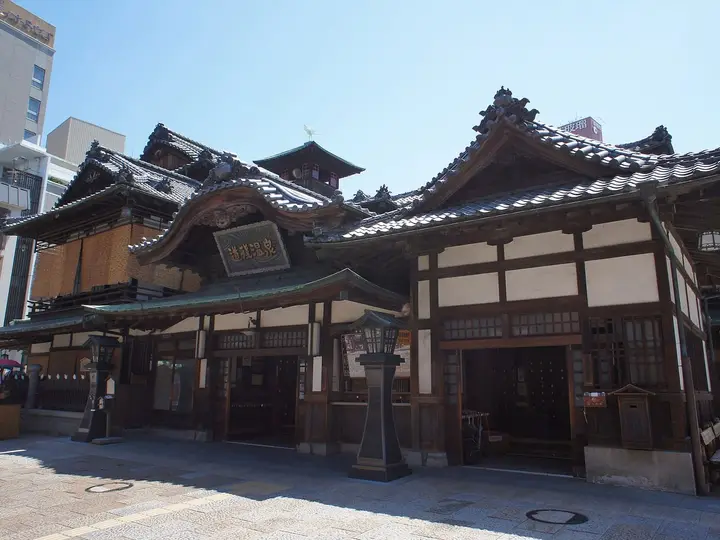
Beppu's best-known city bathhouse, a 1938 wooden building with a curved gable roof near the station, where ¥300 buys a plain, hot local soak and ¥1,500 gets you buried in spring-warmed sand.
Photos: 大分帰省中 (CC BY 3.0); Marc Heiden - User: (WT-shared) Gorilla Jones at wts wikivoyage (CC BY-SA 3.0); 663highland (CC BY 2.5); z tanuki (CC BY 3.0). Resized and cropped for this page.


- Water temperature
- Not published
- Entry
- Paid
- Getting in
- Drive-up
- Type
- Public pool
- The bathhouse dates from 1879; the present wooden building with its curved karahafu gable was built in 1938.
- The men's and women's baths use different source water: a chloride spring on the men's side, a sodium bicarbonate spring on the women's side.
- Attendants bury you in sand warmed by the hot spring for ¥1,500, and the ordinary bath is included.
- No parking at all. It is about a 10-minute walk from JR Beppu Station.
What to expect
Takegawara Onsen is the bathhouse most people picture when they think of Beppu. It sits on a narrow street in the old Motomachi neighbourhood, a short walk from the station and the bay, and the city of Beppu runs it as one of its municipal baths. If you only have time for one soak in town, this is the usual pick.
The city dates the bathhouse to 1879. The name means “bamboo tile”: the first building had a bamboo roof, later replaced with tiles. The building you see now went up in 1938, a large wooden hall with a heavy curved karahafu gable over the entrance. Inside, the high-ceilinged lobby with its wooden floor is part of the reason people come. This is not a museum, though. Locals still walk in with a towel over the shoulder for their morning bath.
There are two separate things to do here:
- The ordinary bath (futsuyoku): one plain indoor bath on each side, men’s and women’s. There is no outdoor bath or sauna.
- The sand bath (sunayu): you change into a cotton robe, lie down in a pit of sand warmed by the hot spring, and an attendant shovels sand over you until only your head is out. Afterwards you rinse off and use the ordinary bath, which the ticket includes.
The water
The city lists the water as coming straight from the source and flowing through the baths without being recirculated. The two sides use different springs. The men’s bath is a sodium-calcium-magnesium chloride and bicarbonate spring, and the women’s bath is a sodium bicarbonate spring. The sand bath shares the men’s source. The city does not publish bath temperatures, and travel guides describe the water as on the hot side. Beppu’s neighbourhood baths are often kept hotter than visitors expect, so test the water with a hand before you sink in.
In November 2025 the city ran a one-week event that swapped the men’s and women’s sides so regulars could try the other spring. It noted that the two sources run at different temperatures.
Prices and booking
Prices are from the city’s page in October 2026.
| What | Price |
|---|---|
| Ordinary bath, adults (junior high and up) | ¥300 |
| Ordinary bath, elementary schoolchildren | ¥100 |
| Ordinary bath, preschoolers | Free |
| Sand bath (ages 6 and up, ordinary bath included) | ¥1,500 |
| Sand bath, 10 visits | ¥13,500 |
| Ordinary bath, 10 visits | ¥2,700 adults, ¥900 children |
Ten-visit tickets for the ordinary bath are valid for a year and also work at several other city baths.
The sand bath takes up to eight people at a time. There is no booking by phone or online. You give your name at the desk and wait your turn, and on busy days the desk can stop accepting people before the official last entry at 21:30.
The desk sells what you forgot: an original towel for ¥350, a bath towel for ¥1,200, a shampoo, rinse and soap set for ¥100, plus razors, toothbrushes and hair caps. A coin locker costs ¥100, the hair dryer ¥100 for seven minutes, and washbowls are free. The city also lends a bath cover and a bath shawl free of charge if you ask the bath in advance, and asks other bathers to be understanding toward people who bathe in such garments.
Onsen etiquette
The ordinary bath follows standard Japanese public bath rules. Bathe naked, wash and rinse at the side of the bath before getting in, and keep your towel out of the water. This is a local bath first, so keep your voice down and do not add cold water without asking the people already in the tub. Do not take photos in the changing or bathing areas.
In the sand bath you keep the robe on, and the attendants tell you when to get up. Oita Prefecture’s public bath rules have banned mixed bathing for anyone aged 7 or over since January 1, 2022, so older children must use the bath for their own sex.
Getting there
Takegawara is at 16-23 Motomachi, Beppu.
- On foot: about 10 minutes from JR Beppu Station on the Nippo Main Line.
- By bus: several city bus routes stop nearby.
- By car: about 15 minutes from Beppu IC on the Higashi-Kyushu Expressway. The bathhouse has no parking, so use a paid lot in central Beppu or leave the car at your hotel.
Beppu itself is reached by the JR limited express Sonic from Hakata in Fukuoka, by bus from Oita Airport, or by overnight ferry from Osaka.
When to go
Takegawara is open every day except the third Wednesday of the month. The ordinary bath is quietest at opening time, when the people in the tub are mostly regulars. Late morning to evening brings more visitors, and the sand bath queue is longest on weekends and holidays. Winter is the best season for a hot sand bath. In summer the sand can feel like hard work in Beppu’s humid heat, so go early in the day.
Where to stay nearby
There are no rooms at the bathhouse. Central Beppu, around the station and the Kitahama seafront, has business hotels and larger hotels within walking distance, which makes a dawn bath at Takegawara easy. For more choice, see our Beppu Onsen guide, which covers the city’s eight hot spring districts, the Kannawa steam bath, the other city bathhouses and the boiling “hells” you can only look at.
Safety notes
- Hot water: the ordinary bath can be hotter than you are used to. Keep soaks short and get out if you feel dizzy.
- Sand bath: you sweat a lot under the sand. Drink water before and after, and tell the attendant at once if you feel unwell.
- Floors: wet tiles and old wooden floors are slippery. Walk, do not hurry.
- Children: the sand bath is closed to children under 6.
Map and nearby springs
GPS: 33.27745, 131.50598
Takegawara Onsen: common questions
How much does Takegawara Onsen cost?
The ordinary bath is ¥300 for adults (junior high school and up) and ¥100 for elementary schoolchildren, and younger children are free. The sand bath is ¥1,500 for anyone aged 6 or over and includes the ordinary bath afterwards. Towels, soap and shampoo are extra, so bring your own or buy them at the desk.
Can you book the Takegawara sand bath?
No. The city says it takes no reservations by phone, online or any other route. You register at the reception desk. Up to eight people use the sand at once, so on busy days you wait, and the desk may stop taking names before the 21:30 last entry.
What are the opening hours and closing days?
The ordinary bath runs 6:30 to 22:30. The sand bath runs 8:00 to 22:30 with last entry at 21:30. Both close on the third Wednesday of each month, or the following day when that Wednesday is a public holiday.
Is the water at Takegawara free-flowing?
Yes. The city lists the baths as fed with source water that flows straight through (kakenagashi). The men's bath is a sodium-calcium-magnesium chloride and bicarbonate spring; the women's bath is a sodium bicarbonate spring. The sand bath uses the same source as the men's side.
Are tattoos allowed at Takegawara Onsen?
The city's official page for the bath does not mention tattoos either way, so we could not confirm a policy. Call the bath on 0977-23-1585 before you visit.
Can children use the opposite-sex bath with a parent?
Only young ones. Oita Prefecture's public bath rules, in force since January 1, 2022, ban mixed bathing for anyone aged 7 or over. Children under 7 may go in with a parent of either sex.
Closest hot springs to Takegawara Onsen
Near Takachiho
Public pool
Takachiho Onsen (Takachiho no Yu)
Miyazaki Prefecture, Japan
40 mi away, ~1 hr drive
Temp n/a Paid Drive-up