Beppu Onsen
Near Beppu, Oita Prefecture, Japan
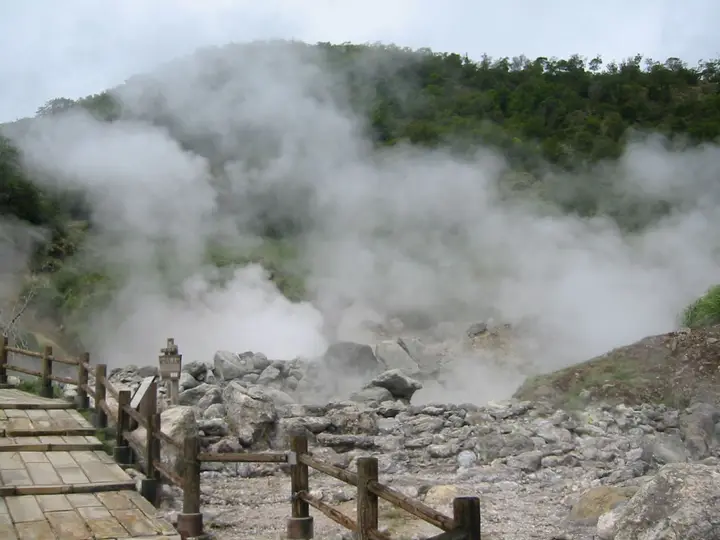
A whole city of hot springs on Beppu Bay, split into eight historic onsen districts, with cheap city-run bathhouses, sand and steam baths, and the boiling "hells" you look at but never enter.
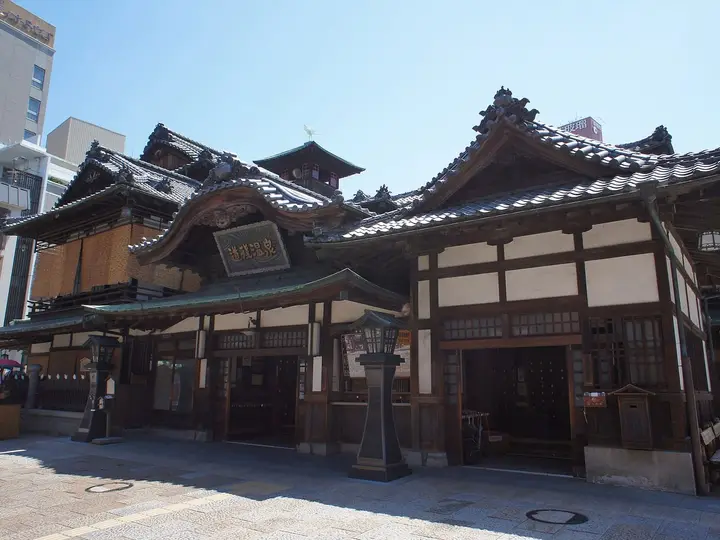
Photos: Unknown author Unknown author (CC BY 4.0); Marie-Sophie Mejan (CC BY 4.0); Jordi Sanchez Teruel from Seúl, South Korea (CC BY-SA 2.0); Suicasmo (CC BY-SA 4.0). Resized and cropped for this page.


- Water temperature
- Not published
- Entry
- Paid
- Getting in
- Drive-up
- Type
- Public pool
- Most city-run bathhouses charge ¥300 for adults and ¥100 for children, and open from early morning.
- Takegawara Onsen offers a buried-in-hot-sand bath for ¥1,500 next to its ordinary ¥300 bath.
- Kannawa Mushiyu is a small hot spring steam room that takes four people per side at a time, for ¥700.
- The seven Beppu hells are for viewing only. A common ticket for all seven is ¥2,400 for adults.
What to expect
Beppu is not a single hot spring but a city built on top of them. Steam rises from street drains, hillside vents and bathhouse chimneys all over town, and there are bathhouses on what feels like every other block. Visitors usually split their time between three things: soaking in cheap neighbourhood bathhouses, trying the unusual sand and steam baths, and touring the jigoku (hells), boiling ponds you look at but never enter.
The city divides its hot springs into eight historic districts, the Beppu Hatto:
- Hamawaki, said to be where Beppu’s hot springs began, with old inns and the Yutopia Hamawaki complex.
- Beppu, the central district around Takegawara Onsen, walkable from the station.
- Kamegawa, in the north, known for sand baths.
- Kannawa, the steamiest district, with the Mushiyu steam bath, many hells and long-stay inns.
- Kankaiji, the highest at about 150 m, with big resort hotels and bay views.
- Horita, an old healing area whose water is also piped into the city.
- Shibaseki, a valley district with a city bath that has two temperatures, outdoor, steam and family baths.
- Myoban, known for its thatched yunohana huts and for alum production that dates back to the Edo period.
The city-run baths
Beppu city runs a set of public bathhouses. Most charge the same low price and open early, which makes a morning bath-hop easy. A few to know:
- Takegawara Onsen (16-23 Motomachi), the symbol of the central district, has its own listing on this site. The ordinary bath runs 6:30 to 22:30 and costs ¥300. The sand bath runs 8:00 to 22:30 (last entry 21:30) and costs ¥1,500 for ages 6 and up, including use of the ordinary bath. Both use continuously flowing source water. It closes on the third Wednesday of each month and has no parking.
- Kannawa Mushiyu, in Kannawa, is a hot spring steam bath in a small room. It costs ¥700 for junior high and up, and a cotton robe rents for ¥220. Normal hours are 6:30 to 20:00, but from October 1, 2026 to January 31, 2027 they are 7:30 to 19:30 (last entry 19:00). Each side takes four people at a time, so expect a short wait when busy. It closes on the fourth Thursday. The foot steamer outside is free.
- Shibaseki Onsen has indoor, outdoor and steam baths and family baths. Adults ¥300, children ¥100. The general bath runs 7:00 to 20:00, but nobody enters 13:00 to 14:00 during cleaning. Family baths are 9:00 to 20:00 at ¥2,000 per hour for up to four people. Closed the second Wednesday.
- Hotta Onsen has indoor baths and a seasonal outdoor bath with rocks and plantings, a wheelchair-accessible bath and about 30 parking spaces. Adults ¥300, children ¥100, open 6:30 to 22:30 with a cleaning break from 14:00 to 15:00. Closed the first Wednesday.
Other city baths include Hamawaki, Yutopia Hamawaki, Eiseki, Furosen, Tanoyu, Kaimonji, Shibai no Yu, Hamada, Kiyosen, Kakujusen, Jizosen and Netsu no Yu. Kitahama Onsen (Termas) has closed permanently. Each bath closes on one set day a month; the city publishes a closure calendar.
Getting there
Beppu Station is on the JR Nippo Main Line. The JR limited express Sonic runs from Hakata in Fukuoka. Buses link Oita Airport with Beppu, and overnight ferries arrive at Beppu port from Osaka. Takegawara and the central district are a short walk from the station. Kannawa, Myoban and the hells are up the hill and easiest by local bus or taxi.
Many city baths have no car park (Takegawara has none), so leave the car at the hotel if you can.
When to go
Beppu works in every season. Winter is ideal for bathhouse hopping and the steam is at its most dramatic on cold mornings. Summer is hot and humid, which makes the sand and steam baths hard work at midday. For the city baths, early morning is when locals go. The hells are busiest on weekends and holidays, especially late morning when tour buses arrive.
Prices and booking
- Most city bathhouses: adults ¥300, elementary schoolchildren ¥100, preschoolers free. Ten-visit tickets are ¥2,700 at Hotta and Shibaseki, valid only at the issuing bath.
- Takegawara sand bath: ¥1,500. No phone or online booking; register at the desk.
- Kannawa Mushiyu: ¥700; ten-visit book ¥6,300.
- Shibaseki family bath: ¥2,000 per hour, up to four people.
- Seven hells common ticket: adults ¥2,400, children ¥1,200, since February 1, 2025.
Towels, soap and shampoo are sold or rented at most city baths. Smaller neighbourhood baths have few amenities, so carry a small towel and soap.
Onsen etiquette
City bathhouses are separated by sex and bathing is naked. Since January 1, 2022, Oita Prefecture’s public bath ordinance bans mixed bathing for anyone aged 7 or over, so children of 7 and up must use their own sex’s bath. Many small baths are used mostly by locals: greet people, wash and rinse before you get in, keep your towel out of the water, and never add cold water without asking, since regulars may like it hot. At the sand bath and steam bath you wear the robe provided. At Kannawa Mushiyu you may also bring a T-shirt and shorts.
Where to stay nearby
Beppu has a huge range of hotels and ryokan. Central Beppu near the station is best for bathhouse hopping on foot. Kannawa suits a slower stay among the steam vents, and the district still has inns that rent rooms for long stays. Kankaiji has the big resort hotels with bay views.
Safety notes
- The hells are dangerous: they are boiling. Stay behind barriers and keep children close.
- Hot water: some neighbourhood baths are much hotter than tourists expect. Test with a hand and get out if you feel dizzy.
- Sand and steam baths: both are intense. Drink water first and leave if you feel unwell.
- Wet floors: bathhouse floors and steps are slippery.
Nearby stops worth adding
Yufuin, a smaller, quieter onsen town inland, is a popular half-day trip by bus or train. The Beppu Ropeway climbs Mount Tsurumi for views over the bay. Back in town, the Hamada Onsen Museum in the Kamegawa area covers the city’s bathing history.
Map and nearby springs
GPS: 33.27962, 131.50031
Beppu Onsen: common questions
How much does a public bath cost in Beppu?
Most city-run baths, including Takegawara, Hotta and Shibaseki, charge ¥300 for adults (junior high and up) and ¥100 for elementary schoolchildren, with preschoolers free. Takegawara's sand bath is ¥1,500 and the Kannawa Mushiyu steam bath is ¥700. Bring a towel or buy one at the desk.
Can you bathe in the Beppu hells (jigoku)?
No. The jigoku are boiling ponds and mud pools for viewing only, and the water is far too hot to touch. The common ticket for all seven is ¥2,400 for adults and ¥1,200 for children, a price that took effect on February 1, 2025. They are open 8:00 to 17:00 every day.
How does the Takegawara sand bath work?
You change into a cotton robe, lie down on sand warmed by the hot spring and staff shovel warm sand over you. Afterwards you rinse and use the ordinary bath, which is included. It costs ¥1,500 (ages 6 and up), runs 8:00 to 22:30 with last entry at 21:30, and cannot be booked by phone or online.
What are the eight onsen areas of Beppu?
Beppu Hatto are Hamawaki, Beppu, Kamegawa, Kannawa, Kankaiji, Horita, Shibaseki and Myoban. Kannawa is the steamiest, Myoban is known for its thatched yunohana huts, Kankaiji is the highest at about 150 m, and the central Beppu district around Takegawara is the most walkable from the station.
Can children go into the opposite-sex bath in Beppu?
Only young ones. Since January 1, 2022, Oita Prefecture's public bath ordinance bans mixed bathing for anyone aged 7 or over, so a child of 7 or older must use the bath for their own sex. Younger children may go in with a parent of either sex.
Closest hot springs to Beppu Onsen
Near Takachiho
Public pool
Takachiho Onsen (Takachiho no Yu)
Miyazaki Prefecture, Japan
40 mi away, ~1 hr drive
Temp n/a Paid Drive-up