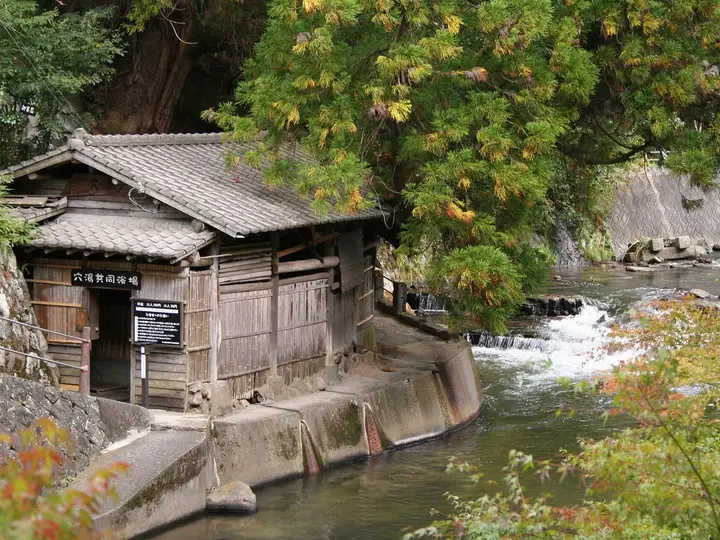
Myoken Onsen
Near Kirishima, Kagoshima Prefecture, Japan
A string of inns along the Amori River gorge in Kirishima, Kagoshima, where nearly every ryokan has its own spring, from ¥500 self-catering bathhouses to a high-end inn with a riverside mixed bath.
- Water temperature
- 108°F42°C
- Entry
- Paid
- Getting in
- Drive-up
- Type
- Resort or spa
- Every inn draws from its own source, and several, including Ishiharaso and Orihashi, run their baths without added water.
- Myoken Ishiharaso has seven sources of its own and gives women a bathing wrap for its mixed outdoor bath.
- Orihashi Ryokan's day bath costs ¥500, among the cheapest soaks in the valley.
- Kagoshima Airport is about 15 minutes away by car.
Which Myoken Onsen
There are two places called Myoken Onsen in Japan. This page covers the larger and better-known one, in Kirishima City, Kagoshima Prefecture, on the Amori River between the Hayato and Makizono districts. The other, Innai Myoken Onsen in Usa, Oita Prefecture, is a small separate spring. If you were sent here looking for Kirishima’s inns such as Myoken Ishiharaso, Tajima Honkan or Orihashi, you are in the right place.
What to expect
Myoken Onsen is not a town so much as a line of inns along a green river gorge. Route 223 follows the Amori River north from Hayato toward the Kirishima mountains, and the ryokan sit on both sides of it, many with baths right above the water. There is no nightlife and no main street. The area is part of the Shinkawa Keikoku (Shinkawa Gorge) hot spring group, along with Anraku, Shinkawa and Shiobitashi, and in 1967 it was designated a National Health Hot Spring Resort.
The spring opened in 1895, on the old site of a Myoken shrine. Many inns began as toji-ba, places where people stayed for weeks to bathe and cooked their own meals, and several still offer self-catering rooms. At the other end of the scale are high-end ryokan with detached villas.
The Kirishima City Tourism Association notes that every inn uses its own source. The water is mostly a sodium, calcium and magnesium bicarbonate spring, sometimes called a “beautiful skin” bath in Japan.
Where to bathe
- Orihashi Ryokan (2233 Shimonakatsugawa, Makizono-cho, tel. 0995-77-2104): a long-running inn whose Kizu-yu and Take-no-yu indoor baths are open to day visitors for ¥500 adults and ¥250 elementary school children, 10:00 to 15:00 (last entry 14:00; from 11:30 on Tuesdays and Fridays). One indoor bath each for men and women, fed straight from the source, no outdoor bath. Closed irregularly, about 50 free parking spaces, no booking needed. One review site lists a higher price for an outdoor bath at the inn, so confirm what you are paying for.
- Myoken Ishiharaso (4376 Kareigawa, Hayato-cho, tel. 0995-77-2111): an upmarket inn with seven springs of its own, each feeding a different bath, including the large Amafuridono bath and outdoor baths. Bath-only day visits cost ¥1,800 adults and ¥900 children (elementary school and under), tax included, cash only, from 11:30 to 15:00 with last entry at 13:30. Hours are strict because they overlap with check-in and check-out. Towels, shampoo and hair dryers are included. Lunch-and-bath plans start at ¥12,000 and must be booked by phone.
- Shusuiyu (4389-1 Kareigawa, Hayato-cho, tel. 0995-77-2512): a toji-style inn with self-catering rooms, open to day bathers 8:00 to 22:00, with source-fed water and about 20 parking spaces. The tourism association does not publish its price.
- Myoken Onsen Nemu: lists day bathing from ¥1,000, 10:00 to 15:00, with a large rock bath and private baths.
- Tajima Honkan: a toji inn founded over a century ago with three different springs. We could not confirm current day-bathing prices; call ahead.
The water at Ishiharaso
Ishiharaso publishes more detail than most. Its Amafuridono source is a sodium, calcium and magnesium bicarbonate spring with 2,264 mg/kg of dissolved minerals. It comes out at about 133°F56°C and is cooled to about 108°F42°C through a heat exchanger rather than by adding cold water. The inn says nothing is added and the water is not stored or chlorinated. The bath is fed at about 150 litres a minute and turns over its water in about an hour.
Getting there
- By car: from the Kyushu Expressway, leave at Mizobe Kagoshima Airport IC and take Routes 504 and 223, about 11 km (7 miles), roughly 15 minutes. Kirishima Shrine is about 20 to 30 minutes further north.
- By train and bus: the nearest station is JR Kareigawa on the Hisatsu Line, but JR Hayato on the Nippo Line has better connections. The onsen bus from Hayato takes about 17 to 20 minutes and runs only a few times a day. From Kareigawa it is about 10 minutes by car. Some buses also link Kagoshima Airport with Myoken.
- Taxi: Ishiharaso arranges a shuttle taxi for staying guests (¥3,000 per car from the airport or Hayato Station since August 2023), but warns that bookings can be refused because of a driver shortage in Kirishima.
When to go
Myoken is open all year and is at its quietest on weekdays. Day bathing at most inns fits into a late-morning to mid-afternoon window, after guests check out and before new ones arrive, so plan around that. Summer in Kagoshima is hot and humid; the riverside baths are at their best from autumn to spring. Heavy rain can raise the river quickly in the June to July rainy season and during typhoons.
Onsen etiquette
Wash before you get in, bathe naked in the single-gender baths, and keep small towels out of the water. In Ishiharaso’s mixed Mukunoki outdoor bath, women are given a one-piece yuami-gi wrap at the front desk; return it and used towels to the collection box afterwards. The inns we checked publish no tattoo policy. Call before you go if this affects you.
Where to stay nearby
Staying the night at one of the riverside inns is the best way to see Myoken. Budget-minded travellers can book a self-catering toji room; others can splurge on a riverside room with its own bath. For more variety, Kirishima Onsen is in the mountains to the north, and the sand baths at Ibusuki, including Sunamushi Kaikan Saraku, are south of Kagoshima city.
Safety notes
- Heat: sources here run hot. Test the water and keep soaks short.
- River: the Amori River can rise fast after rain. Riverside outdoor baths may close in bad weather.
- Footing: wet stone steps and tub edges are slippery, especially in the riverside baths.
- Buses: service is sparse. Note the last bus or book a taxi in advance.
Map and nearby springs
GPS: 31.80964, 130.75580
Myoken Onsen: common questions
Which Myoken Onsen is this?
This page covers Myoken Onsen in Kirishima City, Kagoshima Prefecture, the inns along the Amori River in the Hayato and Makizono districts. There is also a small Innai Myoken Onsen in Usa, Oita Prefecture, which is a different place.
Can you visit Myoken Onsen without staying?
Yes. Several inns take day bathers. Orihashi Ryokan charges ¥500 for adults (10:00 to 15:00, last entry 14:00). Myoken Ishiharaso charges ¥1,800 for adults and ¥900 for children, cash only, from 11:30 with last entry at 13:30. Shusuiyu lists day bathing from 8:00 to 22:00. Myoken Onsen Nemu lists baths from ¥1,000.
Is there mixed bathing at Myoken Onsen?
At some inns. Myoken Ishiharaso's Mukunoki outdoor bath is mixed, and the front desk lends women a one-piece bathing wrap (yuami-gi) to wear in it. Its other baths are separate for men and women, as are Orihashi's indoor baths.
How do I get to Myoken Onsen from Kagoshima Airport?
It is about 15 minutes by car. Leave the Kyushu Expressway at Mizobe Kagoshima Airport IC and take Routes 504 and 223, about 11 km (7 miles). By bus, the onsen bus runs from the airport and from JR Hayato Station (about 17 to 20 minutes from Hayato), but only a few times a day.
Is the water at Myoken Onsen heated or diluted?
It depends on the inn. Ishiharaso says its water is not heated, diluted, stored or chlorinated, and is cooled from about 133°F56°C to about 108°F42°C with a heat exchanger. Orihashi and Shusuiyu say their baths are fed straight from the source. Ask at other inns.
Closest hot springs to Myoken Onsen
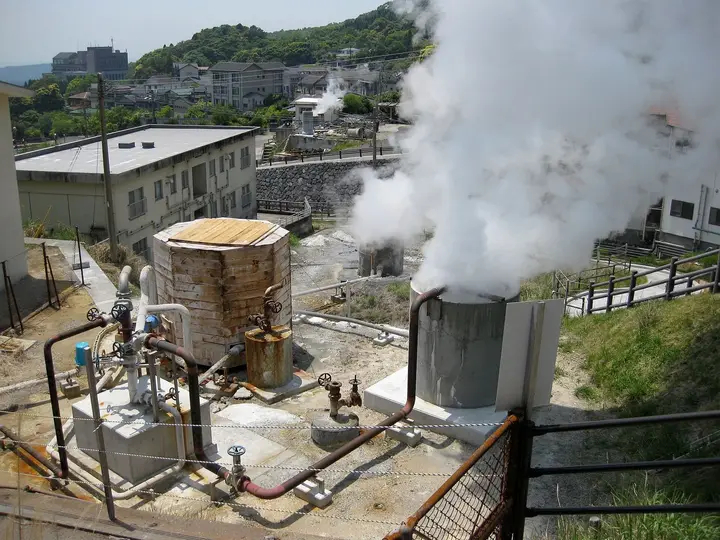
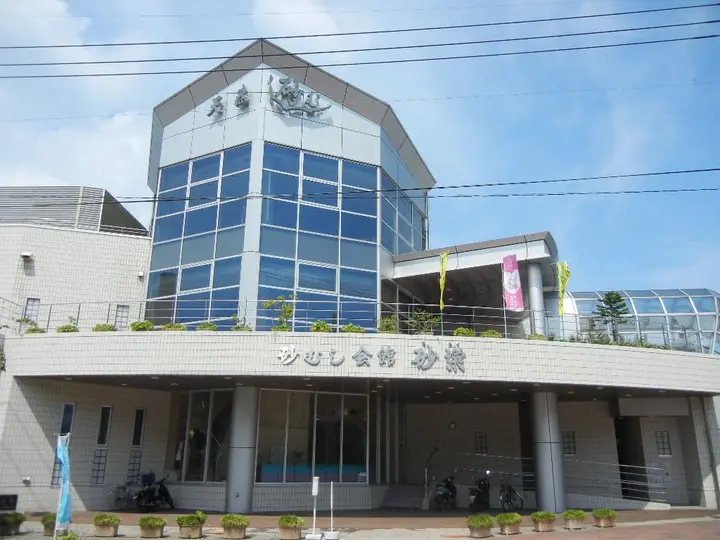
Ibusuki Onsen (Sunamushi Kaikan Saraku)
Kagoshima Prefecture, Japan
41 mi away, ~1 hr drive
Temp n/a Paid Drive-up
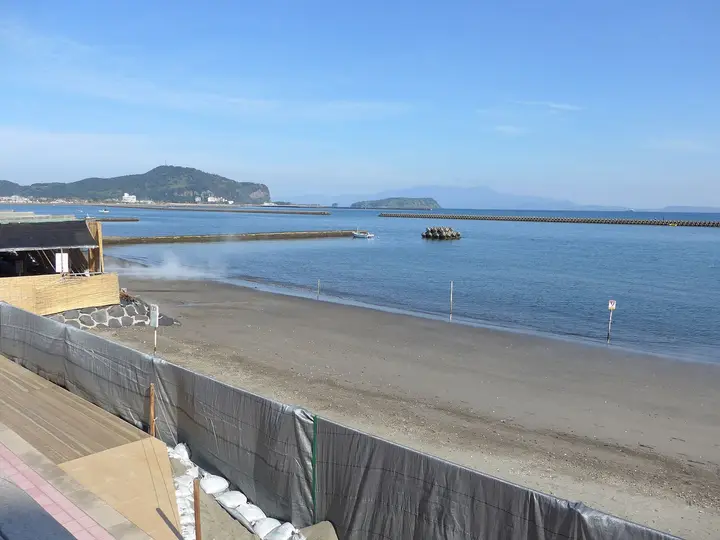
Near Takachiho
Public pool
Takachiho Onsen (Takachiho no Yu)
Miyazaki Prefecture, Japan
71 mi away, ~2 hr drive
Temp n/a Paid Drive-up