Tsuboyu (Yunomine Onsen)
Near Yunomine Onsen (Hongu, Tanabe), Wakayama Prefecture, Japan
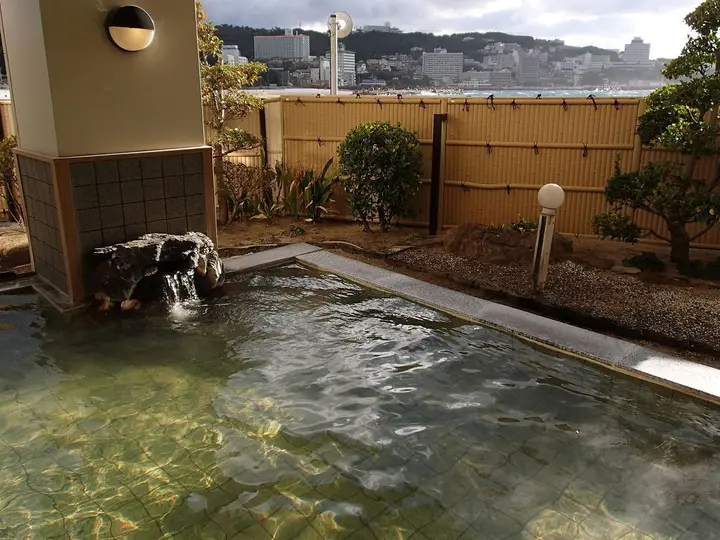
A two- or three-person rock tub in a wooden hut on the creek at Yunomine Onsen, used privately in 30-minute turns and listed as part of the Kii Mountains World Heritage pilgrimage sites.
Photo: Nekosuki (CC BY-SA 4.0). Resized and cropped for this page.

- Water temperature
- Not published
- Entry
- Paid
- Getting in
- Drive-up
- Type
- Public pool
- One small stone tub in a hut by the creek, used by one group at a time for 30 minutes and locked from the inside.
- The ¥800 ticket also covers one soak in the Yunomine public bathhouse, either the plain bath or the kusuri-yu.
- The water is a sulfur and sodium bicarbonate spring that leaves the ground at 198°F92°C; a cold tap lets you cool the tub yourself.
- No booking: you take a numbered tag at the bathhouse counter, and on busy days the wait can be long.
What to expect
Yunomine Onsen is a small hot spring village in a narrow valley in the Hongu area of Tanabe city, southern Wakayama. Inns and minshuku crowd both sides of a little creek, steam rises from the stream bed, and the smell of sulfur hangs over the whole street. The Tanabe City Kumano Tourism Bureau says the spring was found about 1,800 years ago and counts it among the oldest in Japan. Pilgrims on the Kumano Kodo stopped here to purify themselves before going on to Kumano Hongu Taisha.
Tsuboyu is the reason most visitors come. It is a single bath: a small wooden hut built over the creek, with a stone-lined tub inside that holds two or three people at most. One group goes in at a time, locks the door, and has the bath to itself for 30 minutes. That is all there is. The appeal is the age of the place and the setting, not facilities.
The water does not look the same from visit to visit. The Hongu tourist association repeats the local saying that its colour can change as many as seven times in a day. It also comes in very hot, so expect to use the cold tap.
Tsuboyu is tied to the story of Oguri Hangan and Princess Terute, retold in kabuki and old religious narratives. In the legend Oguri, near death from a terrible illness, was brought to Yunomine and recovered after bathing here.
The water
The Hongu tourist association lists the Yunomine spring as a sulfur-containing sodium bicarbonate spring, colourless at source and 198°F92°C when it leaves the ground. That is far too hot to sit in, so Tsuboyu has a green tap of cold water and a paddle. If the tub is too hot, run the cold water and stir before you get in. Neither office says whether the water is circulated or chlorinated; it is a natural spring tub, not a treated pool.
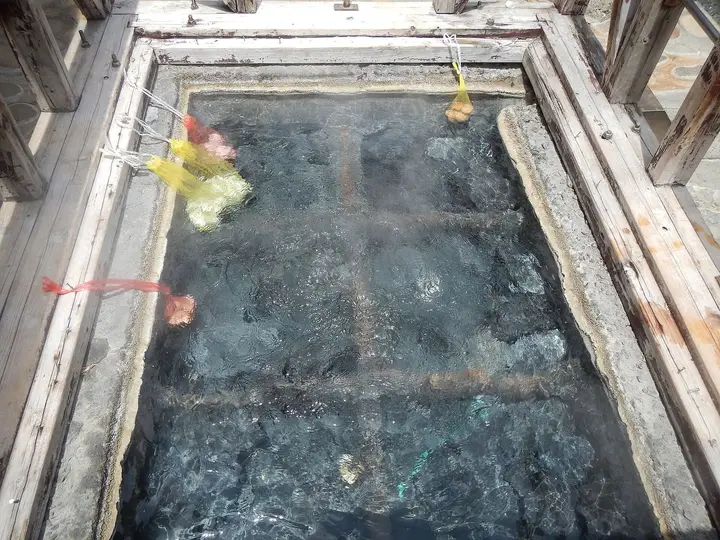
Down the street, the Yuzutsu is an open spring basin by the creek where people boil eggs and vegetables in the hot water (open 6:00-21:00). The shops sell eggs in nets for this. There is also a tap where you can draw spring water to take home, ¥100 for 10 litres.
Prices and booking
Prices below have applied since April 23, 2022, when the bathhouse was renovated, and were still on the Hongu tourist association page in 2026.
- Tsuboyu: ¥800 adults, ¥400 under 12. Includes one bath in the public bathhouse (the plain public bath or the kusuri-yu).
- Public bath (ippan-yu): ¥400 adults, ¥200 under 12. Shampoo and body soap provided. A 12-visit book is ¥4,000.
- Kusuri-yu (medicine bath): ¥600 adults, ¥300 under 12, or ¥800 for a day ticket. A kusuri-yu ticket also covers the plain public bath. Soap and shampoo are not used here.
- Family bath: the bathhouse also lists a family bath at ¥700 adults, ¥300 under 12.
Hours for Tsuboyu and the bathhouse are 6:00 to 21:00, with the last ticket at 20:30. Closing days are irregular, for cleaning and inspections.
How the queue works: buy a ticket at the vending machine by the bathhouse (beside Toko-ji temple), hand it in at the counter, and take a numbered tag. When your number comes up, hang the tag on the hook by the Tsuboyu door so others know it is in use. Leave your shoes outside, put your clothes in the basket, and lock the door. When your 30 minutes are up, get out on time. Soap, shampoo and towels are sold at the shop in front of the ticket counter.
Rules and etiquette
- No swimsuits. You bathe naked, as in any Japanese bath. Since you are alone or with your own group, this is less daunting than a shared bath.
- No soap or shampoo in Tsuboyu or the kusuri-yu. Wash in the plain public bath if you want to.
- Rinse off with water from the tub before getting in.
- Keep to 30 minutes. People are waiting.
- Children pay the child rate and can share the tub with a parent. Because the tub is small and very hot, test the water carefully first.
- Tattoos: neither tourist office publishes a policy. Tsuboyu is private while you are in it, but ask the bathhouse (0735-42-0074) if you also plan to use the shared baths.
Camping is not allowed anywhere in Yunomine, and cooking in the car park is banned.
Getting there
Yunomine Onsen is a short drive from Kumano Hongu Taisha, and the Dainichi-goe section of the Kumano Kodo starts in the village, so many walkers arrive on foot from the shrine. Buses run every day to the Yunomine Onsen stop from Kii-Tanabe and Shirahama, from Shingu and from Gojo, and regularly from the Hongu Taisha-mae stop; the Tanabe tourism bureau posts current timetables.
By car, use the 46-space car park next to the Minshuku Takiyoshi, shared with the public bathhouse.
When to go
Tsuboyu is open all year. The queue is the main thing to plan around. Weekends, Japanese holidays and the spring and autumn walking seasons are busiest, and the wait for one 30-minute slot can stretch on. Early morning, soon after 6:00, is usually the easiest time. In winter the steam over the creek is at its thickest and a hot tub in a cold hut makes most sense.
The bath can close on irregular days. If you are coming a long way, call the bathhouse (0735-42-0074) or the Kumano Hongu Tourist Association (0735-42-0735, 9:00-17:00) first.
Where to stay nearby
Yunomine has a row of ryokan and minshuku, many with their own baths on the same spring; see our Yunomine Onsen listing for the village as a whole. Nearby Kawayu Onsen is where hot water rises through the riverbed and the free winter river pool, Sennin-buro, opens from December to February. Wataze Onsen is the third village in the Hongu hot spring area. Across the Nara border, Totsukawa Onsen is about 40 minutes north by bus from Hongu Taisha-mae, and on the coast Nachikatsuura and Shirahama have larger hotels.
Safety notes
- Very hot water: the spring leaves the ground at 198°F92°C. Always test the tub with your hand, cool it with the tap if needed, and take extra care with children.
- Short soaks: sulfur water at high temperature tires you quickly. Get out slowly and drink water afterwards.
- Footing: the hut floor and the stones are wet. Step carefully getting in and out.
- Alcohol: do not bathe after drinking, especially alone in a locked hut.
Map and nearby springs
GPS: 33.82919, 135.75772
Tsuboyu (Yunomine Onsen): common questions
How much does Tsuboyu cost?
¥800 for adults and ¥400 for children under 12, the prices set when the bathhouse was renovated in April 2022. The ticket also gives you one bath in the Yunomine Onsen public bathhouse next door (the plain public bath or the kusuri-yu).
Can you book Tsuboyu in advance?
No. It is first come, first served. Buy a ticket at the machine by the public bathhouse, swap it at the counter for a numbered tag, and wait for your number. Each group gets 30 minutes. On holidays and weekends the wait can run well over an hour, so go early.
How many people fit in Tsuboyu?
Two or three. The Hongu tourist association says about 2 to 3 people; the Tanabe tourism bureau describes it as a bath for 1 or 2. It suits a couple or a parent with a child, not a group of friends.
Do you wear a swimsuit in Tsuboyu?
No. The Tanabe tourism bureau says swimsuits, soap and shampoo are not allowed. You lock the hut from the inside and bathe naked as in any Japanese bath. Rinse off with the tub water before you get in.
Is Tsuboyu really a World Heritage site?
Yes. Yunomine Onsen sits on the Kumano Kodo, and Tsuboyu is part of the Sacred Sites and Pilgrimage Routes in the Kii Mountain Range, the UNESCO World Heritage site registered in 2004. The Tanabe tourism bureau calls it one of the only hot springs registered as World Heritage.
Closest hot springs to Tsuboyu (Yunomine Onsen)
Nanki-Katsuura Onsen (Nachikatsuura)
Wakayama Prefecture, Japan
18 mi away, ~25 min drive
Temp n/a Paid Drive-up
Near Shirahama
Public pool