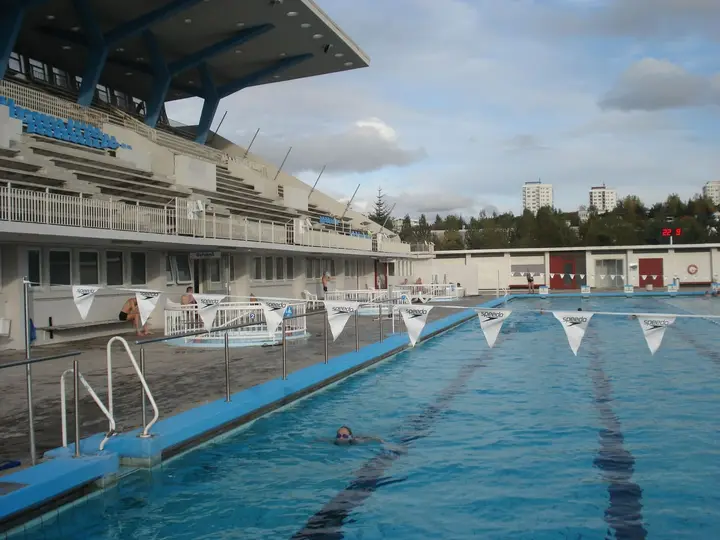
Kvika Footbath (Bollasteinn)
Near Reykjavík, Seltjarnarnes, Capital Region, Iceland
A footbath, not a soak: a round basin carved into a single basalt boulder on the Seltjarnarnes shore near Grótta lighthouse, with warm geothermal water running through it for free.
Photos: Markus Trienke (CC BY-SA 2.0); Michal Gorski (CC BY-SA 3.0). Resized and cropped for this page.


- Water temperature
- 102°F39°C
- Entry
- Free
- Getting in
- Short walk
- Type
- Public pool
- A public artwork by Ólöf Nordal, carved from one basalt boulder 2 m (6.6 ft) across and installed in June 2005.
- Fed constantly with pre-cooled geothermal water from the Seltjarnarnes boreholes, at about 102°F39°C.
- Only deep enough for your feet and ankles. You cannot bathe in it.
- On the shore path near Grótta lighthouse, about 4.6 km (2.9 miles) west of central Reykjavík as the crow flies.
What to expect
Kvika is the smallest entry on this site, and the honest description is a warm puddle with a view. It is a single block of grey basalt, about 2 m (6.6 ft) across and 80 cm (2.6 ft) high, with a round, shallow basin carved into the top. Warm geothermal water flows through it all the time. You sit on the edge of the stone, take your shoes and socks off, and put your feet in.
It is not a hot pot. The basin is only deep enough to cover your feet and ankles, so you cannot sit in it, and nobody should try. Think of it as a 20-minute stop on a walk along the Seltjarnarnes shore, not a bathing trip.
The setting is the reason to come. The stone sits on the Kisuklappir rocks at the edge of the sea, at the western tip of the Seltjarnarnes peninsula, with Grótta lighthouse close by and Mount Esja across the bay. After dark the basin is lit softly from inside.
The artwork
The Seltjarnarnes culture committee commissioned the piece from the Icelandic artist Ólöf Nordal in September 2004, and it was installed in June 2005. The town lists it among its public artworks as Bollasteinn, or “cup stone”. Most visitors and tourism sites know it as Kvika, the Icelandic word for magma.
The water is unmixed geothermal water from the Seltjarnarnes boreholes, cooled before it reaches the stone. Visit Reykjavík describes it as geothermally heated seawater and gives a temperature of about 102°F39°C.
The town’s description of the piece says the artist wanted to point back to Iceland’s old bathing culture while getting people to take their shoes off and feel the earth’s heat at the meeting point of land and sea. There is also a short audio guide in Icelandic on the town’s website.
Getting there
Seltjarnarnes is a small town on the peninsula just west of Reykjavík, and Kvika is at its far end, on the north shore road Norðurströnd near the Grótta car park.
- By car: From central Reykjavík, drive west along the coast road through the Vesturbær district into Seltjarnarnes and follow signs for Grótta. There is a car park near the lighthouse causeway. Kvika is a few minutes’ walk along the shore from there. The distance from Hallgrímskirkja is about 4.6 km (2.9 miles) as the crow flies.
- By bus: Strætó route 11 runs between Mjódd and Seltjarnarnes. The Hofgarður stop is the closest to Grótta, about 1 km (0.6 miles) away.
- On foot or by bike: A coastal path runs around Seltjarnarnes with sea views and birdlife, and makes a good approach on foot or by bike.
The last stretch is over rough shore rocks. The stone itself is not wheelchair accessible.
When to go
Kvika works in any season, but it makes the most sense when it is cold. In winter, warm water on bare feet in a sharp wind is the whole point. Clear nights between about September and March give you a chance of northern lights over the bay.
Summer evenings are bright and busy, with walkers and cyclists on the coastal path. From 1 May to 15 July the island of Grótta itself is closed to protect nesting birds, but the shore path and Kvika stay open.
Check the tide and the forecast. In strong onshore wind and high seas, waves can wash over the shore rocks.
Rules and etiquette
- Feet only. The basin is an artwork and a footbath. Do not climb into it or let children sit in it.
- No soap. Rinse sand off your feet in the sea if you must, not in the basin.
- Share the rim. It seats only a few people at once. Take a turn and move on.
- Take everything away. There are no bins on the rocks.
- Respect the reserve. Grótta has been a protected nature reserve since 1974. Stay on paths and keep away from nesting birds.
Where to stay nearby
Kvika is inside the capital area, so any Reykjavík hotel works as a base. Seltjarnarnes is mostly residential and has few places to stay of its own, while the hotels and guesthouses of central Reykjavík are a short drive or bus ride away.
For a proper soak afterwards, the town’s own pool, Sundlaug Seltjarnarness, is just up the road and has geothermal hot tubs, a steam room and salt-treated water. In central Reykjavík, Vesturbæjarlaug is on the way back into town.
Safety notes
- Footing: The shore rocks are uneven and slippery with seaweed and ice. Wear proper shoes to the stone and bring a towel to dry your feet before you put them back on.
- Tides: Never try to cross to Grótta on a rising tide. The bar floods quickly, and the town specifically tells visitors to watch the tide table.
- Cold: Warm feet can trick you into staying out too long in winter wind. Dress for the weather, not for the water.
- Children: The basin is shallow, but it sits right by the sea on hard rock. Keep small children within reach.
Nearby stops worth adding
Grótta lighthouse has stood on the island in its current form since 1947, with a light on the site since 1897. When the tide and season allow, the walk across the bar is a classic short outing. Bakkatjörn, a small protected pond on Seltjarnarnes, is another stop for birdwatchers. The coastal path around the peninsula turns the footbath and the lighthouse into an easy loop on foot.
Map and nearby springs
GPS: 64.16239, -22.00828
Kvika Footbath (Bollasteinn): common questions
Can you swim or soak in Kvika?
No. Kvika is a footbath. The basin is a shallow bowl carved into a boulder, made for dipping your feet while you sit on the rim. If you want a full soak nearby, the Seltjarnarnes municipal pool is a short drive or walk away.
Is the Kvika footbath free?
Yes. It is a public artwork commissioned by the town of Seltjarnarnes and sits beside the coastal path. There is no ticket, attendant or fee.
How warm is the water in Kvika?
Visit Reykjavík puts it at about 102°F39°C. The town says the basin is fed with a constant flow of unmixed geothermal water from its boreholes, cooled before it reaches the stone.
Why is it called both Kvika and Bollasteinn?
The town of Seltjarnarnes lists the artwork as Bollasteinn (cup stone), its title by the artist Ólöf Nordal. Most visitors and tourism sites call it the Kvika footbath. Both names refer to the same basin on the Kisuklappir rocks.
Can you walk out to Grótta lighthouse from Kvika?
Only at low tide, and not in the nesting season. Grótta is a tidal island joined to land by a narrow bar that floods at high tide, so check the tide table first. All traffic onto the island is banned from 1 May to 15 July to protect nesting arctic terns.
Closest hot springs to Kvika Footbath (Bollasteinn)
100-111°F38-44°C
Public pool
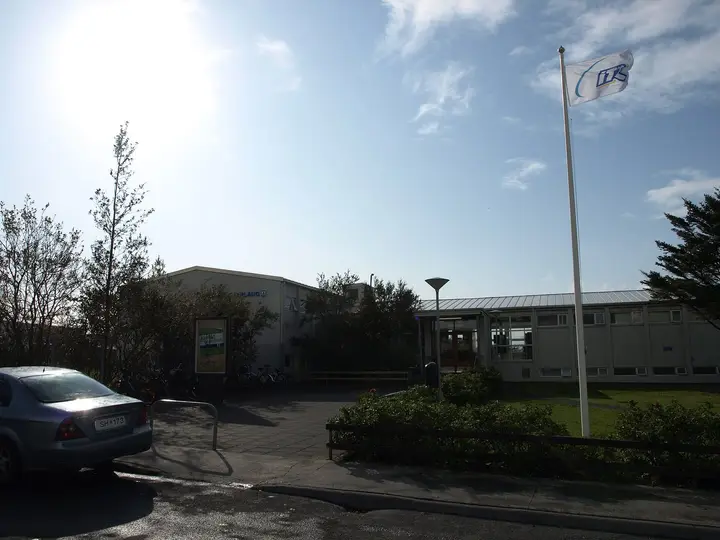
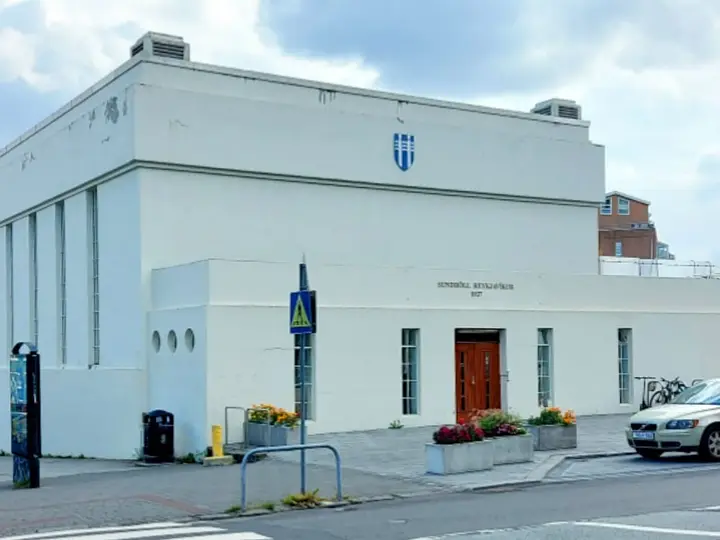
Seltjarnarneslaug (Sundlaug Seltjarnarness)
Seltjarnarnes, Capital Region, Iceland
1 mi away, ~10 min drive
100-111°F38-44°C Paid Drive-up
86-102°F30-39°C
Public pool
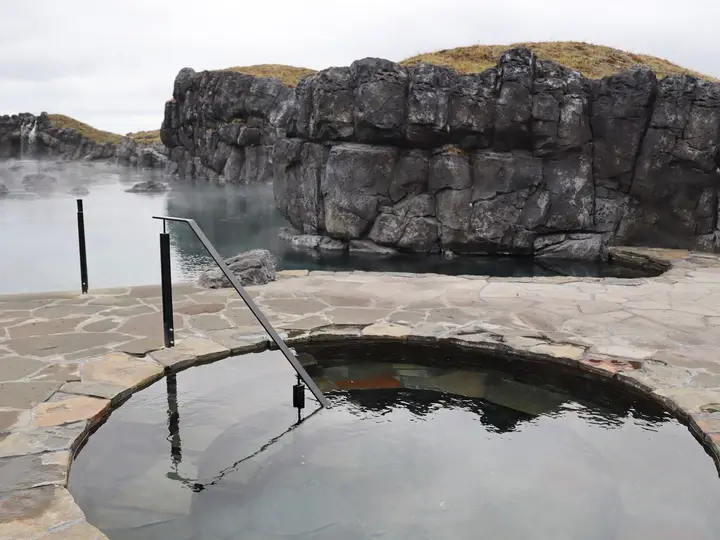
Nauthólsvík Geothermal Beach (Ylströndin)
Reykjavík, Capital Region, Iceland
4 mi away, ~10 min drive
86-102°F30-39°C Paid Drive-up