Buckhorn Mineral Wells (Buckhorn Baths)
Near Mesa, Arizona, United States
A 1939 mineral bathhouse and motel on Main Street in east Mesa, famous as the spring training home of the Giants, closed since 1999 and now a vacant historic property.
Closed to the public. The Buckhorn bathhouse closed in 1999 and the motel followed in the mid-2000s. The site at 5900 E. Main Street in Mesa is private, vacant and in poor condition, and redevelopment plans announced in 2021 had stalled by 2023.
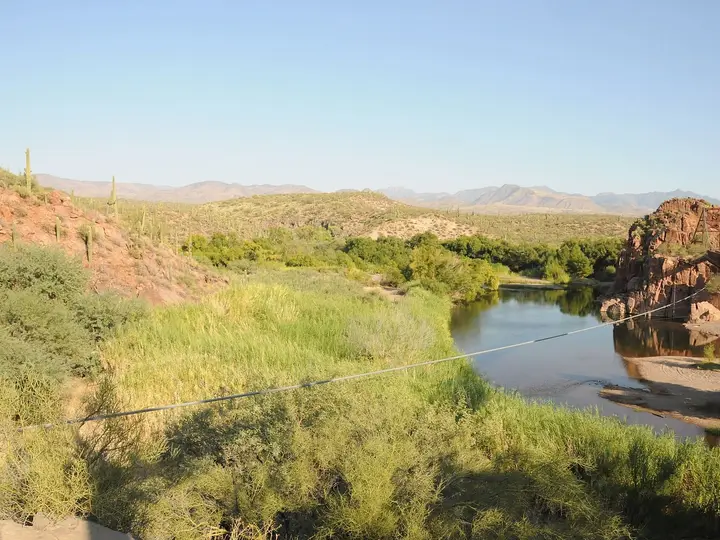
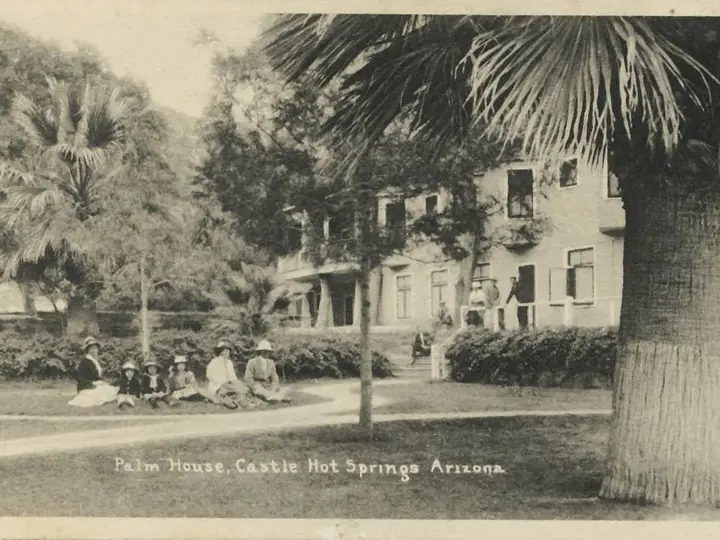
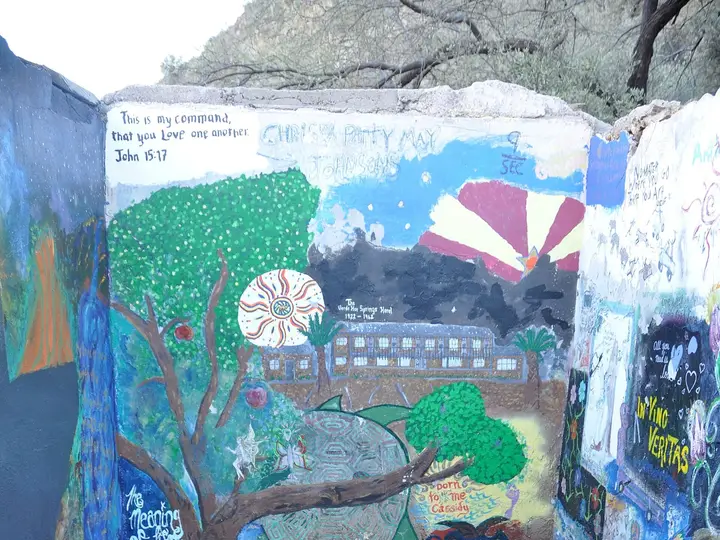
Photos: Tony the Marine ( talk ) (CC BY-SA 3.0); Boston Public Library (CC BY 2.0); Beyond My Ken (CC BY-SA 4.0). Resized and cropped for this page.


- Water temperature
- Not published
- Entry
- Paid
- Getting in
- Drive-up
- Type
- Resort or spa
- The Sligers struck 112°F44°C mineral water while drilling a well in 1939 and opened the baths the same year.
- The New York and later San Francisco Giants stayed here for about 25 years of spring training, an early root of the Cactus League.
- Listed on the National Register of Historic Places on May 10, 2005.
- The bathhouse closed in 1999. There is no public soaking on the property today.
Current status: closed
Buckhorn Mineral Wells, better known as the Buckhorn Baths, has not offered a soak since 1999. The bathhouse closed that year, and the motel and its wildlife museum closed a few years later (the National Register file says 2004, later reporting says 2007). The property is private. There is no day use, no tour and no public access to the mineral water.
The buildings still stand at 5900 E. Main Street, on the corner of North Recker Road in east Mesa, along with the large neon sign that has made the place a landmark for drivers on old US 60. You can look from the public sidewalk. Do not go onto the property: it is private, vacant and in poor condition.
This page exists because the name still appears on hot spring lists and old maps of the Phoenix area, often as if it were a working spa.
What the Buckhorn was
The story begins in the 1930s with Ted and Alice Sliger. After their earlier roadside store and lunch counter, Desert Wells, burned down in 1936, they bought a 10-acre property on the highway east of Mesa and started over. Water had to be hauled in, so they drilled a well. In 1939 it hit hot, mineral-heavy water at 112°F44°C, and they opened mineral baths almost immediately.
Over the next decade they built out a full roadside resort: a motel, cottages, a cafe, a curio shop, a taxidermy museum and a bathhouse with 27 private tubs. The complex was essentially complete by 1947. For years it was also a Greyhound bus depot. By 1950 the resort was advertising its mineral water treatments, which drew visitors with arthritis and similar complaints. That was the selling point of the era, not something this guide can vouch for.
When Mesa annexed the property in 1974, the mineral water measured 106°F41°C, a little cooler than the original strike.
The baseball connection
The Buckhorn matters to Arizona history for reasons that have nothing to do with soaking. New York Giants owner Horace Stoneham stayed there, liked it and moved the team’s spring training to Mesa. The Giants used the Buckhorn for about 25 years, a run that spanned the team’s move from New York to San Francisco. The Chicago Cubs also based themselves there in their first years in Arizona, and other teams followed. Local historians credit those stays with helping start what became the Cactus League. The Giants moved their camp to Casa Grande in 1972.
What happened after it closed
Ted Sliger died in 1984 and Alice ran the business on her own. The bathhouse shut in 1999, and the motel and museum followed. The complex was added to the National Register of Historic Places on May 10, 2005. Alice lived on the property until shortly before her death in 2010, at 103.
The years since have been a string of plans that did not happen:
- 2012: Mesa voters approved a parks bond that set aside $5 million toward buying the Buckhorn.
- 2015: the city deal fell through amid disputes within the Sliger family.
- 2017: the family sold the property for $2.15 million to a buyer that planned to keep historic elements. A full restoration was estimated at up to $10 million.
- 2019: the taxidermy collection was donated to Arizona State University.
- 2021: after a receivership, a new owner bought the site. KJZZ reported plans to refurbish the baths and build townhomes, with architect Tim Boyle working on the project, and later reports added a boutique hotel and about 200 townhouses.
- 2023: Cronkite News reported that the development plans had stalled, and Mesa Historical Museum president Vic Linoff described the building’s condition as “demolition by neglect.”
We found no reporting since then of a restoration, a reopening or a demolition. Wikipedia’s article notes that the mineral water could still flow, but that the old cast-iron pipes would need replacing before any bathing could resume.
Getting there (to see it from the street)
The site is on Main Street at the corner of Recker Road, between Higley Road and Power Road in east Mesa. Do not park on the property itself. Look for legal street or public parking nearby, and view the sign from across Main Street. Photographs from the sidewalk are fine. Entering the grounds or buildings is trespassing, and the structures are not safe.
When to go
Any time, as a quick roadside stop on the way to or from the Superstition Mountains or the Apache Trail country east of Mesa. Spring training season, from late February to March, is when baseball fans tend to seek it out.
Rules and etiquette
- The property is private and closed. Stay on public land.
- Do not enter the buildings or the old bathhouse.
- Respect any posted signs from the owner or the city.
Where to soak instead
There is no public hot spring in Mesa or anywhere in the Phoenix metro. The closest natural hot spring soak is Castle Hot Springs, an all-inclusive resort in the Bradshaw Mountains about an hour north of Sky Harbor Airport. It is adults only (18+) and open only to overnight guests. For a free, primitive soak you need to drive farther, to the Black Canyon springs below Hoover Dam such as Arizona Hot Springs, which are a hike or paddle and close to hikers in summer.
Where to stay nearby
Mesa has a full range of chain hotels along the Loop 202 and US 60 corridors. Downtown Mesa, about 7 miles west of the Buckhorn along Main Street, has independent restaurants and the city’s museums. Apache Junction, a few miles east, is the usual base for the Superstition Mountains.
Safety notes
Abandoned buildings are dangerous: rotten floors, broken glass and unstable roofs. Stay off the property. Main Street is busy at this corner, so cross at the signal at Recker Road.
Map and nearby springs
GPS: 33.41667, -111.70111
Buckhorn Mineral Wells (Buckhorn Baths): common questions
Is Buckhorn Baths in Mesa still open?
No. The bathhouse closed in 1999 and the motel closed in the mid-2000s (sources give 2004 or 2007). The property at Main Street and Recker Road is private and vacant. You can see the buildings and the old sign from the street, but you cannot go in or soak.
Who owns Buckhorn Baths now?
The Sliger family sold the property in 2017. It later went into receivership and was sold again in 2021 to a buyer who talked about restoring the baths and building townhomes and a boutique hotel. By 2023 Cronkite News reported that the plans had stalled and the building was deteriorating.
How hot was the water at Buckhorn Mineral Wells?
The original well hit water at 112°F44°C in 1939. By the time the property was annexed into Mesa in 1974, the mineral water was recorded at 106°F41°C. The bathhouse had 27 private tubs.
Why is Buckhorn Baths historically important?
Giants owner Horace Stoneham stayed at the Buckhorn and moved the team's spring training to Mesa, where it stayed for about 25 years. The Chicago Cubs also used it in their first years in Arizona, and the arrangement helped start the Cactus League. The complex is on the National Register of Historic Places.
Where can I soak near Mesa instead?
There is no public hot spring in Mesa. The closest natural hot spring soak to Phoenix is Castle Hot Springs, a luxury resort about an hour north of Sky Harbor Airport that admits only overnight guests aged 18 and over.
Closest hot springs to Buckhorn Mineral Wells (Buckhorn Baths)
Near Tonopah
Resort or spa
118°F48°C
Resort or spa
Indian Hot Springs (Holladay Hot Springs)
Arizona, United States
108 mi away, ~3 hr drive
118°F48°C Paid Drive-up
Near Willcox
Resort or spa
Hooker's Hot Springs (Muleshoe Ranch)
Arizona, United States
113 mi away, ~3 hr drive
Temp n/a Paid Drive-up
All hot springs in ArizonaAll hot springs in United StatesOpen the full map
Sources we checked (4)
- en.wikipedia.org/wiki/Buckhorn_Baths_Motel
- cronkitenews.azpbs.org/2023/04/20/mesa-arizona-hotel-spa-spring-training/
- kjzz.org/2021-12-23/content-1743028-valley-architect-lays-out-future-vision-buckhorn-baths
- axios.com/local/phoenix/2022/10/03/buckhorn-baths-vacant-lots-next-for-these-metro-phoenix-eyesores